
If you’ve ever wondered what does meth look like, you’re not alone. Many people ask this question after finding an unfamiliar substance or wanting to better understand the dangers of illegal drugs. Methamphetamine, commonly called meth, can appear in several forms, making it difficult to identify without proper knowledge.
Learning about meth’s appearance is important for awareness, but it is equally important to avoid handling or testing any unknown substance yourself. If you suspect someone is using meth or you find a suspicious substance, contact local authorities or a healthcare professional instead of trying to identify it on your own.
In this guide, you’ll learn what does meth look like, its different forms, common items associated with its use, signs of meth use, and why professional help is essential for anyone struggling with meth addiction.
What Is Meth?
Meth, short for methamphetamine, is a powerful and highly addictive stimulant that affects the central nervous system. While certain forms of amphetamine are prescribed for specific medical conditions, illicit meth is produced illegally and often contains harmful chemicals.
Illegal meth is known for producing intense feelings of energy and euphoria. However, repeated use can quickly lead to dependence and serious physical and mental health problems. Some common street names include:
- Crystal
- Ice
- Glass
- Crank
- Tina
- Speed
Because illegal meth is manufactured in uncontrolled and unregulated environments, there are no consistent production standards. The chemicals and methods used can vary from one batch to another, causing differences in its appearance, color, texture and purity.
As a result, meth may look different depending on how and where it was produced, making it difficult to identify based on appearance alone.
What Does Meth Look Like?
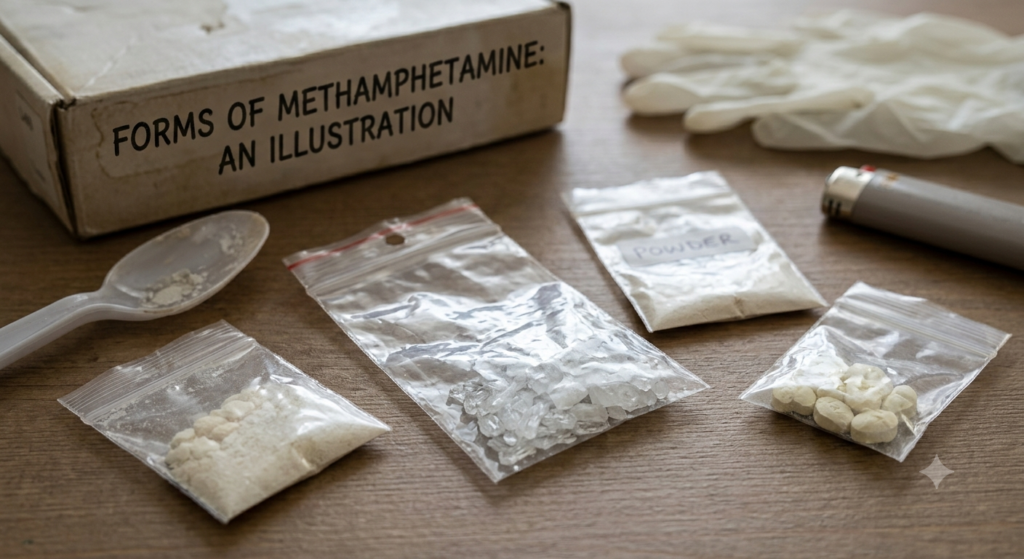
One of the reasons people ask what does meth look like is because it doesn’t always appear the same. The drug comes in several forms depending on how it is produced and distributed.
Crystal Meth
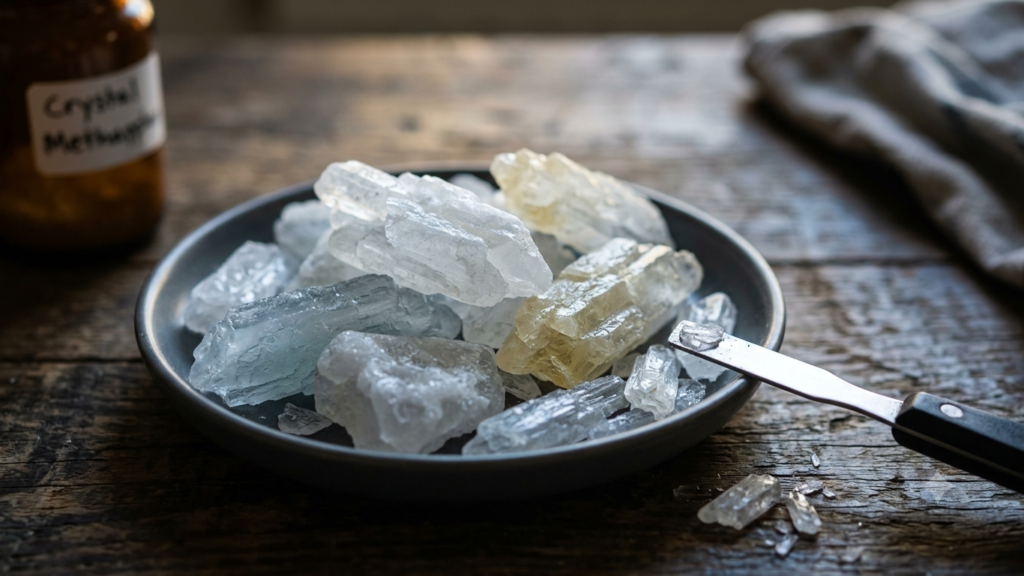
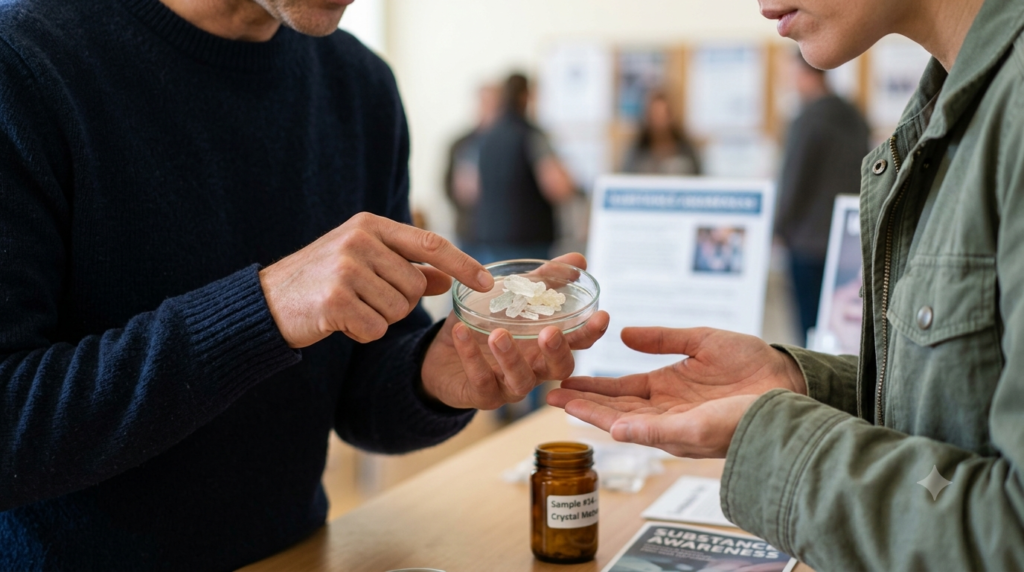
Crystal meth is the most recognizable form of methamphetamine. It typically appears as clear or bluish white crystals with a shiny, glass like appearance. Depending on how it is produced, it may also be found as rock like chunks or small crystal shards.
Many people compare its appearance to broken pieces of glass or coarse rock salt. The size of the crystals can vary, ranging from tiny grains to much larger chunks.
Real world example:
Someone cleaning out a rental property may discover clear crystal like pieces in small plastic bags. Although they resemble crushed glass or rock candy, they should never be touched or tasted because they could contain dangerous substances
Powder Meth
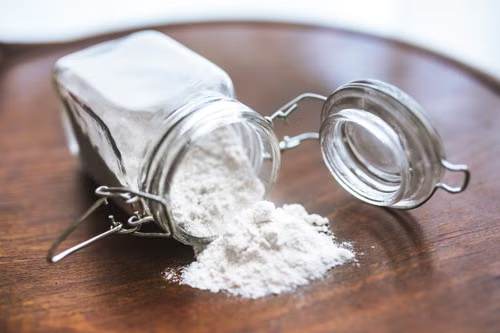
Powder meth has a much finer texture than crystal meth and usually appears as a loose, powdery substance. It is most commonly white or off white but it can also be light yellow, slightly brown or gray depending on the chemicals used during its production and the level of impurities present. Because it closely resembles other powders, such as flour or powdered sugar, it can be difficult to identify based on appearance alone.
Unlike crystal meth, powder meth looks similar to flour, powdered sugar or certain medications. Since many harmless substances have a similar appearance, visual identification alone is not reliable.
Pill Form
Although less common than crystal or powder meth, methamphetamine can also be found in pill form. These pills may be white, blue, green or other colors and often have logos or markings that make them resemble legitimate prescription medications.
They are usually round or oval in shape, making them difficult to distinguish from genuine medicines. Since counterfeit pills have become increasingly common, it is impossible to know what a pill contains based on its appearance alone. Never assume a pill is safe simply because it looks like a prescription medication.
Base Meth
Base meth is another form of methamphetamine that has a different appearance and texture from crystal or powder meth. It may look sticky or wax like, with a thick, oily consistency and is often damp rather than dry.
Its color is usually yellowish or brown due to the presence of impurities and the manufacturing process. Compared to crystal meth, base meth is generally less refined and may contain a higher amount of contaminants.
Can You Identify Meth by Smell or Taste?
Many people believe they can identify meth by its smell or taste but this is neither a safe nor a reliable method. The odor and taste of meth can vary depending on the chemicals used during its illegal production, making it impossible to accurately identify based on these characteristics alone.
In addition, attempting to smell or taste an unknown substance can expose you to harmful or toxic chemicals. If you come across a suspicious substance, the safest approach is to avoid handling or testing it and seek assistance from the appropriate authorities or a qualified professional.
The Smell of Meth
Meth may produce a strong chemical odor that some people describe as resembling ammonia, household cleaning products, cat urine, burnt plastic or industrial solvents. However, the smell is not always the same because it depends on the ingredients and manufacturing process used to produce the drug.
Some samples may have little or no noticeable odor at all. Additionally, many common household chemicals have similar smells, so odor alone is not a reliable way to identify meth.
The Taste of Meth
Meth is often described as having a very bitter chemical taste. However, you should never taste an unknown substance to identify it. Doing so could expose you to dangerous chemicals or toxic contaminants.
Items Commonly Associated with Meth Use
Finding meth is sometimes accompanied by discovering certain drug related items. While these objects do not always indicate meth use on their own, they may raise concerns when found together.
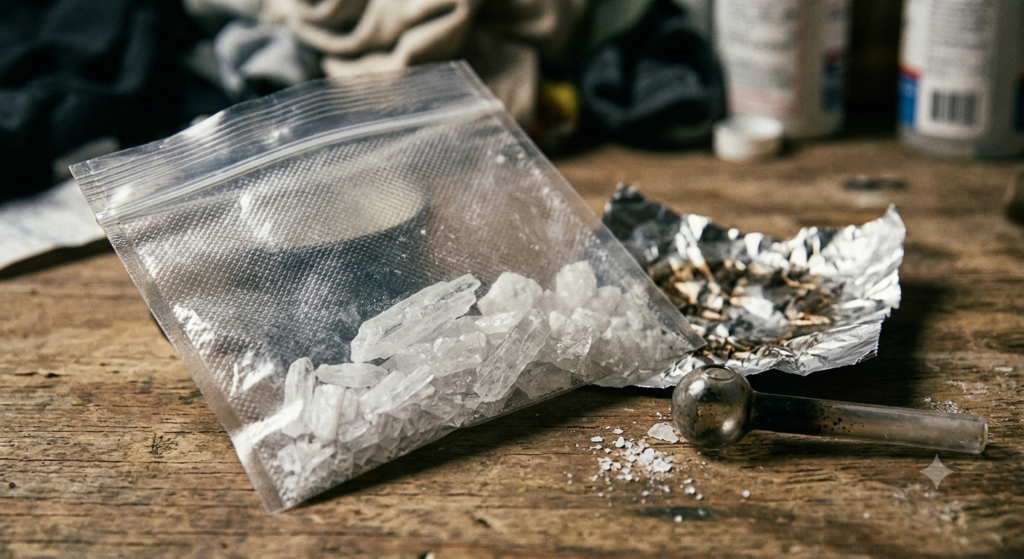
Glass Pipes
Glass pipes are among the most common items associated with smoking crystal meth. They are usually made of clear glass and feature a small round bowl at one end where the substance is heated. Over time, these pipes may develop burn marks or contain white or dark residue from repeated use.
While the presence of a glass pipe does not always confirm meth use, finding one alongside other suspicious items may be a cause for concern.
Aluminum Foil and Burnt Spoons
Pieces of burned foil or spoons with black marks may indicate that drugs have been heated. These items may contain residue left behind after use.
Syringes and Needles
Some individuals inject meth using syringes. Discarded needles should never be handled directly because they may carry infectious diseases.
Straws or Hollow Pens
Short straws, rolled paper or empty pen tubes are sometimes used to inhale powdered meth. These items are often cut into small pieces and may contain traces of white or off white residue. While they can have harmless everyday uses, finding them alongside other drug related items or suspicious substances may indicate possible meth use.
Small Plastic Bags or Wrappings
Tiny resealable plastic bags, folded paper packets or other small containers are often used to store illegal drugs, including meth. These items are usually designed to hold small amounts of substances and may sometimes contain visible residue or powder. While similar packaging can be used for legal purposes as well, finding multiple small bags or unusual wrappings alongside other suspicious items may be a warning sign.
Digital Scales
Small digital pocket scales are commonly used for measuring powdered substances. While these scales have legitimate uses, finding them alongside suspicious substances may indicate illegal drug activity.
Signs That Someone May Be Using Meth
Knowing what does meth look like is only one part of recognizing possible meth use. Changes in a person’s appearance and behavior may also provide clues. Some common signs include:
- Extreme bursts of energy
- Sleeping very little
- Rapid weight loss
- Dilated pupils
- Poor dental health (“meth mouth”)
- Skin sores from excessive scratching
- Anxiety or paranoia
- Mood swings
- Aggressive behavior
- Neglect of personal hygiene
Not everyone who shows these symptoms is necessarily using meth, so it is important not to jump to conclusions based only on appearance or behavior. Many of these signs can be linked to other health conditions, stress, mental health issues or lifestyle factors. A proper understanding and if needed, professional evaluation are essential before making any assumptions.
Real world example:
A family member may notice that a loved one who was once healthy has suddenly lost significant weight, stays awake for several days, becomes unusually secretive and displays unpredictable mood changes. These signs may suggest the need for professional evaluation rather than confrontation.
Why Meth Is Dangerous
Meth affects nearly every organ in the body and can lead to serious short term and long term health consequences. In the short term, meth use can quickly impact both physical and mental functioning, often causing noticeable and dangerous effects even after a single use.
- Increased heart rate
- High blood pressure
- Elevated body temperature
- Restlessness
- Aggressive behavior
Long term risks may include serious and often lasting damage to both physical and mental health. With continued use, meth can affect multiple organs in the body and significantly impair overall well being. Over time, these risks can become more severe and may even lead to permanent health complications.
- Addiction
- Memory problems
- Severe dental damage
- Heart disease
- Stroke
- Anxiety
- Depression
- Hallucinations
- Permanent brain changes
Because illegally produced meth is made in unregulated and uncontrolled conditions, it often contains unknown and dangerous contaminants. These impurities can vary widely from batch to batch, which means the strength, purity and overall effects of the drug are highly unpredictable. As a result, users may experience unexpected or severe reactions that can increase the risk of serious harm to both physical and mental health.
What to Do If You Find Suspected Meth
If you believe you have come across a substance that may be meth, your first priority should always be your safety. Do not attempt to touch, taste or examine it closely, as even minimal contact can be harmful.
Instead, keep a safe distance, avoid inhaling any fumes or particles and make sure that children and pets are kept away from the area. If necessary, contact local authorities or a qualified professional for proper handling and disposal. Follow these steps:
- Do not touch or taste the substance.
- Keep children and pets away.
- Avoid inhaling any powder or fumes.
- Wash your hands if accidental contact occurs.
- Contact local law enforcement or appropriate authorities if necessary.
- Seek emergency medical attention immediately if someone shows signs of an overdose.
Attempting to identify or dispose of illegal drugs without proper training or protective equipment can be extremely dangerous. Unknown substances may contain toxic chemicals, sharp objects or infectious materials that can pose serious health risks upon contact or inhalation.
For this reason, it is always safest to avoid handling such substances directly and instead seek help from trained professionals or local authorities who are equipped to manage them safely.
Getting Help for Meth Addiction
Meth addiction is a serious medical condition but recovery is possible with professional treatment and ongoing support. Treatment may include:
- Medical evaluation
- Supervised detoxification
- Behavioral therapy
- Individual counseling
- Group therapy
- Family support
- Relapse prevention planning
Many people achieve long term recovery through comprehensive treatment programs and continued support from healthcare professionals, family and recovery communities. Seeking help early often leads to better outcomes.
Conclusion
Understanding what does meth look like can help improve awareness and promote safety. Meth may appear as clear crystals, white powder, pills or sticky base meth and its appearance can vary depending on how it is manufactured. While recognizing its physical characteristics can be helpful, appearance alone is never enough to confirm that a substance is meth.
If you suspect someone is struggling with meth addiction or you discover a suspicious substance, avoid handling it yourself and seek assistance from qualified professionals. Early intervention and proper treatment can make a significant difference in helping individuals recover and rebuild healthier lives.
FAQs
What color is meth usually?
Meth is most commonly white or clear but it can also appear off white, yellow, brown, blue or pink depending on impurities and manufacturing methods.
Does meth always look like crystals?
No, meth can appear in several different forms, including crystal like shards, fine powder, pills or a sticky base substance. Its appearance varies widely depending on how it is illegally produced and the level of purity.
Can you identify meth just by looking at it?
No, many harmless substances can look very similar to meth, making visual identification unreliable. Only proper laboratory testing can accurately determine whether an unknown substance is actually methamphetamine.
What are the most common signs of meth use?
Common signs include rapid weight loss, lack of sleep, hyperactivity, mood swings, poor dental health, skin sores and unusual behavior. These signs alone do not confirm meth use.
What should I do if I find a substance that looks like meth?
Do not touch, taste or smell it. Keep others away from the area and contact the appropriate authorities or a healthcare professional if you believe the substance may be illegal or dangerous.
Can meth be different colors?
Yes. While meth is often white or clear, it can also appear yellow, brown, blue or pink. The color depends on the chemicals used during its illegal production and the level of purity.
Is crystal meth different from regular meth?
Crystal meth is a highly purified form of methamphetamine that typically appears as clear or bluish crystal like shards. Although its appearance differs from powder meth both contain the same addictive stimulant.
Why does meth look different from one batch to another?
Illegal meth is produced in uncontrolled environments using different ingredients and methods. As a result, its color, texture and overall appearance can vary widely from one batch to another.
Can meth be mistaken for other substances?
Yes. Meth can resemble sugar, salt, crushed glass, powdered medication or other white powders. Because many substances look alike, you should never rely on appearance alone to identify an unknown material.



12 Best Coding Fonts in 2026 for Less Eye Strain
July 7, 2026[…] Meth is a powerful stimulant that can seriously affect the brain and body, often leading to long-term physical and mental health problems. Discussions around meth usually focus on its side effects, addiction risks, warning signs, and the impact it can have on daily life and overall well-being. […]
Hardy Hawkson
July 7, 2026https://invisigals.com/what-does-meth-look-like/