
How Long Does Percocet Stay in Your System? If you have taken Percocet and you are worried about the duration it stays in your system, the honest answer is: it depends on what you are actually worried about. The drug’s main effects vanish in a matter of hours. But the tests can show the presence of drugs in your blood even after months. These are two different aspects and often blurred with each other.
This guide separates the two clearly, walks through the actual science, and covers the missed fact that Percocet isn’t one drug, it’s two.
What’s Actually in Percocet
Percocet is a combination medication. It contains oxycodone, an opioid painkiller, and acetaminophen, the same pain reliever found in Tylenol. These two ingredients are processed by your body at different speeds and through slightly different pathways.
That matters because when people ask “how long does Percocet stay in my system,” they are really asking about oxycodone, that is the part that gets tested for and the part with abuse potential. But the acetaminophen does not just disappear alongside it, and ignoring it is a mistake, which we will get back to later.
The Short Answer: How Long does Percocet Stay in Your System
For a healthy adult taking a normal prescribed dose, oxycodone is largely cleared from the bloodstream within about 24 hours. Its pain-relieving effect, though, only lasts around 4 to 6 hours, which is why people are sometimes surprised the drug is “still in there” long after they stop feeling it.
Drug tests are a different story. Depending on the test used, oxycodone can be detected anywhere from a single day in blood to about three months in hair. That range is wide on purpose as different tests look for the drug in different parts of the body, and each part clears it at a different rate.
Half-Life 101: The Math That Explains the Timeline
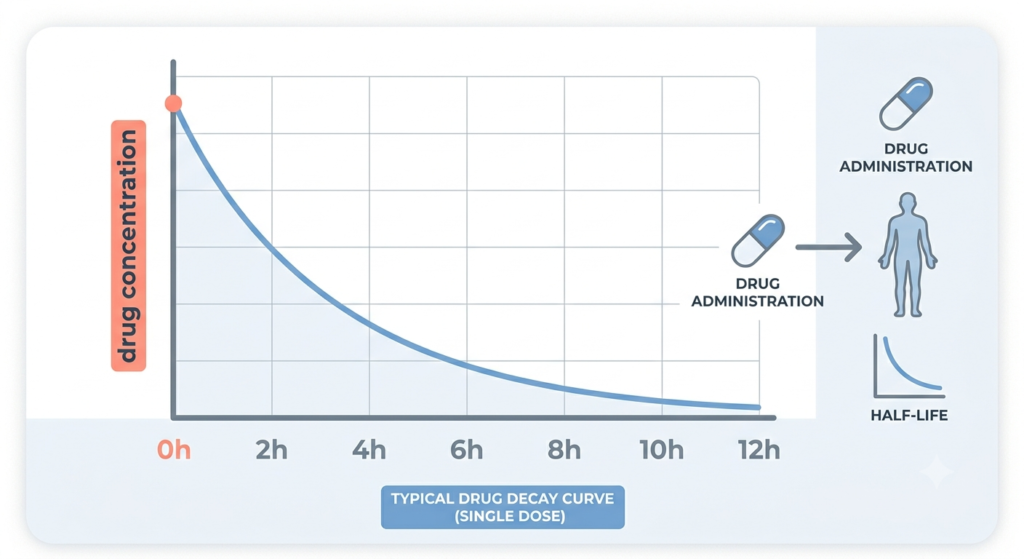
Every drug has a half-life: the time it takes for your body to eliminate half of the amount currently in your bloodstream. It is not a countdown to zero, it is a rate. Understanding this number is really the whole key to understanding detection windows.
Oxycodone’s Half-Life
Oxycodone’s half-life is typically around 3 to 5 hours in someone with normal liver and kidney function. Doctors and pharmacologists generally estimate that it takes about four to five half-lives for a drug to be considered fully cleared from the blood. Do that math with a 4-hour half-life, and you land at roughly 16 to 20 hours, which lines up with the “about a day” figure most sources land on.
Acetaminophen’s Half-Life
Acetaminophen clears faster on its own, with a half-life of around 2 to 3 hours in a healthy adult. That puts its full clearance somewhere in the 10 to 15 hour range, meaning the acetaminophen in a dose of Percocet is usually gone from your blood before the oxycodone is.
Why Half-Life Isn’t the Same as “Completely Gone”
Here is the part that trips people up: half-life describes blood concentration, not detectability. Your liver breaks oxycodone down into metabolites, smaller leftover compounds, which get filtered by your kidneys and pushed out through urine over a longer stretch of time. Standard drug tests are often built to catch these metabolites, not just the original drug, which is exactly why urine can test positive for days after your blood is technically clear.
How Long Percocet Shows Up on a Drug Test
This is usually the part people actually came for, so here it is directly. These are general ranges, your actual result can land outside them, which is why the next section on personal factors matters just as much.

Urine Tests
Urine is the most common method used for employment and legal drug screening, and it is also the one with the widest normal range: oxycodone is typically detectable for 1 to 4 days after the last dose. Someone taking higher doses regularly over time can push toward the longer end, sometimes a bit past four days.
Blood Tests
Blood tests have the shortest window because they are measuring what is actively circulating, not stored metabolites. Oxycodone is generally detectable in blood for about 24 hours, occasionally up to 36 in slower metabolizers.
Saliva Tests
Oral fluid testing sits in between, with oxycodone typically detectable for 1 to 2 days, sometimes reported up to 4. Saliva testing is used less often than urine because it is more sensitive to timing and collection technique.
Hair Tests
Hair testing works completely differently, it is not measuring what is currently in your system, it is measuring what got deposited into hair follicles as they grew. Drugs typically show up in hair testing for around 90 days, since a standard 1.5-inch hair sample roughly represents the past three months of growth. This is the test least likely to be used for routine screening but the one with by far the longest reach.
What Actually Changes Your Personal Timeline
Every number above is a population average, not a guarantee. Several real, physical factors shift where you fall on that range:
Your metabolic rate matters a lot, younger people and those with faster metabolisms generally clear oxycodone quicker than older adults.
Liver function is arguably the single biggest factor, since the liver does almost all of the actual breakdown work; anyone with liver impairment, including from heavy alcohol use, will process both the oxycodone and the acetaminophen more slowly.
Kidney function affects the final step, since the metabolites exit through urine, reduced kidney function means they linger longer.
Dose and how long someone has been taking it also matter. A single 5mg tablet clears differently than repeated daily dosing, because with regular use, the drug can build up in fat and tissue and get released back into the blood gradually, extending the tail end of the detection window.
Body composition plays a role here too, since oxycodone is somewhat fat-soluble.
There’s also a genetic piece: a liver enzyme called CYP2D6 partly governs how oxycodone gets processed, and people’s CYP2D6 activity varies significantly due to genetics. Some people are “fast metabolizers” and clear it noticeably quicker; others are “poor metabolizers” and hold onto it longer, at the same dose, with the same body weight.
This is a real, documented source of the person-to-person variation you’ll see in these timelines, not just noise.
The Part Mostly Skipped: Acetaminophen and Your Liver
Because oxycodone is the flashy, tested-for half of Percocet, mostly “how long Percocet stays in your system” ignores the acetaminophen. That is a real gap, because acetaminophen carries its own serious risk that has nothing to do with drug testing
liver damage from taking too much, too often, or combining it with other acetaminophen-containing products (cold medicine, other pain relievers) without realizing it.
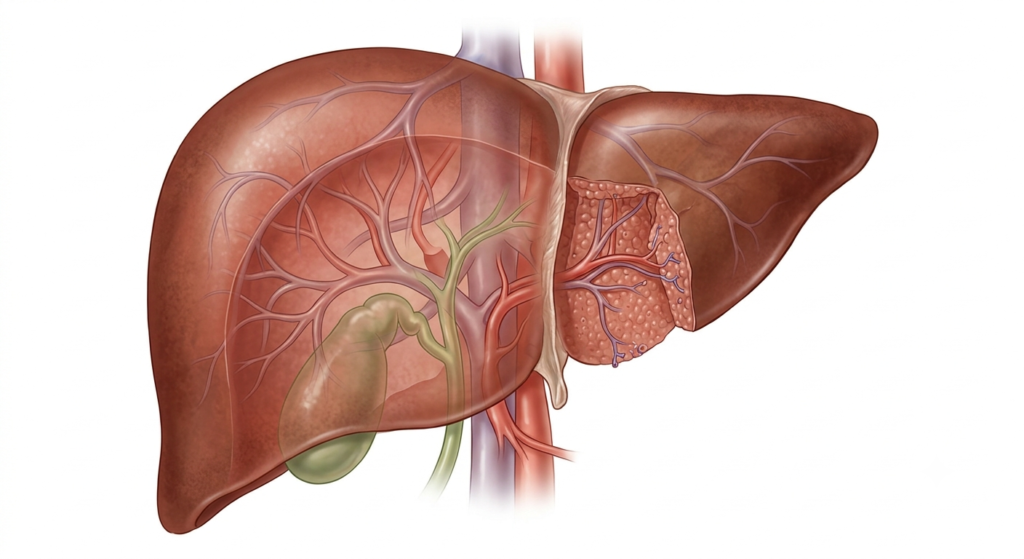
This is not a detection-window issue, acetaminophen clears fast and isn’t part of standard drug panels. It is a safety issue. If you are taking Percocet regularly, it is worth knowing your total daily acetaminophen intake, since the maximum safe daily amount is a real ceiling, not a suggestion, and exceeding it, especially alongside alcohol, is one of the more common preventable causes of acute liver injury in the U.S.
How Percocet Compares to Other Opioids
Oxycodone sits roughly in the middle of the pack for detection length. It clears somewhat faster from blood than longer-acting opioids like extended-release morphine, but it is broadly similar in urine detection windows to hydrocodone (found in Vicodin/Norco), which also typically shows up for a few days.
Fentanyl, by contrast, has a much shorter half-life but is often used in ways that lead to unpredictable accumulation, so its detection windows behave differently and are not directly comparable.
If you are being tested and prescribed Percocet legitimately, the practical difference between these drugs matters less than simply disclosing your prescription to whoever is administering the test.
What to Do If You Are Worried About an Upcoming Test
If you have a legitimate prescription, the simplest and most reliable step is disclosure, tell the testing administrator or your employer’s medical review officer that you are taking prescribed Percocet, ideally with documentation. Medical review officers are specifically trained to distinguish prescribed use from misuse, and a documented prescription generally resolves a positive result without issue.
Beyond that, there is no shortcut that reliably speeds up elimination. Detox drinks, excessive water intake, or “cleanses” don’t meaningfully change how fast your liver and kidneys do their job, and some can backfire by diluting a sample enough to flag it as tampered. Time, hydration at a normal level, and your body’s own processing are what actually clear the drug, there is nothing to substitute for that.
Conclusion
Percocet’s oxycodone typically clears your bloodstream within about a day, but drug tests can still catch it, anywhere from 24 hours in blood to 90 days in hair, depending on the test and your own body chemistry. What mostly is not discussed is that Percocet is really two drugs, and the acetaminophen half carries its own liver risk that has nothing to do with testing. If your situation does not match these general estimates, or you are worried about your own use, talk to a doctor or pharmacist rather than guessing.
FAQ’S
How long does Percocet stay in your urine?
Oxycodone is generally detectable in urine for 1 to 4 days after the last dose, with regular or higher-dose use trending toward the longer end.
How long does Percocet stay in your blood?
Typically around 24 hours, since blood tests measure active drug concentration rather than stored metabolites.
Does Percocet show up the same as oxycodone on a drug test?
Yes — standard opioid panels test for oxycodone and its metabolites, and Percocet’s opioid component is oxycodone, so it shows up as oxycodone (not as “Percocet” specifically).
Can you fail a drug test a week after taking Percocet?
For most people on a standard urine test, no — the typical window closes by day 3 or 4. It’s possible with heavy, prolonged use or slower metabolism, but a week out is uncommon for a single or short-term dose.
Why do I still feel the effects fade before the drug is fully out of my system?
Pain relief depends on the drug reaching a certain concentration at opioid receptors, which drops off faster than the drug fully clears your blood — so you can feel “back to normal” hours before oxycodone is completely gone.
Is it dangerous to take another dose before the last one has cleared?
Taking doses too close together, especially outside your prescribed schedule, raises the risk of both opioid side effects and acetaminophen buildup — always follow your prescribed timing and check with your doctor or pharmacist if you’re unsure.
Does drinking water flush Percocet out faster?
Normal hydration supports normal kidney function, but drinking excess water doesn’t meaningfully speed up how fast oxycodone clears — and can dilute a urine sample enough to be flagged separately.
Can Percocet affect a breastfeeding or pregnancy-related drug test differently?
Pregnancy and breastfeeding can alter drug metabolism, and opioid use in either context carries specific medical considerations beyond detection timing — this is a conversation to have directly with an OB or physician rather than estimating from general detection windows