
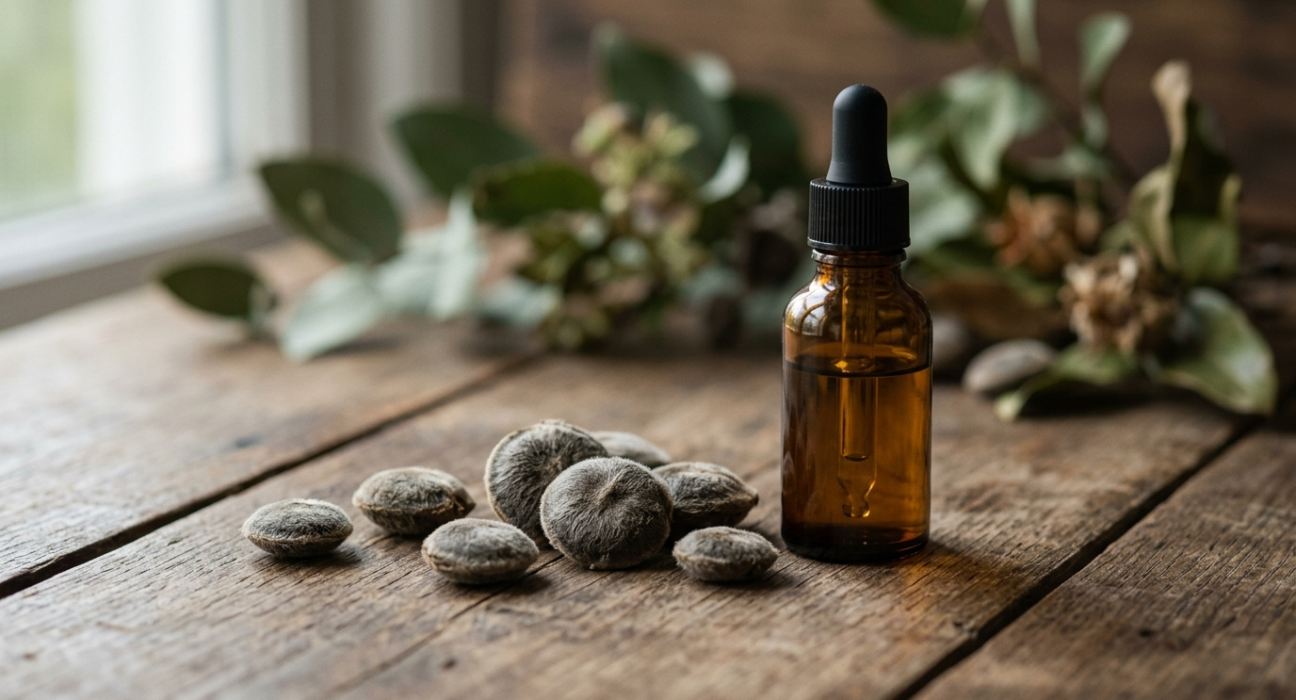
Nux vomica often appears on labels for homeopathic remedies aimed at digestion, hangovers, or stress. At first glance, it may seem like another herbal product. In reality, nux vomica comes from a tree whose seeds contain strychnine and brucine. Both compounds are highly toxic and affect the central nervous system.
It is important to know the difference between raw seeds, processed traditional preparations, and highly diluted homeopathic products. This guide explains what nux vomica is, how it is used, the risks of raw seeds and what a cautious approach looks like.
What Is Nux Vomica?
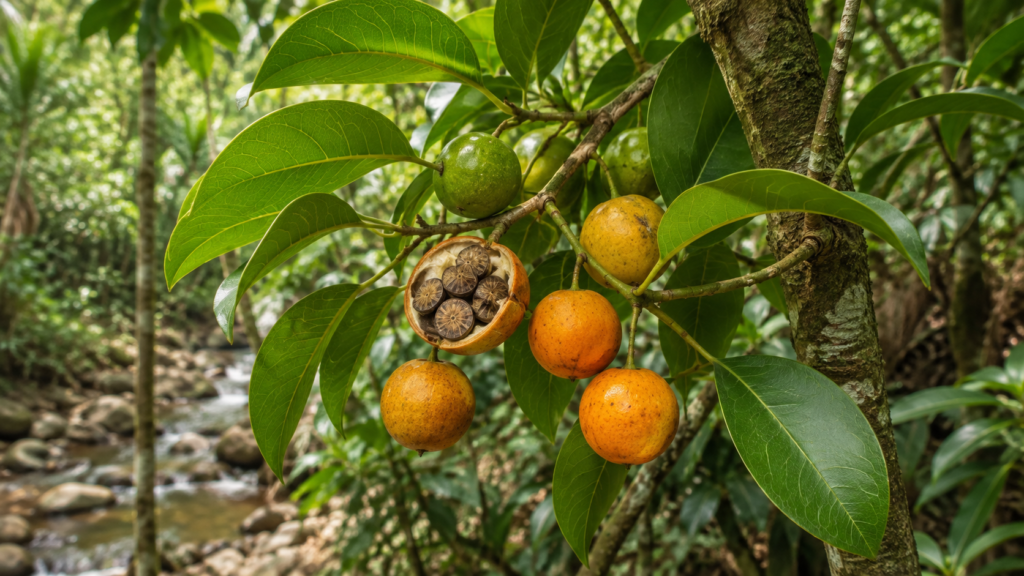
Nux vomica refers to the dried, ripe seeds of the Strychnos nux-vomica tree. The tree is also known as the strychnine tree. It grows in parts of South and Southeast Asia, including India and nearby regions.
The seeds contain two main bitter alkaloids: strychnine and brucine. These compounds affect the central nervous system. In toxic amounts, they can cause severe muscle spasms and convulsions. Because of this risk, raw seeds and concentrated extracts are unsafe. Many countries ban or tightly control these forms.
Nux vomica is still used in homeopathy and some traditional medical systems, including Ayurveda. However, traditional use involves specific preparation methods.
Nux Vomica in Homeopathy and Traditional Medicine
Homeopathic Use
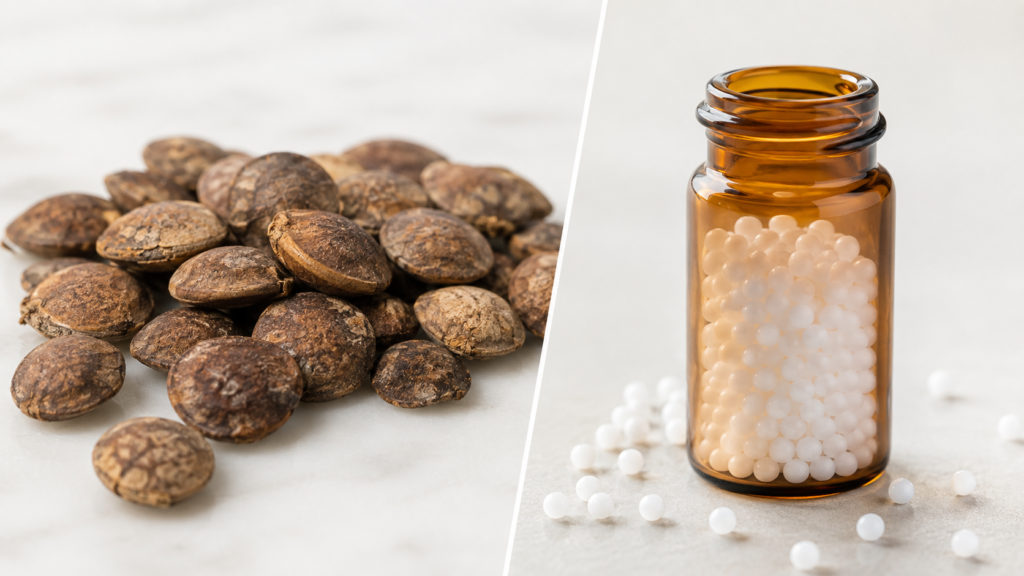
In homeopathy, nux vomica is prepared through repeated dilution and shaking. This process is called potentization. Homeopathic products may have potencies such as 6C, 30C, or 200C.
At high dilutions, especially 30C and above, the amount of the original plant material is ‘extremely small. These products are commonly marketed for indigestion, hangovers and stress related complaints.
Homeopathic practitioners also use nux vomica based on a specific “remedy picture.” This picture often includes people who are driven, overworked or dependent on stimulants such as coffee, nicotine or alcohol.
Common complaints linked with this pattern include indigestion after heavy meals, constipation, headaches, irritability and insomnia.
Ayurveda Use
In Ayurveda, nux vomica seeds are known as Kupeelu. Raw seeds are not used directly. Instead, they undergo a traditional detoxification process called shodhana.
Traditional methods may include soaking the seeds in cow’s urine, boiling them in milk or herbal preparations and roasting them in ghee. These steps are intended to reduce the amount of strychnine and brucine. After processing, very small amounts may be used in certain traditional formulations.
These methods are complex. They should never be attempted at home. The key point is that homeopathic pellets, processed Ayurvedic preparations, raw seeds and crude powders are very different. Treating them as the same thing can be dangerous.
Common Uses of Nux Vomica

In homeopathic practice, nux vomica is mainly linked with digestive and lifestyle-related complaints.
Digestive Problems
One common use is digestive discomfort after overeating or drinking alcohol.
People may use it for:
- Indigestion
- Bloating
- Acid reflux
- Nausea
- Sour taste in the mouth
- Constipation
Nux vomica is often associated with constipation that causes a strong urge to pass stool. However, only a small amount may pass. The person may still feel that the bowel has not emptied fully.
Stress and Sleep Problems
Nux vomica is also linked with a “wired but tired” state. This pattern may include stress, headaches, irritability and trouble sleeping despite feeling exhausted.
It often involves long work hours, frequent coffee or energy drinks, late-night work and waking with a busy mind.
Other Traditional Uses
Historically, nux vomica has been used for many other complaints. These include menstrual pain, chills, body aches, fatigue and some urinary or rectal problems. Most of these uses come from traditional practice and homeopathic experience. They are not supported by large modern clinical trials.
How to Use Nux Vomica Safely
The most important safety rule is simple: do not use raw seeds or concentrated extracts as a home remedy.
Avoid Raw Seeds and Crude Products
Raw seeds, powders and tinctures marketed as “natural” can contain high levels of strychnine and brucine. There is no proven safe dose for using raw seeds as a self-treatment.
The seeds may contain about 1.25% to 1.5% strychnine by weight. This makes unprocessed nux vomica a serious poisoning risk.
What About Homeopathic Nux Vomica?
Homeopathic nux vomica is highly diluted. It is therefore very different from raw seeds or concentrated extracts. Products may list potencies such as 6C or 30C. At these dilutions, the amount of the original active ingredient is extremely low.
If you use a homeopathic product, choose one that is clearly labeled and comes from a reputable manufacturer. For short-term complaints, homeopathic practitioners may recommend lower potencies such as 6C or 30C. However, it cannot be used as a sole treatment for persistent symptoms.
If symptoms continue, speak with a healthcare professional. This is especially important if you have chronic digestive problems or other ongoing symptoms.
Risks of Unprocessed Nux Vomica Seeds
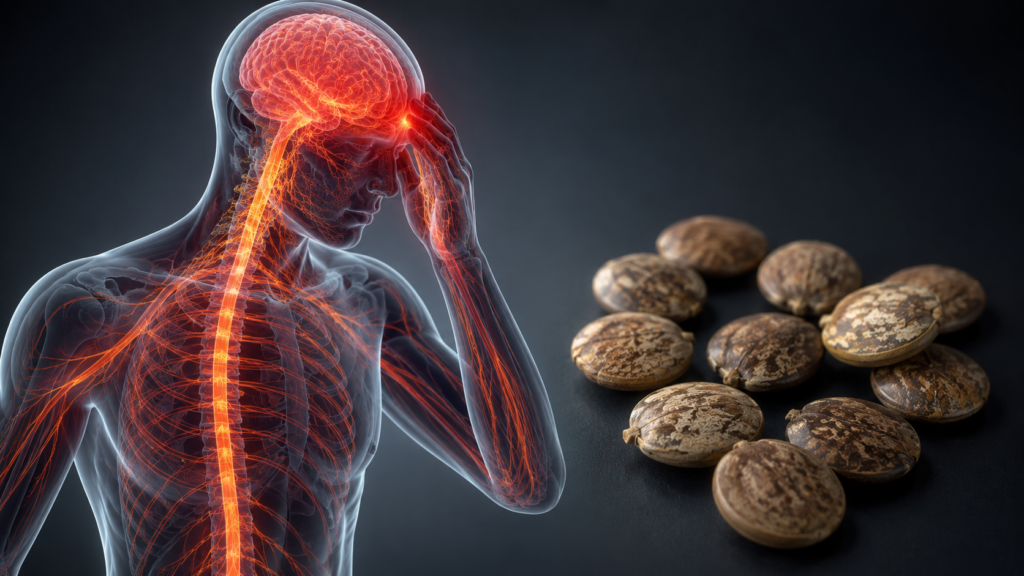
The greatest danger comes from raw seeds. The seeds contain strychnine and brucine, both of which are toxic. Strychnine can strongly stimulate the central nervous system.
Symptoms of Strychnine Poisoning
Early symptoms may include:
- Agitation
- Anxiety
- Restlessness
- Dizziness
- Increased sensitivity to sound or light
- Neck and back stiffness
As poisoning becomes worse, muscle spasms can become severe and painful. A person may develop seizures and trouble breathing. Severe poisoning can lead to respiratory or cardiac arrest.
The toxic dose of strychnine is low. This makes self-treatment with raw seeds especially dangerous. A person cannot safely judge the amount of strychnine in a seed or spoonful of powder. There is also no reliable way to calculate a safe dose at home.
Other Possible Complications
Severe nux vomica poisoning can cause several serious complications.
These may include:
- Rhabdomyolysis, or muscle breakdown
- Metabolic acidosis
- Kidney injury
- Liver stress
People with existing liver or kidney disease may face an even greater risk. If someone has taken raw nux vomica or a strong extract and develops muscle stiffness, spasms, tremors, or breathing problems, they need urgent medical care.
Who Should Avoid Nux Vomica?

Some people should avoid nux vomica unless a qualified healthcare professional recommends it.
This includes:
- Pregnant or breastfeeding individuals
- Young children
- People with liver disease
- People with kidney disease
There is limited safety information for these groups. The potential toxicity also makes extra caution important. People who take medicines that affect the nervous system should speak with their doctor or pharmacist before using it.
This includes some medicines used for seizures, muscle disorders, and psychiatric conditions. Information about specific drug interactions is limited, but the effects of strychnine on the nervous system make caution important.
Seek medical care for symptoms such as persistent vomiting, unexplained weight loss, rectal bleeding, or severe insomnia. Alternative medicines should not delay proper diagnosis or treatment.
Conclusion
Nux vomica is not a simple herbal remedy. Its seeds contain strychnine and brucine, which can cause severe and life-threatening poisoning. The plant has a history of use in homeopathy and traditional medicine. However, the form and preparation matter greatly.
Raw seeds, powders, and strong extracts are dangerous. They should never be used as home treatments. If you are considering to use it for digestive problems, hangovers, stress, or sleep issues, use caution. Choose clearly labeled products and tell your healthcare provider what you are taking.
Most importantly, never experiment with unprocessed nux vomica seeds. The potential harm can far outweigh any possible benefit.
FAQ’s
Is homeopathic nux vomica safe?
Highly diluted homeopathic nux vomica, such as 30C, contains very little of the original plant material. It therefore has a very different risk profile from raw one. However, it should still be used as directed. If you have ongoing symptoms, discuss them with a healthcare professional.
Are raw nux vomica seeds safe to use at home?
No. Raw or minimally processed seeds can contain dangerous amounts of strychnine. They should never be used as a home remedy.
What symptoms suggest strychnine poisoning?
Common symptoms include anxiety, restlessness, and extreme sensitivity to noise or touch.
Can nux vomica damage the liver or kidneys?
Severe nux vomica poisoning can cause muscle breakdown and metabolic problems. It may also lead to kidney injury and liver stress. Highly diluted homeopathic products do not contain the same toxic load as raw seeds. However, people with existing liver or kidney disease should still use caution.
Is nux vomica an herbal supplement or a drug?
Nux vomica comes from a poisonous plant. Its seeds have been used to make certain traditional and homeopathic preparations. In its crude form, it should not be treated like a harmless herbal supplement. The seeds contain toxic compounds. Highly diluted homeopathic products are different from raw plant material and have a different risk profile.