
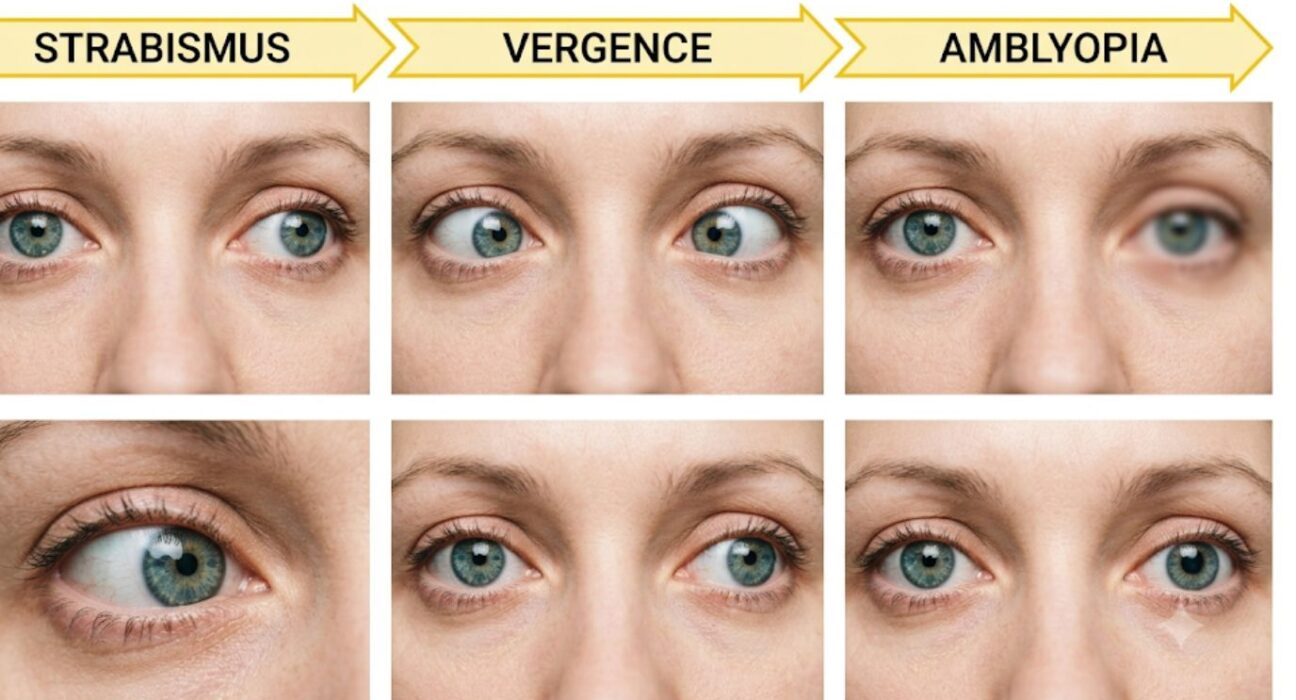
If you have ever felt dizzy in a grocery store, gotten a headache from reading or noticed you are always the one bumping into doorframes, the cause might not be your inner ear or your posture. It could be binocular vision dysfunction (BVD) , a condition more common than most people realize and one that is frequently missed by doctors altogether. The symptoms can show up in strange, seemingly unrelated ways.
Keep reading because chances are you have experienced at least one of these signs without ever connecting the dots.
What Is Binocular Vision Dysfunction?

Binocular vision dysfunction is not one single diagnosis , it is an umbrella term for any condition where your eyes struggle to team up and deliver a single, seamless image to your brain. Instead of one clear picture your brain receives two competing images that overlap incorrectly, forcing constant micro adjustments that can wear you down physically and mentally.
Common conditions that fall under the BVD umbrella include crossed eyes ,known as strabismus, and lazy eye known as amblyopia, but dozens of other misalignment and processing issues can produce the same effect.
The 3 Grades of Binocular Vision
To understand why BVD causes so many different symptoms, it helps to know how normal binocular vision actually works. Eye specialists break it into three levels:
Macular perception : both eyes clearly see the same object at the same time
Fusion:;your brain blends the two separate images into one combined picture
Stereopsis :your brain uses the slight differences between each eye’s view to build depth perception and 3D vision
BVD can interrupt any one of these three stages, which is why symptoms range from mild eye strain to serious balance and coordination problems.
How Common Is BVD?
Most individual conditions under the BVD umbrella are uncommon but a few are surprisingly widespread. Lazy eye (amblyopia) alone affects between 6 and 13 million people in the United States, making it one of the most frequently diagnosed vision conditions tied to binocular vision dysfunction.
Symptoms of Binocular Vision Dysfunction
Because BVD affects how your eyes, brain and inner ear communicate, symptoms show up in places you might not expect.
Visual Symptoms
Since BVD starts with a mismatch between what each eye sees, the first symptoms often show up directly in your vision. Many people notice blurred or shadowed vision or even double vision (diplopia), where objects appear duplicated or overlapping. Light sensitivity is also common especially glare or halos around lights at night.
Physical and Balance Symptoms
When your eyes can not agree on one clear image, your brain and body pay the price,often in ways that feel more physical than visual. Frequent headaches and eye strain are among the most reported symptoms, along with dizziness, motion sickness or a spinning sensation known as vertigo. Poor coordination is another classic sign, whether that means bumping into doorframes, tilting your head to compensate or generally feeling unsteady on your feet.
Reading and Focus Symptoms
Tasks that demand sustained eye teamwork, like reading, tend to expose BVD the fastest. You might find yourself losing your place while reading, skipping lines or relying on a finger to track text across the page. Words may also seem to float, merge or blur together, making it hard to stay focused for long.
Emotional and Situational Symptoms
BVD doesn’t just affect your eyes ,the constant strain of compensating can spill over into how you feel in certain environments. Many people with BVD report anxiety or discomfort in crowded, brightly lit or open spaces, even without a clear reason why.
Not everyone with BVD experiences all nine symptoms ,but if several of these sound familiar, it is worth mentioning to an eye care provider.
What Causes Binocular Vision Dysfunction?
BVD can be caused by a few different things and sometimes more than one at the same time. Often, it is linked to basic vision problems like astigmatism, nearsightedness, farsightedness or the kind of blurry near vision that comes with age.
Other times, it is caused by an actual eye problem, like eyes that do not line up right (strabismus) or a lazy eye (amblyopia). It can also come from something going on in the brain or nervous system, things like migraines, a stroke, nerve damage or the way some people with ADHD process visual information differently.
And sometimes, it is a mix of everything at once. Something like a concussion or a certain kind of migraine can throw off your eye alignment, brain processing and balance all together, which makes it extra tricky for doctors to figure out exactly what’s going on.
Conditions BVD Is Often Mistaken For

Because BVD symptoms overlap so heavily with other disorders, it is one of the more frequently misdiagnosed conditions in both children and adults. Patients are commonly told they have:
- Migraines
- Dyslexia or a reading/learning disability
- ADD/ADHD
- Chronic fatigue syndrome
- Agoraphobia or another anxiety disorder
- Meniere’s disease
- BPPV (benign paroxysmal positional vertigo)
- PPPD (persistent postural-perceptual dizziness)
- TMJ disorder
If treatment for one of these conditions has not helped, BVD is worth ruling out.
How Is BVD Diagnosed?
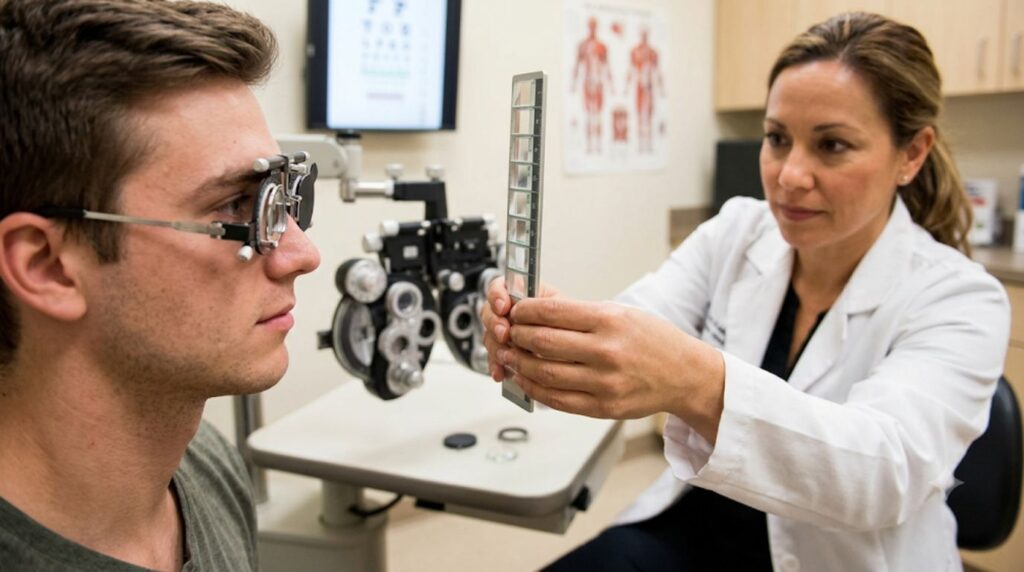
A routine eye exam is usually the first step, since it checks eye alignment and overall field of vision. From there, an optometrist trained in binocular vision or a pediatrician, for children’s cases it can run towards more targeted tests to pinpoint exactly which part of the visual system is struggling.
Treatment Options
The right treatment depends entirely on the underlying cause but three approaches are the most common:
- Prism lenses :specialized glasses that bend incoming light before it reaches your eyes, effectively tricking your brain into perceiving proper alignment and reducing strain
- Vision therapy :a structured program of eye exercises that strengthens the communication between your eyes and brain over time
- Corrective lenses or Botox :used to address refractive errors or overactive eye muscles that pull in one direction
Many patients see the best results when prism lenses and vision therapy are combined, especially when dizziness or balance issues are involved.
Complications If Left Untreated
In children, untreated BVD ,particularly amblyopia ,can cause permanent vision loss. When a child’s brain stops relying on one eye, the neural connections tied to that eye’s vision can weaken permanently if not corrected early. This is why pediatric eye exams matter even when a child has not complained about their vision.
When to Seek Emergency Care
Most causes of BVD are uncomfortable but not dangerous with one major exception. Sudden double vision or eye misalignment can sometimes signal a stroke or transient ischemic attack (TIA). If these symptoms appear suddenly, especially alongside slurred speech, numbness or confusion, seek emergency care immediately.
Looking for more engaging guides and helpful insights? Explore more expert guides on Invisigals for detailed articles, practical tips, and the latest updates across gaming, technology, health, sports and trending topics.
Conclusion
Vision problems do not always look like blurry eyesight ,sometimes they show up as a headache, a stumble or a moment of unease in a busy room. Binocular vision dysfunction is easy to overlook precisely because it hides behind symptoms that seem unrelated to your eyes at all. The good news is that once identified, it is also highly treatable. If any of this struck a chord, the next step is not guesswork ,it is a conversation with a specialist who knows exactly what to look for.
FAQs
Can binocular vision dysfunction go away on its own?
It is uncommon for BVD to resolve without intervention, especially in adults. However, mild cases in children sometimes improve as the visual system continues developing, particularly with early treatment.
Is binocular vision dysfunction the same as lazy eye?
No. Lazy eye (amblyopia) is one specific condition that falls under the BVD umbrella but BVD is a broader term covering many different eye teaming problems, not just amblyopia.
What kind of doctor diagnoses binocular vision dysfunction?
A neuro optometrist or a behavioral optometrist typically diagnoses BVD, since standard eye exams often do not test for how well the two eyes work together.
Can binocular vision dysfunction affect only one eye?
BVD is inherently a two eye (binocular) issue, since it involves how both eyes coordinate together. However, an underlying condition affecting one eye’s strength or alignment can still trigger BVD symptoms.
Does binocular vision dysfunction get worse with age?
It can, especially if left untreated, since the eyes’ ability to compensate for misalignment often declines with age related changes in focusing ability.
Can binocular vision dysfunction be caused by screen time?
Excessive screen use does not directly cause BVD but it can worsen symptoms in people who already have an underlying eye teaming issue, due to increased visual strain.
Is binocular vision dysfunction hereditary?
Some underlying causes of BVD, like strabismus can run in families but BVD itself is not considered a directly inherited condition.