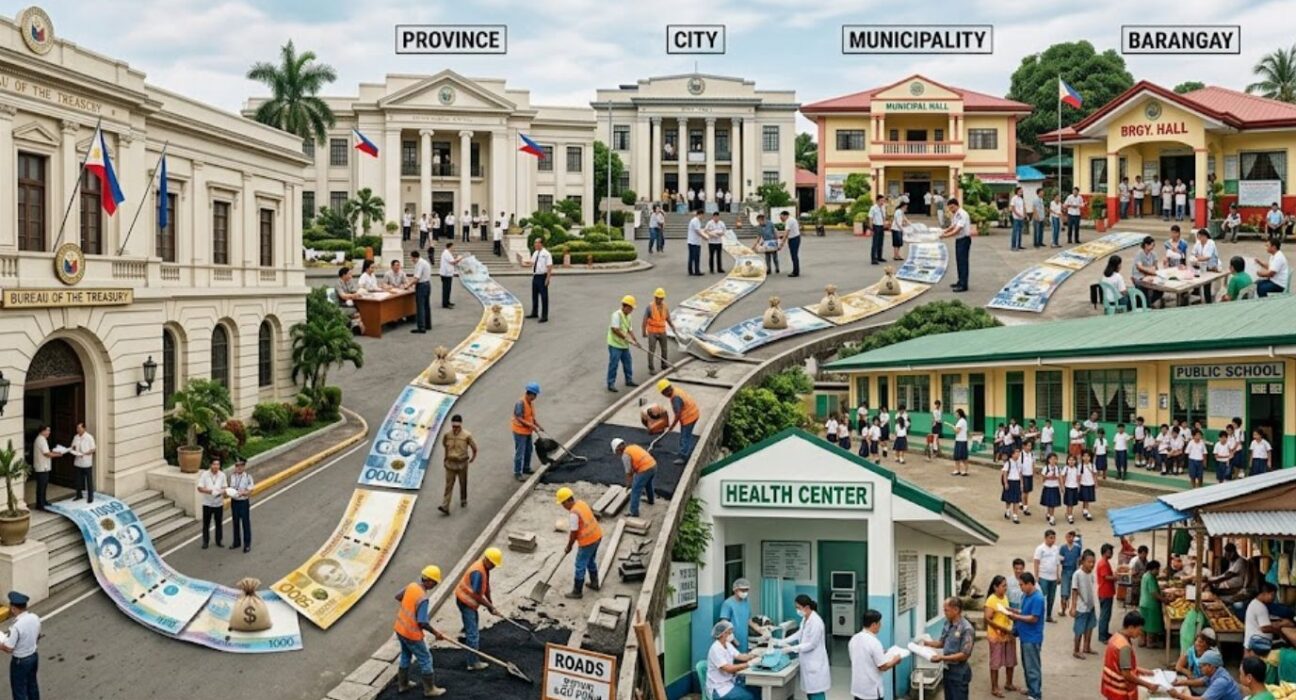
There is a part of every city and town budget that many people do not think about. Yet, it can decide whether a local road gets repaired or a health center has enough staff. Local officials care about this money and experts often discuss how it should be shared. A Supreme Court ruling also changed the rules a few years ago.
So, if you have ever wondered where your local government gets the money it uses, the answer starts with the Internal Revenue Allotment. Understanding the it also makes it easier to see how national tax collections support services in cities, municipalities, provinces and barangays.
A Constitutional Promise, Not Just a Budget Line
The money given to LGUs through the Internal Revenue Allotment is more than just a number in a budget.
The 1987 Philippine Constitution says local government units must receive a fair share of national taxes. This money must be given automatically. This means the national government cannot simply keep the money from an LGU as a political favor or punishment.
The Local Government Code of 1991, or Republic Act No. 7160, turned this constitutional promise into actual rules for sharing the money. For almost 30 years, however, the government used a narrower way to calculate the LGUs’ share.
The Internal Revenue Allotment therefore became an important source of local government funding under the rules established by the Local Government Code.
From Internal Revenue Allotment to National Tax Allotment: What Changed?
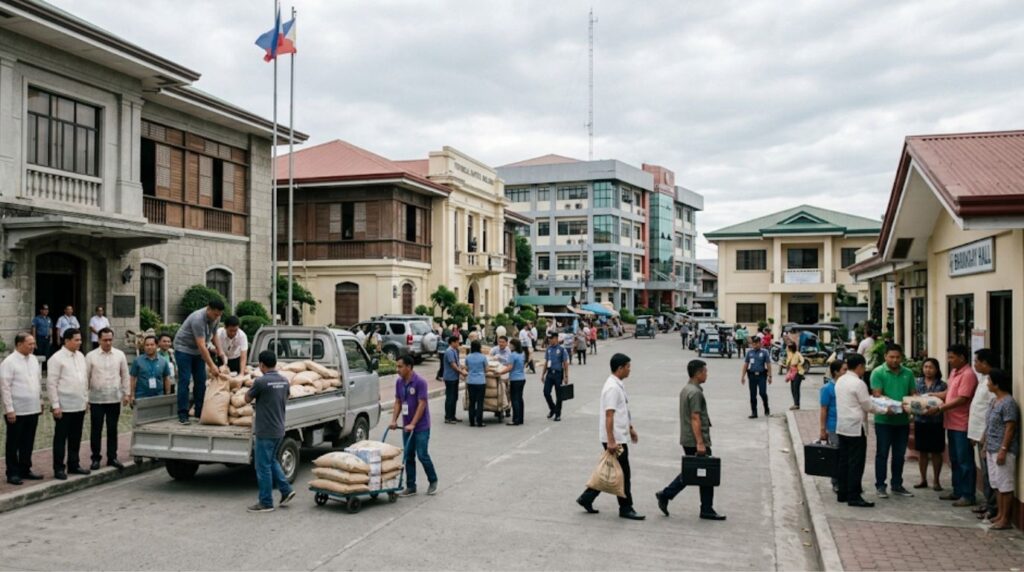
For many years, the Internal Revenue Allotment was mainly calculated using taxes collected by the Bureau of Internal Revenue (BIR). Taxes collected by the Bureau of Customs (BOC) and some other national agencies were not included.
In 2018, the Supreme Court looked at the Mandanas and Garcia cases. The Court found that this method was too narrow. The Court said the calculation should include national internal revenue taxes collected by all government agencies, not only the BIR.
This decision significantly changed how the Internal Revenue Allotment was calculated and eventually led to the system being renamed the National Tax Allotment.
What Happened Starting in 2022?
The ruling fully took effect in Fiscal Year 2022 through Executive Order No. 138, issued in 2021. The name also officially changed from Internal Revenue Allotment (IRA) to National Tax Allotment (NTA).
The share stayed at 40% but the amount used to calculate that 40% became much larger. It now includes more national tax sources, including customs duties, tariffs and other national tax collections.
In simple terms, LGUs gained access to a much bigger pool of money than under the previous Internal Revenue Allotment calculation.
The change did not simply increase the amount available to local governments. It also changed the financial relationship between the national government and LGUs.
How Does the Money Reach Your City or Town?
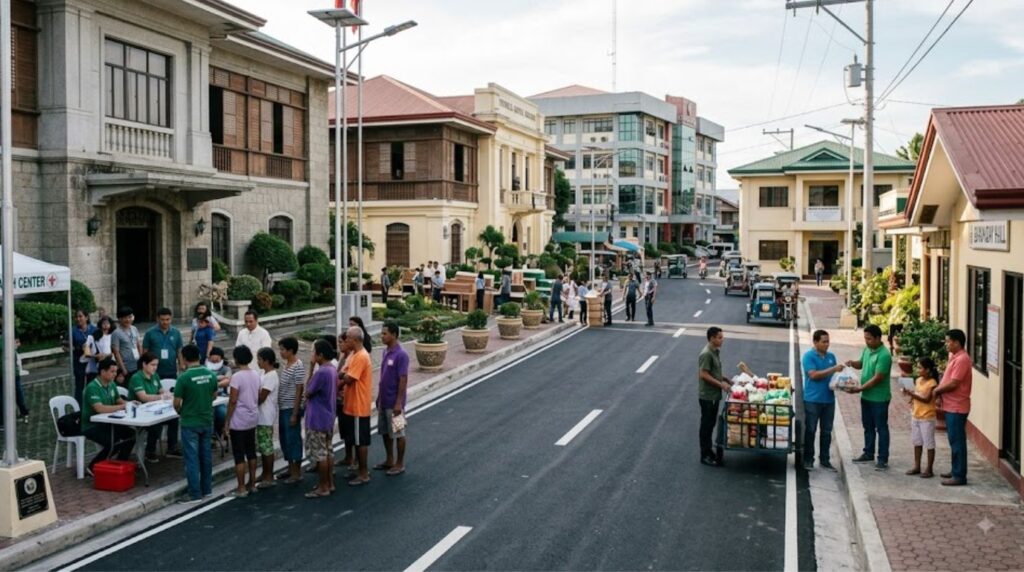
The formula is important but how the money reaches an LGU is also important.
Every year, the Department of Budget and Management (DBM) tells each province, city, municipality and barangay how much money it will receive. The money is then released through the government’s official payment system.
The Local Government Code says the money should be released automatically and directly to each LGU treasurer. The national government cannot normally place a hold on it.
Under the old Internal Revenue Allotment system the money was released in quarterly payments. More recently, DBM has moved toward releasing the full year amount at once.
For example, the FY 2026 National Tax Allotment was released in full in late January. This gives local governments a clearer idea of how much money they can use for projects and services.
For LGUs, predictable releases are important because the Internal Revenue Allotment and its successor system can influence annual budgeting, planning, and service delivery.
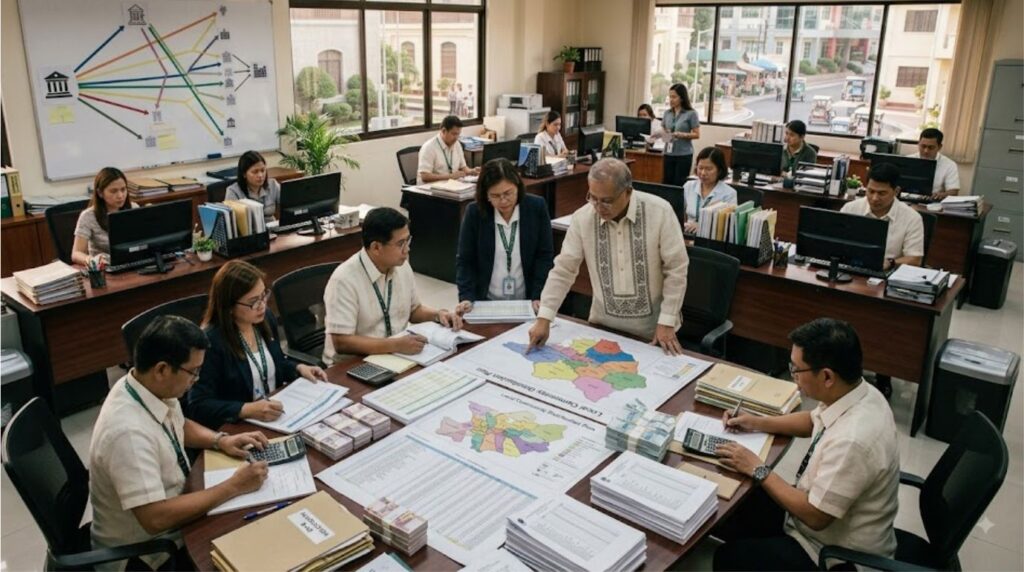
The basic formula associated with the Internal Revenue Allotment has been used since 1991.
The money is divided into three main parts:
- 50% is based on population.
- 25% is based on land area.
- 25% is shared equally among LGUs of the same level.
A Simple Example of the Formula
For example, imagine two municipalities in the same province.
Municipality A has 80,000 people and covers 120 square kilometers. Municipality B has only 30,000 people but covers 300 square kilometers.
Municipality B has fewer people, so it may receive less from the population part. However, its larger land area helps it receive more from the land area part.
The equal sharing part also gives every LGU of the same level a basic share. This system tries to make the money fairer for both large and small areas.The same basic approach was closely associated with the Internal Revenue Allotment before the broader National Tax Allotment framework took effect.
Are There Other Sources of Money for LGUs?

Yes. The regular allotment is not the only money an LGU can receive. Some LGUs receive extra money from natural resources found in their areas. This can include money from mining, quarrying, forestry and energy projects. Tobacco producing provinces can also receive a special share from certain tobacco excise taxes.
There is also a general LGU share from Value Added Tax collections. These types of money have their own rules. They are not all divided using the same 50-25-25 formula.This is one reason two provinces with similar populations can still have very different total revenues.
Therefore, looking only at an LGU’s Internal Revenue Allotment or National Tax Allotment does not always provide a complete picture of its financial resources.
Why Doesn’t More Money Always Mean Better Services?
Getting more money does not automatically mean an LGU will provide better services. Some local governments depend heavily on money from the national government. Because of this, they may collect less money from local taxes and fees.
For example, provinces have historically depended on national transfers for a large part of their operating income. Municipalities have also depended heavily on these transfers, while cities often have larger local tax bases.
This can create a problem. If an LGU does not improve its property tax or business tax collection, it may continue depending on national money.
The additional funding resulting from the Mandanas ruling was also meant to help LGUs pay for services that were being transferred to them. In that sense, the expanded Internal Revenue Allotment framework was connected not only to funding but also to greater local responsibility.
What Is the Devolution Transition Plan?
The Supreme Court ruling did not only change the amount of money LGUs receive. It also came with a change in responsibilities.
LGUs had to take over some services that were previously handled by national government agencies. These included certain health, agriculture and social welfare services.
Executive Order No. 138 created the Devolution Transition Plan (DTP).
Each LGU needed a plan showing how it would take on these new responsibilities using its larger allotment. So, the extra money was not simply free money. LGUs also had more work and more services to manage.
The shift from the traditional Internal Revenue Allotment approach to the broader National Tax Allotment was therefore connected to the wider decentralization and devolution process.
Can You See Where the Money Goes?

Yes. The money received by LGUs is public money. Because of this, LGUs must tell the public how they use it.
The Full Disclosure Policy (FDP) requires LGUs to publish information about their budgets, spending and bidding documents. This information can be posted on official websites, LGU bulletin boards and the DILG’s Full Disclosure Policy Portal.
Citizens can also ask their local government offices for specific budget information. This gives ordinary people a way to check how public money is being spent.
Understanding the Internal Revenue Allotment system can help citizens follow the money from national tax collections to local budgets and public services.
What Changes Could Come Next?
The National Tax Allotment system may continue to change. Some policymakers are discussing whether the current formula should consider more than population and land area.
Although the Internal Revenue Allotment is now officially called the National Tax Allotment, people may continue using the older term when discussing the system, its history or previous budget allocations.
Could Poverty and Development Be Considered?
Proposals could consider poverty levels and differences in development between areas. Several bills have suggested adding socio economic factors to the formula, although none had become law at the time of the source’s writing.
If such changes are adopted, they could affect how the national tax share is distributed among LGUs.
So, while the term Internal Revenue Allotment remains widely recognized, the rules governing local government funding can continue to develop.
Conclusion
The Internal Revenue Allotment was much more than a simple yearly payment to local governments. It was based on a constitutional promise and is distributed using a formula based on population, land area and equal sharing.
The 2018 Mandanas Garcia ruling changed how the money was calculated. Starting in 2022, the calculation used a wider group of national tax collections and the system became known as the National Tax Allotment.
The change also gave LGUs more responsibilities through the devolution process. Knowing how the Internal Revenue Allotment worked and how the National Tax Allotment works today can help people understand where local government money comes from, how it is distributed and how it should be used.
FAQs
When Are National Tax Allotment Funds Released?
National Tax Allotment funds are released automatically to LGUs. The sources explain that releases are made on a regular basis helping local treasurers plan their budgets and projects.
Under the former Internal Revenue Allotment system, releases were generally made in scheduled installments. Current practices may provide LGUs with their annual allotment earlier, helping them plan spending more effectively.
Can the National Government Withhold an LGU’s Share?
Normally, the national government cannot simply hold back an LGU’s share as punishment. The law provides a limited exception if the country faces an unmanageable public-sector deficit.
The law also says the share cannot be reduced below 30% of the base computation in that situation. There is another situation where part of the money may be used for an LGU’s unpaid loan obligations if the LGU had pledged its share as security.
These protections were also important under the Internal Revenue Allotment framework because they supported the principle of automatic local government funding.
Do Barangays Receive Their Share Directly?
Yes. Barangays receive their share directly from the national government through the official release process. The money does not first pass through the city or municipality before reaching the barangay.
This direct release principle was also part of the way the Internal Revenue Allotment was designed to operate.
What Happens to Money an LGU Does Not Spend?
Money that an LGU does not spend may generally remain in its Continuing Appropriations or Trust Fund accounts. It can then be used in the following year for the same purpose as long as it follows auditing rules.
Can an LGU Use Its Allotment to Get a Loan?
The allotment is a stable source of income for LGUs. Because of this, banks and government financial institutions may consider it when deciding whether an LGU can repay a loan.
Future allotment payments may also sometimes be used as loan security. Similar arrangements were possible when the funding was known as the Internal Revenue Allotment.
Can Citizens Report Misuse of Allotment Money?
Yes. If people believe allotment money is being misused, they can file complaints with bodies such as the Commission on Audit, the Office of the Ombudsman or the Department of the Interior and Local Government.
Citizens can also review publicly disclosed budget and spending information to better understand how their LGU uses its National Tax Allotment.
Do New Cities and Municipalities Get a Full Share Right Away?
Newly created LGUs usually start receiving their share in the fiscal year after they are officially created and certified by the proper agency. Their first share may later be adjusted when updated population and land area information becomes available.
The same general principles that once applied to the Internal Revenue Allotment continue to help explain how local government shares are determined under the current system.