
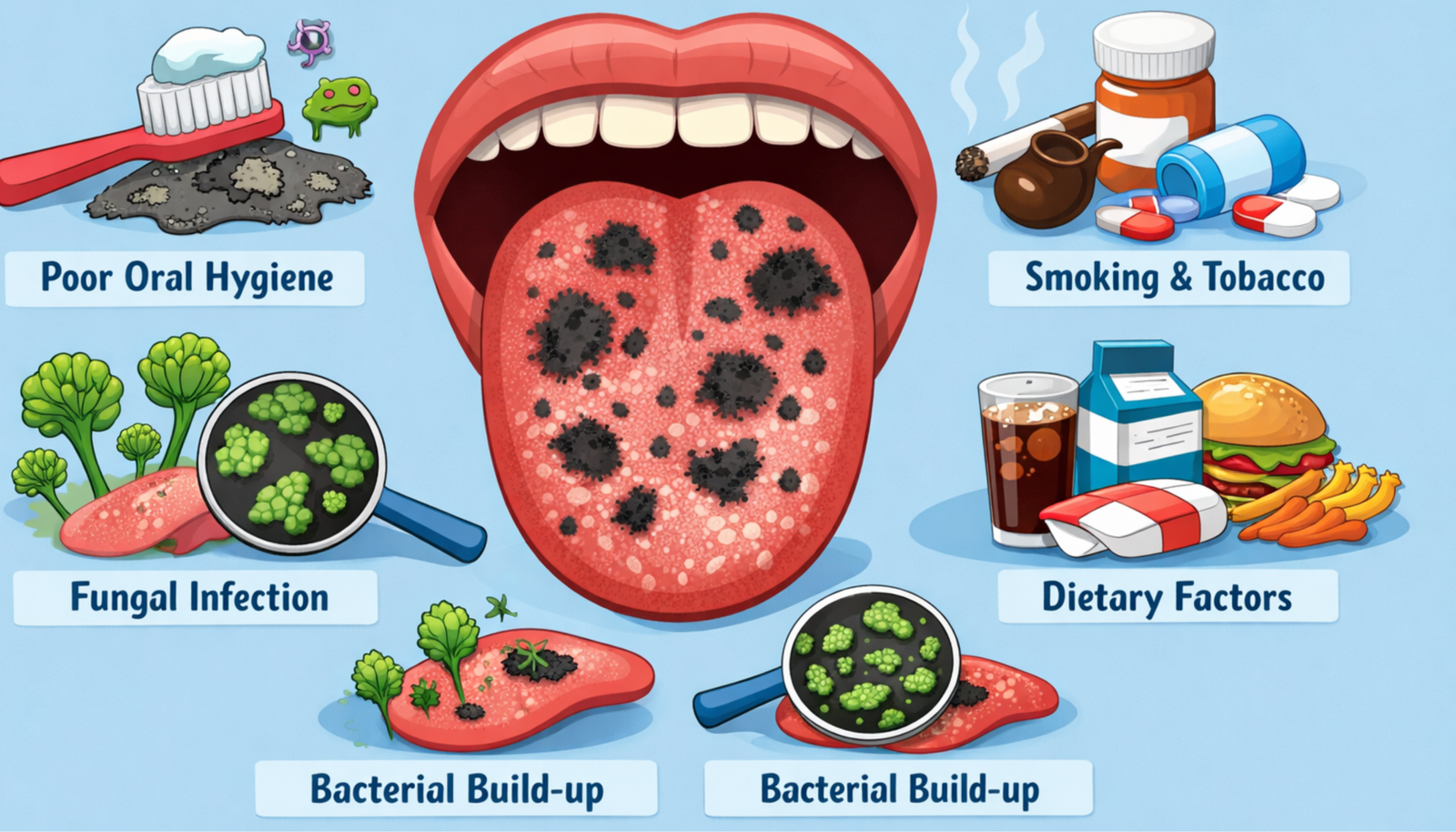
Noticing tongue spots black in the mirror can feel alarming. While black discoloration on the tongue is often harmless in some cases it may signal an underlying oral or medical condition.
Understanding the causes symptoms and treatment options helps you determine whether it’s a temporary issue or something that needs professional evaluation.
This comprehensive guide explains what black tongue spots mean why they appear how they’re treated and when you should seek medical advice.
What Are Black Spots on the Tongue?
Black spots on the tongue refer to dark patches dots or discoloration that may appear on the surface sides or back of the tongue. The appearance can range from tiny black specks to larger dark areas.
What Does Tongue Spots Black Mean?
The phrase tongue spots black describes visible dark pigmentation on the tongue’s surface. These spots may result from staining buildup of dead cells bacterial growth or pigmentation changes. In most cases the condition is temporary and treatable.
What Do Black Spots on the Tongue Look Like?
Black spots may appear as:
- Small dark dots
- A black coating on the back of the tongue
- Hair-like black projections (in certain conditions)
- Flat pigmented patches
The texture may feel normal slightly rough or hairy depending on the underlying cause.
Are Black Tongue Spots Always Serious?
Most cases are not serious. Common causes include staining from food coffee tobacco or temporary bacterial buildup. However if black tongue spots are persistent painful bleeding or growing they should be evaluated by a dentist or doctor to rule out more serious conditions.
Black Spots on Tongue Treatment Simple & Effective Home Solutions
Improving oral hygiene is one of the most effective ways to treat black spots on the tongue brush your tongue gently twice a day use a tongue scraper and rinse with an antibacterial mouthwash. Staying hydrated also helps so drink plenty of water to reduce bacteria buildup.
It’s important to avoid triggers by cutting down on smoking tea and coffee and limiting sugary foods. You can also use a simple salt water rinse by mixing one teaspoon of salt in warm water and rinsing your mouth once or twice daily.
Finally eating healthy foods like fruits and vegetables especially apples and carrots can naturally help clean your tongue and support better oral health.
Why Do Black Spots Appear on the Tongue?
There are several reasons why someone might develop tongue spots black ranging from lifestyle habits to medical conditions.
Common Causes of Black Tongue Spots
Poor oral hygiene can allow bacteria and dead skin cells to accumulate on the tongue.
Smoking or tobacco use often stains the tongue and contributes to pigmentation changes.
Medication side effects especially antibiotics or medications that affect saliva flow may trigger discoloration. Fungal or bacterial infections can also cause dark patches or coating.
One common condition associated with black discoloration is black hairy tongue medically known as Black hairy tongue. This occurs when tiny bumps (papillae) on the tongue grow longer than normal and trap bacteria or debris.
Can Diet or Lifestyle Cause Black Spots on the Tongue?
Yes. Dark beverages such as coffee tea and cola can stain the tongue. Excessive alcohol use and dehydration may also alter oral bacteria balance increasing the likelihood of tongue spots black developing.
Is Black Hairy Tongue the Same as Tongue Spots Black?
Not always. Black hairy tongue is one specific condition while black spots may also result from pigmentation changes injury or harmless moles called melanotic macules.
Are Black Tongue Spots a Sign of Cancer?
In rare cases, dark spots could be linked to oral melanoma or other serious conditions. Warning signs include:
- Rapid growth
- Irregular borders
- Bleeding
- Persistent pain
If these symptoms are present immediate medical evaluation is essential.
Know When Oral Symptoms Need Medical Attention
Black spots on the tongue can occasionally appear alongside other health symptoms. Although many cases are harmless, persistent changes should always be evaluated by a healthcare professional. If you’re experiencing other unusual symptoms, our article on cough abdomen pain explains when common discomfort may require further medical assessment.
How Do You Diagnose Black Spots on the Tongue?
Proper diagnosis ensures safe and effective treatment.
How Dentists and Doctors Evaluate Tongue Discoloration
A dentist or physician will visually examine the tongue and ask about:
- Recent medication use
- Smoking habits
- Diet
- Oral hygiene routine
They may also check for signs of infection or inflammation.
When Should You See a Doctor for Black Tongue Spots?
Seek medical care if:
- The spots last longer than two weeks
- You experience pain or swelling
- The discoloration spreads
- There is unexplained bleeding
What Tests May Be Required?
Most cases do not require testing. However if the cause is unclear a healthcare provider may recommend a biopsy or swab test to rule out infection or abnormal cells.
Certain Foods and Supplements May Affect Oral Health
The appearance of black spots on the tongue can sometimes be influenced by dietary habits, medications, or nutritional deficiencies. While the condition isn’t always serious, understanding how supplements interact with your body can help you make informed health decisions. Learn more about best hair nail supplement Pantagonar to understand how nutritional support fits into an overall wellness routine.
How to Treat Black Spots on the Tongue
Treatment depends on the underlying cause of the tongue spots black condition.
Home Remedies for Mild Tongue Discoloration
Improving oral hygiene often resolves mild cases. This includes:
- Brushing your tongue gently daily
- Using a tongue scraper
- Staying hydrated
- Reducing tobacco use
Many cases of black hairy tongue improve within days to weeks with consistent cleaning.
Medical Treatments for Persistent Black Spots
If infection is present antifungal or antibacterial medication may be prescribed. In rare cases a doctor may remove abnormal tissue.
How Long Does It Take for Black Tongue Spots to Go Away?
With proper care, mild cases may resolve within one to two weeks. Persistent or underlying medical causes may take longer.
Can Black Spots on the Tongue Be Prevented?
Yes. Preventive steps include:
- Maintaining good oral hygiene
- Visiting a dentist regularly
- Avoiding excessive tobacco use
- Drinking plenty of water
Who Is at Risk for Developing Black Tongue Spots?
Certain groups may be more likely to develop tongue spots black due to lifestyle or medical factors.
Risk Factors in Adults
Adults who smoke, consume excessive caffeine or take certain medications are at higher risk.
Tongue Spots Black in Children Is It Different?
In children, black tongue spots are less common but may occur due to antibiotics, poor brushing habits, or dietary staining.
Are Smokers More Likely to Develop Black Tongue Spots?
Yes. Smoking significantly increases the likelihood of discoloration due to staining and changes in oral bacteria.
Black Tongue vs. Other Tongue Conditions
It’s important to distinguish black spots from other oral conditions.
Black Hairy Tongue vs. Melanotic Macules
Black hairy tongue appears fuzzy or coated while melanotic macules are flat pigmented spots that usually remain stable.
Tongue Spots Black vs. Oral Thrush
Oral thrush typically appears white or creamy and is caused by fungal infection. Black spots are visually distinct and may have different causes.
When Is Tongue Discoloration an Emergency?
Seek urgent care if you experience:
- Severe pain
- Rapidly growing dark patches
- Difficulty swallowing
- Persistent bleeding
Medical Insight
This article reflects current dental and medical guidance on oral health conditions.
Reviewed by Dental or Medical Professionals
For accurate diagnosis of tongue spots black consult a licensed dentist or physician specializing in oral health.
Clinical Research on Tongue Pigmentation Disorders
Medical literature shows most tongue discoloration cases are benign and related to hygiene or lifestyle factors.
Healthcare professionals commonly observe temporary tongue pigmentation in patients with antibiotic use or smoking history.
Trusted Medical Sources and References
For further information consult reputable sources such as the American Dental Association and the Mayo Clinic for evidence based oral health guidance.
Conclusion
In most cases tongue spots black are harmless and temporary often improving with better oral hygiene and healthy lifestyle habits. However persistent painful or changing spots should never be ignored. Key warning signs to watch for include growth in size pain or bleeding irregular shape and non healing lesions.
To prevent dark spots on the tongue brush twice daily clean your tongue regularly avoid tobacco and schedule routine dental checkups. Seek immediate medical care if black tongue spots are accompanied by severe pain rapid changes or systemic symptoms to ensure proper evaluation and treatment.
FAQs
What Causes Sudden Black Spots on the Tongue?
Sudden black spots may result from medication changes dehydration or rapid bacterial buildup.
Can Dehydration Cause Black Tongue Spots?
Yes. Reduced saliva flow can alter oral bacteria contributing to discoloration.
Are Black Tongue Spots Contagious?
Most causes are not contagious. However infections should be evaluated by a healthcare provider.
Do Black Tongue Spots Go Away on Their Own?
Many mild cases resolve with improved hygiene and hydration.
Is Tongue Spots Black a Vitamin Deficiency?
Vitamin deficiencies are less common causes but may contribute to changes in tongue appearance in some individuals.