
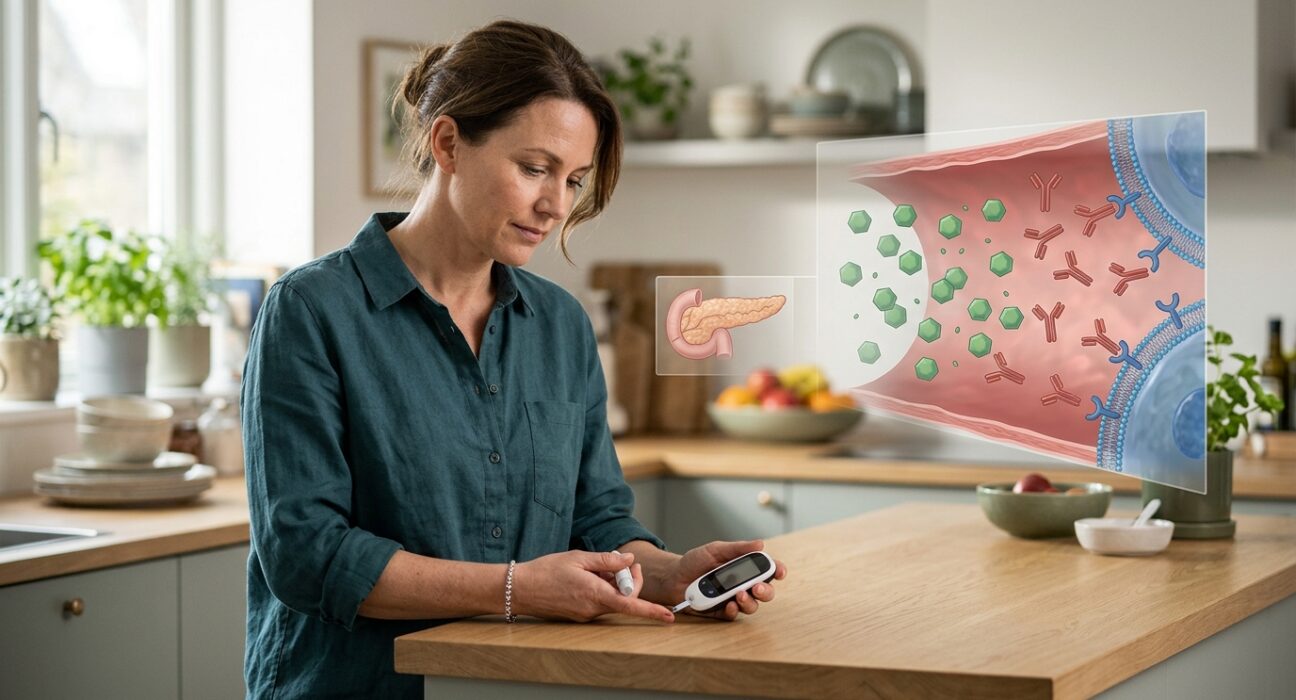
Most of us spend our days glued to a screen, so focused on deadlines and emails that we barely notice the quiet signals our bodies send. T2D is one of those conditions that creeps in while life gets busy, which is why understanding it early makes all the difference. The moment you know what is actually going on, the whole thing feels far less scary.
T2D stands for Type 2 Diabetes, a condition where your body stops responding well to insulin or cannot make enough of it, so sugar builds up in your blood instead of fueling your cells. It is the most common form of diabetes, making up about 90–95% of all cases, and it usually develops slowly over years rather than overnight.
What Actually Happens in Your Body With T2D?
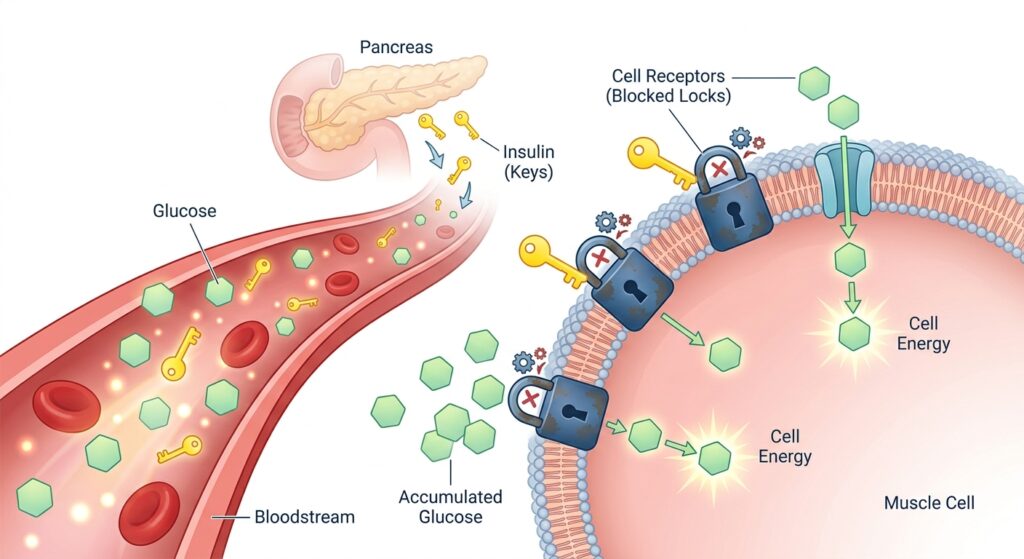
To understand T2D, it helps to imagine how your body handles food on a normal day. Whenever you eat carbs, whether it’s fruit, bread, rice or a sweet treat, your digestive system breaks that food down into a simple sugar called glucose. That sugar enters your bloodstream, where it travels around looking for cells that need energy.
However, sugar cannot just walk into a cell by itself. It needs a key to unlock the cell door. That key is a hormone made by your pancreas called insulin.
In Type 2 Diabetes, two things go wrong with this process:
The locks are rusty (Insulin Resistance): Your body still makes insulin, but your cells stop responding to it properly. It is like trying to open a front door with a rusty lock: the key fits, but the door will not turn.
The key maker gets tired (Pancreatic Exhaustion): Because the sugar is stuck in your blood, your pancreas works overtime to make extra keys. Over time, your pancreas gets worn out and cannot keep up with the constant demand.
When both of these things happen together, sugar builds up in your blood, leading to high blood sugar levels.
T2D vs. Type 1 Diabetes: What Is the Difference?
It is very common to confuse Type 1 and Type 2 diabetes because they share a name and cause high blood sugar. However, there are completely different conditions under the hood.
| Feature | Type 1 Diabetes | Type 2 Diabetes (T2D) |
| What goes wrong? | The body stops making insulin entirely. | The body makes insulin, but the cells ignore it. |
| Why does it happen? | An autoimmune attack (the body accidentally attacks itself). | A combination of family genes, lifestyle, and aging. |
| When is it found? | Usually in kids, teens, or young adults. | Usually in adults over 35, though younger adults get it too. |
| Main treatment | Must take daily insulin shots to survive. | Food choices, staying active, pills, and sometimes insulin. |
| Can it be prevented? | No. Nothing you ate or did caused it. | Yes, it can often be delayed or prevented with habits. |
How Does Someone Get T2D?

A lot of people feel guilty when they hear the word “diabetes,” assuming they brought it on themselves by eating too many sweets. The truth is much more complex. T2D is never caused by just one single bad habit. It is a mix of things you cannot control and things you can.
Things You Cannot Control
Your Family Tree: If your parents or siblings have T2D, your genetics make you much more likely to develop it too.
Your Age: As we get older, our bodies naturally become a little less efficient at processing sugars.
Ethnic Background: People of African, Hispanic, Asian, or Indigenous descent naturally carry a higher biological chance of developing insulin resistance.
Things You Can Influence
Carrying Extra Weight Around the Middle: Belly fat releases chemicals that make your cells more resistant to insulin.
Sitting Too Much: Muscles burn up a lot of sugar when they move. When we sit for long periods, our muscles lose their appetite for blood sugar.
Constant High Stress and Poor Sleep: When you are stressed or sleep-deprived, your body pumps out stress hormones like cortisol. These hormones deliberately dump extra sugar into your blood to give you “fight or flight” energy.
Early Signs You Should Never Ignore
Because T2D builds up quietly over years, early symptoms are easy to brush off as “just getting older” or “having a busy week.” Here are the warning signs your body uses to tell you your blood sugar is running high:
Peeing All the Time: Excess sugar spills into your urine, dragging extra water along with it and causing frequent bathroom trips.
Unquenchable Thirst: Losing extra fluids through urination triggers intense cellular dehydration.
Feeling Drained and Exhausted: Because glucose cannot enter your cells effectively, your body lacks its primary energy source.
Blurry Vision: High blood sugar pulls fluid out of the lenses of your eyes, making it temporarily hard to focus.
Cuts and Scrapes Heal Slowly: Poor blood circulation slows your body’s natural skin repair process.
Darkened Patches of Skin: Soft, velvety dark skin patches (especially around the neck or armpits) signal high insulin levels.
How Doctors Test for T2D

If you tell your doctor you are worried about T2D, they will order a quick blood test. You do not have to guess. The numbers give a clear answer.
1. The A1C Test (The Average)
Think of the A1C test as a 3-month report card for your blood sugar. It measures what percentage of your red blood cells are coated with sugar.
Normal: Below 5.7%
Prediabetes: 5.7% to 6.4%
Type 2 Diabetes: 6.5% or higher
2. Fasting Blood Sugar Test
This test measures your blood sugar first thing in the morning before you eat or drink anything except water.
Normal: Below 100 mg/dL
Prediabetes: 100 mg/dL to 125 mg/dL
Type 2 Diabetes: 126 mg/dL or higher
What Does Managing T2D Look Like Day-to-Day?

Hearing that you have T2D can feel life-changing, but managing it does not mean your life is over, nor does it mean you can never eat a piece of cake again. Successful management comes down to three main pillars:
Pillar 1: Smart Food Swaps
Managing T2D is not about strict dieting; it is about keeping your blood sugar steady instead of letting it spike wildly.
Use the Plate Trick: Fill half your plate with non-starchy veggies (like salad greens, broccoli, or peppers), one-quarter with protein (like chicken, fish, eggs, or tofu), and one-quarter with whole-grain carbs (like brown rice or sweet potatoes).
Love Fiber: High-fiber foods like beans, oats, and vegetables slow down digestion so sugar enters your blood slowly instead of all at once.
Watch Sweet Drinks: Sodas, sweetened teas, and fruit juices hit your bloodstream like a tidal wave. Swapping them for water or sparkling water makes a massive difference.
Pillar 2: Regular Movement
Exercise is practically magic for T2D. When your muscles contract during a walk, a swim, or lifting weights, they soak up blood sugar directly, no insulin required.
Take Post-Meal Walks: Even a quick 10-minute walk around the block right after dinner can dramatically flatten your blood sugar response.
Do What You Enjoy: You do not need to run marathons. Gardening, dancing, cycling, or playing with your kids all count as movement.
Pillar 3: Medications When Needed
If food and movement are not quite enough to get your blood sugar into a safe zone, your doctor might prescribe medication. Taking pills for diabetes is not a personal failure—it is simply giving your body a helping hand.
Metformin: The most common starting pill. It helps your body use its own insulin better and stops your liver from dumping extra sugar into your blood.
Modern Diabetes Meds: Newer options (like GLP-1 shots or SGLT2 pills) help your body release excess sugar through your urine or help you feel full faster.
Conclusion
Hearing about a T2D diagnosis can feel overwhelming, but it is entirely manageable. By making small, steady changes to how you move and eat, and working closely with your doctor, you can keep your blood sugar in check and live a full, healthy life. If you are experiencing symptoms like constant thirst, frequent bathroom trips, or unusual fatigue, make an appointment with your healthcare provider for a quick blood check. Finding out where you stand is the most empowering thing you can do.
FAQs
Is T2D a permanent condition?
T2D is considered a lifelong condition, but it can be put into remission. Remission means your blood sugar returns to normal levels without needing diabetes medication. However, because your body still has a genetic tendency toward diabetes, unhealthy habits can cause high blood sugar to return.
Can eating too much sugar directly cause T2D?
Not directly. Eating sugar alone does not magically cause diabetes. However, regularly drinking sugary beverages and eating ultra-processed foods can lead to weight gain and insulin resistance over time, which increases your risk for T2D.
Will I automatically have to take insulin shots if I have T2D?
No! Many people manage their T2D for decades using just food choices, regular exercise, and oral pills like metformin. Insulin shots are usually only needed if your pancreas stops making enough insulin on its own after many years.
What is prediabetes, and is it the same as T2D?
Prediabetes is an early warning sign. It means your blood sugar is higher than normal, but not quite high enough to be called Type 2 Diabetes yet. If you catch prediabetes early, simple lifestyle changes can often flip your numbers back to normal.
Why is my blood sugar high in the morning even if I didn’t eat overnight?
This is called the “Dawn Phenomenon.” In the early morning hours, your liver naturally releases stored sugar into your blood to give you energy to wake up. Because your body has trouble processing that sugar, your morning reading can look surprisingly high.
Can stress really raise my blood sugar numbers?
Yes, absolutely! When you are stressed out or anxious, your body releases stress hormones like adrenaline and cortisol. These hormones deliberately dump stored sugar into your bloodstream to give you energy to deal with the stress, causing your blood sugar to rise.
How often do I need to poke my finger to test my blood sugar?
That depends entirely on your treatment plan. Some people on pills only test once a day or a few times a week, while people using continuous glucose monitors (CGMs) use a small arm sensor instead of finger pricks. Your doctor will tell you what schedule fits your needs best.
What happens if T2D is left untreated for a long time?
If high blood sugar is ignored for years, it can slowly damage your blood vessels and nerves. This raises the risk of heart disease, eye issues, kidney trouble, and nerve pain in your feet. The good news is that keeping your blood sugar managed effectively prevents these long-term issues.





What Is a Balanced Plate? Healthy Meal Basics
August 19, 2026[…] What Is T2D? A Clear Definition […]
Hardy Hawkson
August 19, 2026T2D or a Type 2 diabetes is a chronic condition in which the body becomes resistant to insulin or does not produce enough insulin to keep blood sugar levels within a healthy range. This causes glucose to build up in the bloodstream and can affect energy use, metabolism and long term health if not properly managed.