
If your smartwatch has ever flashed a number labeled “O2 Maximum” and left you wondering whether it is good or concerning, you are not alone. It is one of the most reliable predictors of cardiovascular fitness and long term health available today, yet most people have no idea what their number actually means or how to change it.
Keep reading,you will walk away knowing exactly where you stand and what to do next.
What Is O2 Maximum?
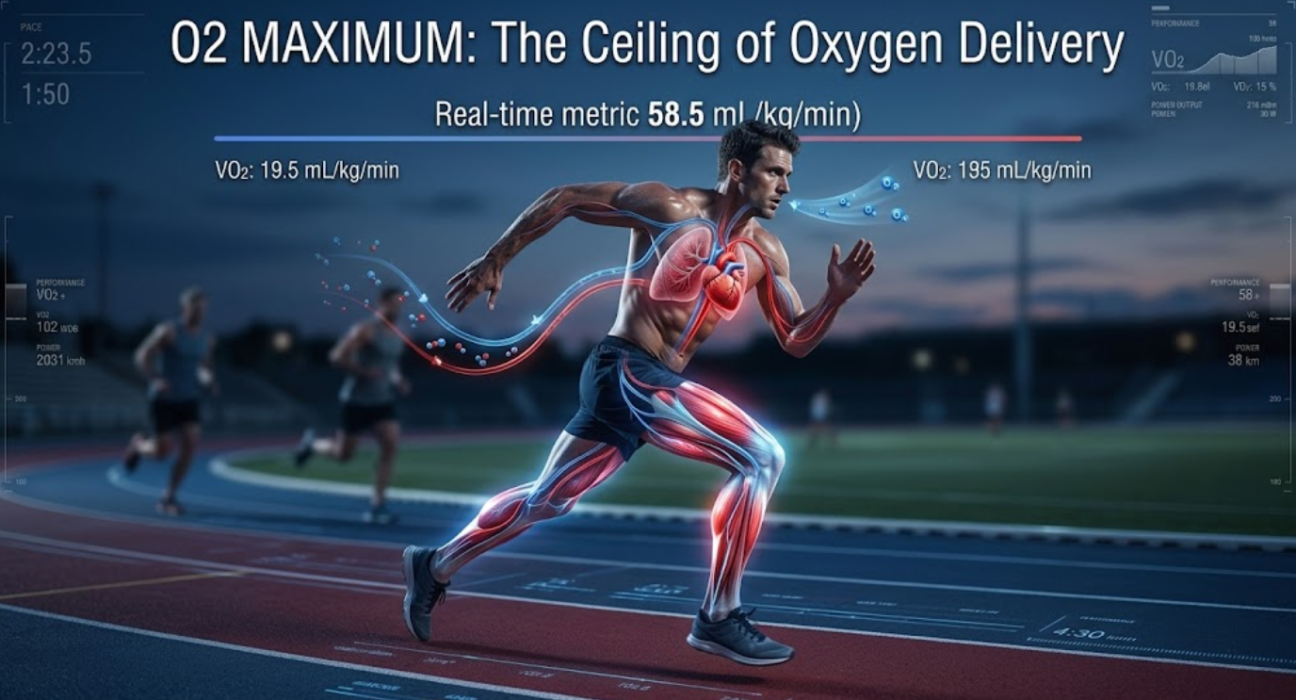
O2 Maximum is the highest rate at which your body can consume oxygen during exercise. It reflects three systems working together:
- Lungs :pulling oxygen from the air into your bloodstream
- Heart :pumping oxygenated blood to working muscles
- Muscles :extracting and using that oxygen to fuel movement
Whichever of these three is the weakest link sets the ceiling on your score. That is why elite endurance athletes, distance runners, cyclists or cross country skiers often post scores above 80–90 mL/kg/min, while sedentary adults typically fall in the 30–40 mL/kg/min range.
Why O2 Maximum Matters for Your Health
O2 Maximum is not just an athletic performance number it is increasingly treated as a clinical vital sign. In 2016, the American Heart Association recommended that cardiorespiratory fitness be tracked the same way blood pressure or cholesterol is, since lower fitness levels are strongly linked to cardiovascular disease and all cause mortality.
A 2023 meta analysis reinforced that every one point increase in estimated fitness was associated with an 11% drop in mortality risk and people with scores in the top third had a 45% lower mortality rate than those in the bottom third.
In short, raising your O2 Maximum score is one of the most evidence backed ways to extend your healthspan , not just your race times.
O2 Maximum Score by Age and Gender
Here’s a simplified reference range in mL/kg/min:
| Age Group | Men — Good | Women — Good |
| 18–25 | 52–60 | 47–56 |
| 26–35 | 49–56 | 45–52 |
| 36–45 | 43–51 | 38–45 |
| 46–55 | 39–45 | 34–40 |
| 56–65 | 36–41 | 32–37 |
| 66+ | 33–37 | 28–32 |
Men typically score around 26% higher than women at comparable fitness levels, largely due to differences in body composition and blood oxygen carrying capacity. Scores gradually decline with age for both genders, though consistent training can significantly slow that decline.
How O2 Maximum Is Measured
Laboratory Testing
The gold standard is a graded exercise test on a treadmill or stationary bike. Intensity increases in stages while you breathe through a mask connected to a metabolic cart, tracking oxygen inhaled versus carbon dioxide exhaled until consumption plateaus,that plateau is your true O2 Maximum.
The Fick Equation
Scientifically, it is calculated as:
O2 Maximum = Cardiac Output × (Arterial Oxygen Content − Venous Oxygen Content)
In plain terms it’s how much blood your heart pumps per minute, multiplied by how much oxygen your muscles pull from that blood. A stronger heart and more efficient muscles both push this number up.
Wearables and Estimates
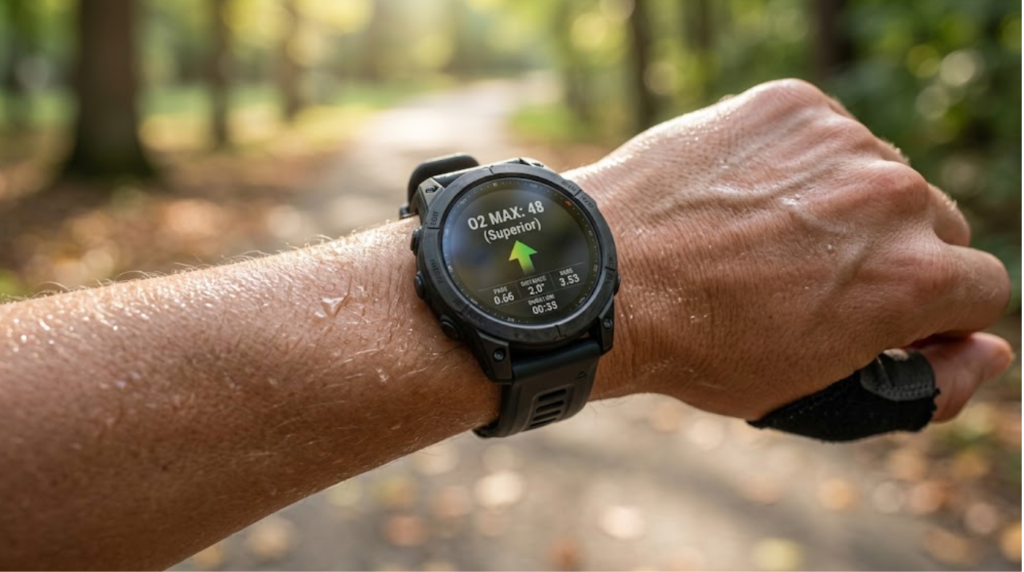
Devices like the Apple Watch and Garmin estimate O2 Maximum using heart rate patterns during runs and walks rather than direct gas measurement. These estimates are useful for tracking trends but can differ from lab results by several points, especially if sensor accuracy is affected by fit or motion.
Field Tests
Cooper Test: Run as far as possible in 12 minutes; distance is plugged into a regression formula.
Rockport Walk Test: Time a fast one-mile walk, factoring in heart rate, age, and weight
Heart rate ratio method: Divide max heart rate by resting heart rate, then multiply by a training-status constant
How to Improve Your O2 Maximum
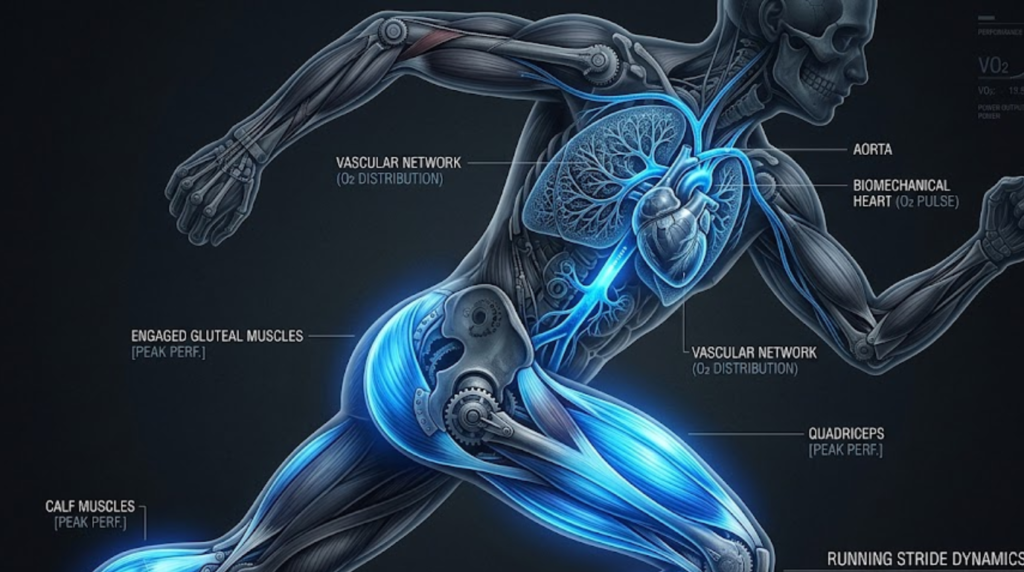
VO2 Max is trainable at nearly any age, and a combination of strategies works best. High-intensity interval training is one of the most effective approaches, short bursts near max effort, at roughly 85–95% of max heart rate, place greater stress on the cardiovascular system than steady-state cardio alone.
This should be paired with Zone 2 base training, which involves long, easy paced sessions that build the aerobic foundation and capillary density needed to support higher intensity work. Strength training also plays a supporting role, improving muscular efficiency in ways that indirectly enhance oxygen utilization.
For real progress consistency matters just as much as the type of training, 3–5 sessions per week tends to produce measurable gains within 8–12 weeks. Finally, since VO2 Max scores are expressed relative to body weight, managing body composition ,specifically reducing excess fat mass while preserving muscle it can raise your relative number even without a large change in absolute fitness.
Conclusion
O2 Maximum is far more than a smartwatch statistic , it is a scientifically validated marker of cardiovascular health, endurance capacity and long term longevity. Knowing where your O2 Maximum falls for your age and gender gives you a clear benchmark and understanding how to test and improve it puts you in control of one of the most powerful predictors of long term health.
Whether you are chasing a faster race time or simply want to lower your risk of chronic disease, consistent aerobic and interval training is the most reliable path forward. Ready to see where you stand? Consider booking a test or start tracking your trend with a wearable device today.
FAQs
Can genetics affect my O2 Maximum score?
Yes ,genetics can account for a significant portion of your baseline capacity, influencing lung size, heart chamber volume and muscle fiber type distribution.
Does altitude training boost O2 Maximum?
Training at altitude can increase red blood cell production over time, which may modestly raise your score once you return to sea level, though effects vary by individual and duration.
How often should I retest my O2 Maximum?
Every 8–12 weeks is typical, since that mirrors the timeframe in which meaningful training adaptations tend to show up on wearables or field tests.
Can smoking lower my O2 Maximum?
Yes ,smoking reduces lung efficiency and blood oxygen carrying capacity, which can noticeably suppress your score even in otherwise active individuals.
Is there a maximum ceiling for O2 Maximum improvement?
Yes ,genetic and physiological limits mean everyone has a personal ceiling, though most people never train close enough to it to know where that ceiling is.
Does sleep quality influence O2 Maximum readings?
Poor sleep can affect resting heart rate and recovery, which in turn can skew wearable-based estimates and slow real physiological gains.
Can children or teens have their O2 Maximum measured?
Yes, though reference ranges differ significantly from adults, since growth stage and body composition change rapidly during those years.
Do certain medications affect O2 Maximum?
Some medications, particularly beta-blockers, can lower measured or estimated scores by capping heart rate response during exercise.