
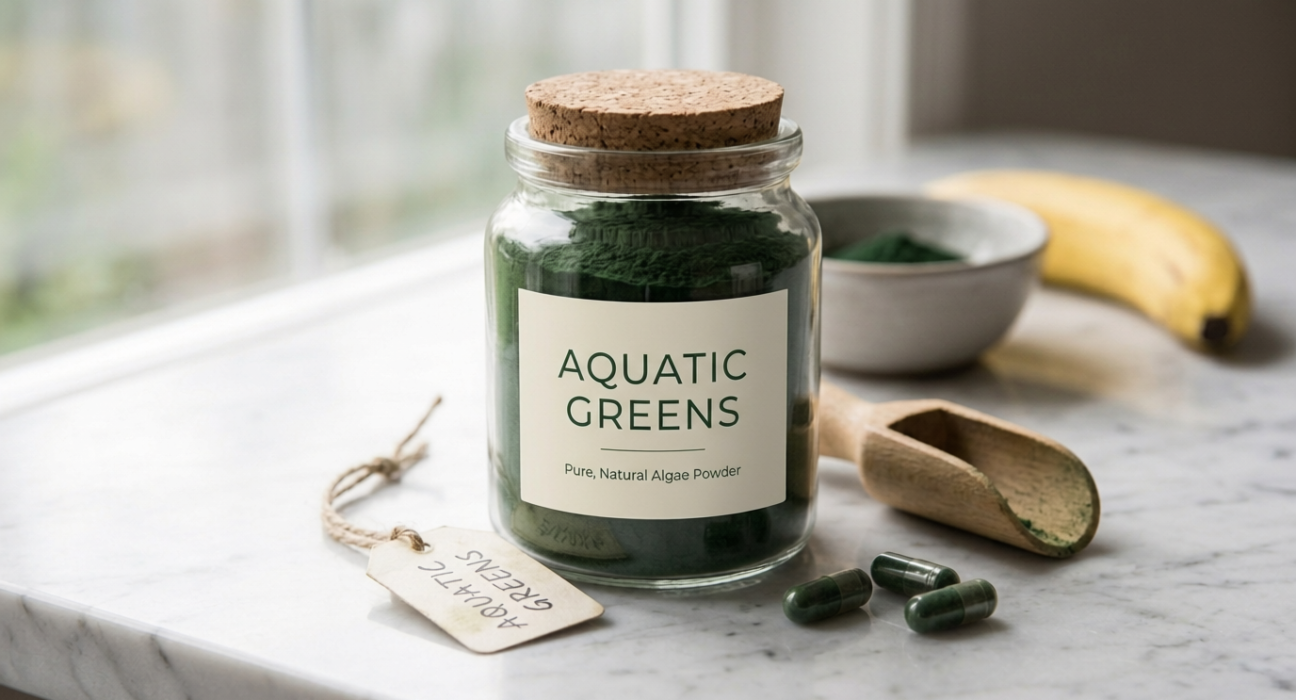
Aquatic greens are a supplement category made from freshwater microalgae, almost always a 50/50 blend of spirulina and chlorella, rather than the land-grown vegetables used in typical greens powders. They are taken primarily for concentrated plant-based protein, chlorophyll, iron, and B12, not as a vegetable substitute or proven detox product.
If you spend hours at a desk, rely on caffeine to get through long editing or gaming sessions, and struggle to eat enough leafy vegetables, you’ve likely looked into greens powders. Lately, a new term called “aquatic greens” has been trending. But are these microalgae blends just a marketing buzzword, or can they actually counteract a tech-lifestyle diet?
This guide breaks down what they contain, the real science behind “detox” claims, and how to use them without ruining your digestion.
What Do “Aquatic Greens” Actually Mean?
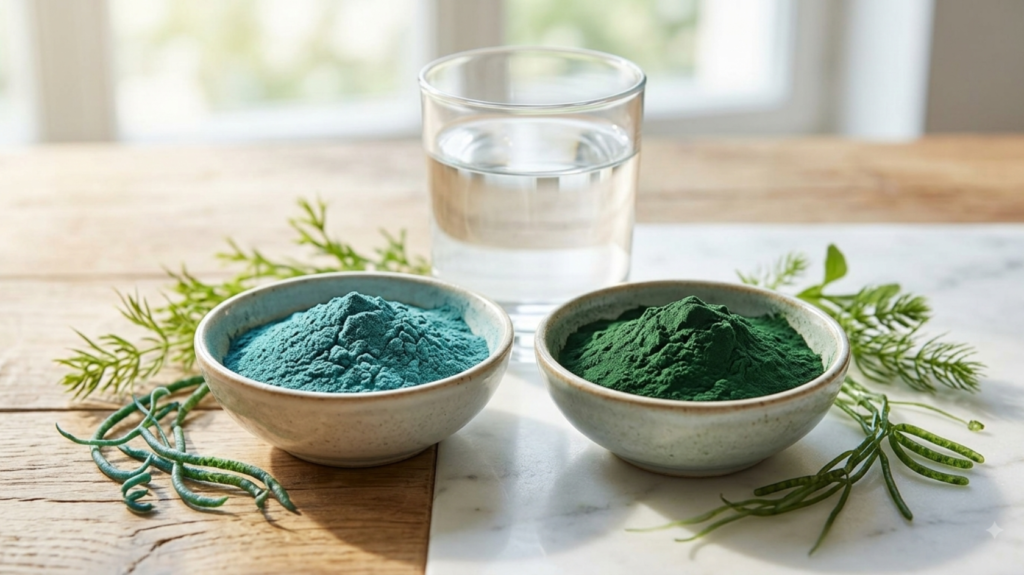
Aquatic greens is a name used for supplements made from freshwater algae, almost always a blend of spirulina and chlorella, rather than the land-grown vegetables you would expect from a typical greens powder. It is a small but growing corner of the supplement world, and the confusion around it is understandable, since most people have never eaten algae on purpose, let alone considered it a fix for a desk-and-screen routine.
Aquatic greens are not a single ingredient. It is a category name for supplements built from microalgae, tiny, single-celled organisms that grow in fresh water. The two most common ones used in these blends are spirulina and chlorella, usually combined in a 50/50 ratio and sold as capsules or a powder you mix into water, juice, or a smoothie.
Both are technically classified as algae rather than plants, which is why the word “aquatic” shows up instead of the usual “leafy greens” language. That distinction matters more than it sounds, because algae have a different nutrient profile and a different cell structure than kale or wheatgrass, and that affects both what you get from them and how your body handles them at first.
Spirulina vs. Chlorella: What Does Each One Actually Provide?
Put together, a spirulina-chlorella blend is trying to combine spirulina’s protein and micronutrient density with chlorella’s chlorophyll and mineral-binding properties. That’s the entire premise behind the “aquatic greens” category. Nutrition figures vary by brand and processing method, so treat any specific numbers as approximate rather than universal. A full daily serving of a 50/50 blend is commonly 3–6 grams total across capsules or a scoop.
| Attribute | Spirulina | Chlorella |
|---|---|---|
| Protein | High. About 7g (1 tsp) contains roughly 4g protein. Called “near-complete” since it provides most, not all, essential amino acids in meaningful amounts. | Present but secondary to spirulina’s protein contribution in a blend. |
| B12 content | Contributes to the blend’s B-complex and B12 content, notable since B12 is rare in plant sources. | Contributes alongside spirulina; combined blend is a genuinely useful B12 source for vegans. |
| Chlorophyll density | Present, but lower than chlorella. | Very high, often cited as the highest of any food source. Also has documented heavy-metal-binding properties in lab and animal studies. |
| Absorption / processing needed | No special processing required for digestibility. | Has a tough outer cell wall the human gut cannot break down on its own. Must be labeled “broken cell wall” or “cracked cell wall,” or most internal nutrients pass through undigested. |
A full serving across both typically delivers, in approximate terms:
- 2–4 grams of protein
- Meaningful iron
- Some B12 and B-complex vitamins
- Beta-carotene
- A noticeable dose of chlorophyll from the chlorella half
What it typically does not deliver in significant amounts: fiber, vitamin C, and the wider spread of phytonutrients you’d get from actual vegetables. It’s a supplement, not a vegetable substitute, and treating it as one is where a lot of the marketing overreaches.
Are Aquatic Greens the Same as My Regular Greens Powder?
No. A typical greens powder, the kind sold in tubs with a scoop, like the big-name morning-routine brands, is usually a mix of dehydrated land vegetables and grasses: wheatgrass, barley grass, kale, spinach, broccoli sprout, sometimes with added probiotics, digestive enzymes, and adaptogens thrown in. These blends can list fifteen to seventy-five ingredients and lean on volume and variety.
Aquatic greens are narrower by design. A product built around just spirulina and chlorella is not trying to replace a multivitamin or a vegetable serving, it is targeting a specific nutrient set: complete-ish protein, chlorophyll, B12 (rare in plant sources, which makes algae genuinely useful for vegans), and trace minerals. The trade-off is that you get less variety but a more concentrated, single-purpose dose of what algae specifically offers.
If your goal is to eat more vegetables in liquid form, a land-based greens powder is the closer match. If your goal is targeting B12, chlorophyll, or plant-based protein specifically, aquatic greens are the more focused tool.
Do Aquatic Greens Actually Detox the Body?
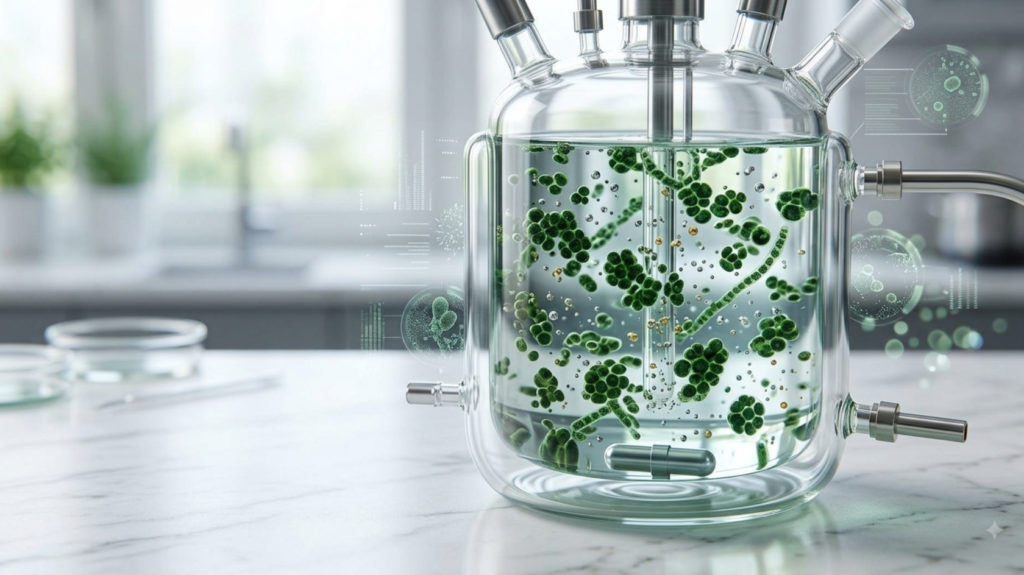
Almost every aquatic green product leans on the word “detox,” specifically the idea that chlorella binds to heavy metals and helps the body clear them out. This claim has some laboratory basis, chlorella’s cell wall does have a documented ability to bind certain heavy metals in test-tube and animal studies, and it’s occasionally used alongside chelation therapy in clinical settings under medical supervision.
What’s overstated is the leap from “binds metals in a lab setting” to “detoxes your body” as a general wellness claim for a daily supplement. There isn’t strong human clinical evidence that taking a chlorella capsule with your breakfast meaningfully reduces heavy metal load in someone without a diagnosed exposure issue.
If you’re specifically concerned about mercury, lead, or another heavy metal exposure, say, after having amalgam fillings removed, that’s a conversation for a doctor, not a supplement label. For everyone else, it’s reasonable to view chlorella’s detox reputation as promising but unproven at typical supplement doses, and to take the products for their nutrient content rather than as a cleanse.
How Do I Start Taking Aquatic Greens Without Getting Stomach Issues?
The most common complaint from first-time users is not taste, it is digestion. Spirulina and chlorella are dense, and chlorella in particular can cause gas, bloating, or loose stool if you jump straight to a full dose. Most brands recommend starting at a quarter of the suggested serving, one capsule, or a quarter scoop of powder for the first few days, then increasing gradually over one to two weeks.
This slow ramp-up isn’t just cautious labeling, it gives your gut bacteria time to adjust to the fiber and cell-wall material, and it lets you catch any allergic reaction early, since algae allergies, while uncommon, do exist. If you tolerate the smaller dose after three or four days, moving up to a full serving is generally safe for most healthy adults.
Can I Take Aquatic Greens If I Have an Autoimmune Condition or Am on Medication?
A few groups should talk to a doctor before starting, rather than assuming these are automatically fine because they’re natural.
- Autoimmune conditions (like lupus or rheumatoid arthritis): sometimes advised to avoid spirulina, since it can stimulate immune activity, a property researchers are actually investigating for its potential benefits, but one that can work against you if your immune system is already overactive.
- Blood thinners: check with a physician first, since spirulina and chlorella both contain vitamin K, which can interact with medications like warfarin.
- Iodine sensitivity or thyroid conditions: use caution, as algae can contain variable iodine levels depending on where and how it was grown.
- Everyone: because these are algae grown in water, sourcing and contaminant testing matter more here than with most supplements. Look for a brand that publishes third-party test results for heavy metals and microcystins (a toxin that can occur in poorly controlled algae farming), not just an organic label.
Should I Choose Capsules or Powder If I’m Busy or Traveling?
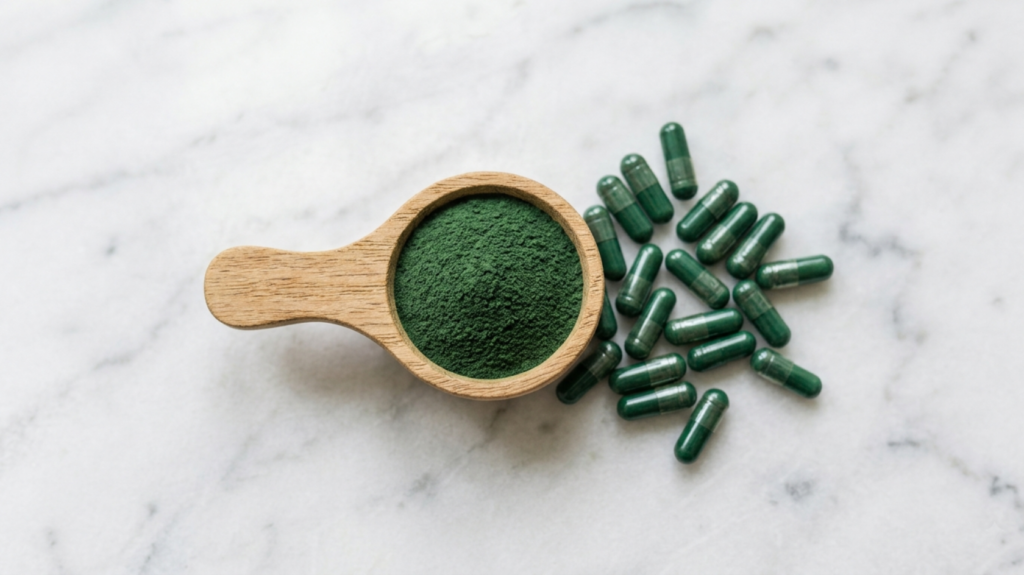
Capsules are the easier entry point if you’re new to the taste, spirulina and chlorella both have a strong, distinctly pond water flavor and smell that surprises a lot of first-time buyers. The trade-off is convenience versus dose size: getting a full serving in capsules often means swallowing four to six pills, which some people find tedious daily.
Powder is more cost-effective per gram and easier to scale up or down, but it needs to be blended into something like juice, a smoothie, or water with a strong flavor to make the taste manageable. If you already have a smoothie habit, powder is the more practical long-term choice. If you don’t, or you travel often, capsules are the lower-friction option even at a slightly higher cost per serving.
Conclusion
Aquatic greens are not a mysterious superfood or a scam, they’re a narrow, algae-based supplement category built around what spirulina and chlorella specifically do well: dense plant-based protein, chlorophyll, and nutrients like B12 that are otherwise hard to get from plants alone. They are not a substitute for vegetables, and the detox claims attached to them are unproven at typical doses. If you go in with realistic expectations, start with a small dose, and check for third-party testing and any medication interactions first, aquatic greens can be a reasonable, targeted addition to a diet, just not the all-in-one fix the marketing sometimes implies.
Frequently Asked Questions
What is spirulina and chlorella good for?
Together they are generally taken for plant-based protein, B vitamins including B12, iron, and chlorophyll, nutrients that are otherwise harder to get in concentrated form from a typical diet, especially for vegans and vegetarians.
Is chlorella or spirulina better?
Neither is strictly better, they offer different things. Spirulina leans toward protein and beta-carotene; chlorella leans toward chlorophyll and mineral-binding properties. That’s exactly why most aquatic greens products combine both instead of choosing one.
Can you take aquatic greens every day?
Most healthy adults can take a daily serving long-term once they have built up to it gradually, though it is worth taking occasional breaks and checking with a doctor if you are on medication or managing a chronic condition.
Do aquatic greens actually detox the body?
The evidence is limited. Chlorella has documented heavy-metal-binding properties in lab studies, but there is not strong human evidence that daily supplement doses produce a meaningful detox effect in people without a specific exposure issue.
Are aquatic greens the same as regular greens powder? No. Aquatic greens are algae-based, spirulina and chlorella, while most mainstream greens powders are built from land vegetables and grasses like wheatgrass and kale. They target different, though sometimes overlapping, nutrients.
Is it safe to take aquatic greens if I’m pregnant? This is not something to decide from a blog post, spirulina and chlorella supplementation during pregnancy or breastfeeding should be discussed directly with an OB-GYN, since sourcing and contaminant risk vary by product.
Why does chlorella need to have a “broken cell wall”? Chlorella’s natural cell wall is too tough for the human digestive system to break down on its own. Without mechanical processing to crack it open first, most of the nutrients inside pass through the body largely unused.
How long does it take to notice a difference?
There is no reliable timeline, and expectations should stay modest, this is a nutrient supplement, not a fast-acting product. Most users who report noticing anything, usually mild energy or digestion changes, describe it after several weeks of consistent daily use, but individual response varies widely and is not guaranteed.




Mais Syrup Explained: Uses, Safety and Best Substitutes
August 13, 2026[…] is mostly glucose. HFCS goes through an extra enzymatic step that converts a large share of that glucose into fructose, which is sweeter, so manufacturers can use less of it to hit the same sweetness […]
Hardy Hawkson
August 13, 2026https://invisigals.com/mais-syrup/