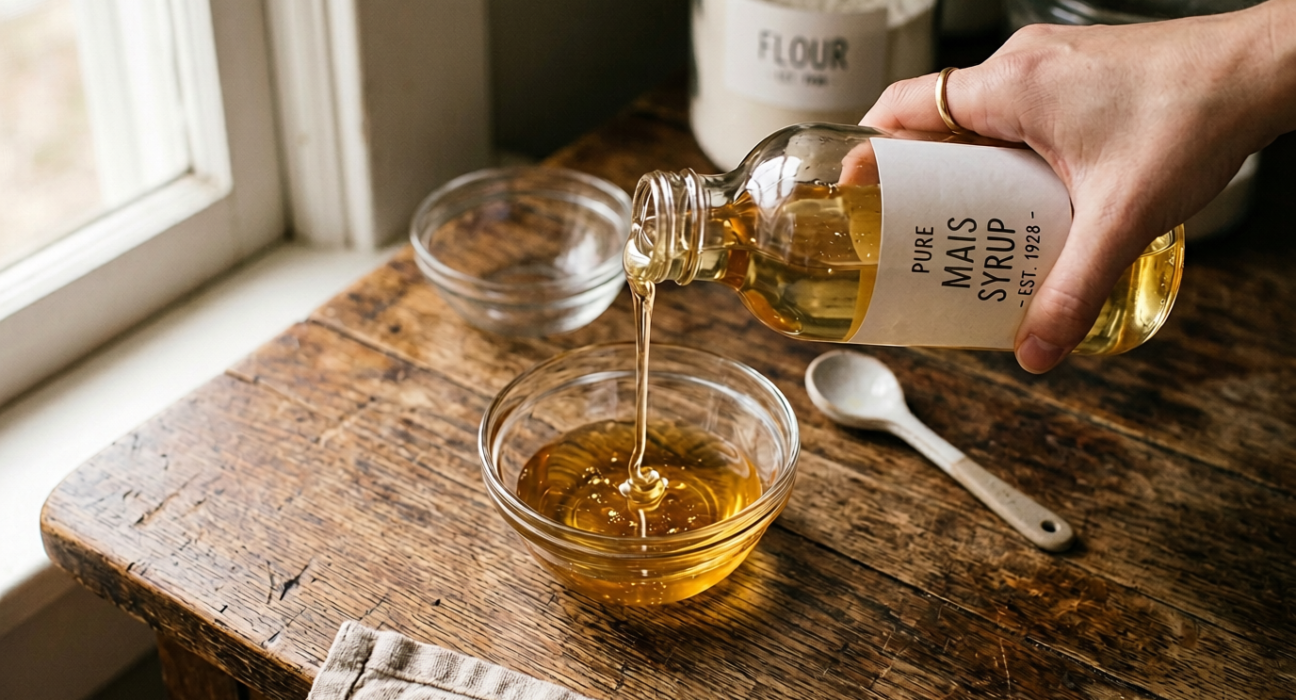
Mais syrup usually refers to a corn- or maize-based syrup made from starch. On food labels and in recipes, “mais” may refer to corn or maize depending on the language and market. Because products can vary, checking the ingredient label is the best way to confirm exactly what type of syrup you have. In most cooking contexts, mais syrup refers to a glucose-rich corn syrup used for sweetness, moisture, texture and, in some recipes, to help prevent sugar crystallization.
This guide walks through what it actually is, how it behaves when you cook or bake with it, whether it is something to worry about health-wise, and what to reach for if your kitchen does not have any.
What Is Mais Syrup, Exactly?
Mais syrup is a liquid sweetener made from corn starch. Manufacturers break the starch down through a process called hydrolysis, which splits it into smaller sugar molecules, mostly glucose, along with some maltose and larger sugar chains, depending on how far the breakdown goes. The result is a thick, clear-to-pale-gold syrup that is noticeably less sweet than table sugar and doesn’t carry a strong corn flavor.
The texture is the real reason bakers reach for it. It is slow-pouring and viscous, similar to honey, but without honey’s distinct taste. That thickness is exactly why it shows up in candy, fudge, and pie recipes, it does a job that granulated sugar physically cannot do on its own.
Why the Word “Mais” Shows Up on the Label
In the U.S., the dominant brand is Karo, which has been selling bottled corn syrup since 1902. In the Netherlands, Germany, and Indonesia, the same product is sold as “maissiroop,” “maissirup,” or “sirup jagung”, all of which translate directly to “corn syrup.”
Can You Swap American and European Versions 1:1?
Yes. If a European or Southeast Asian recipe calls for mais syrup, you can substitute regular American corn syrup at a 1:1 ratio without any adjustment. It is the same ingredient with a different passport.
Light vs. Dark Mais Syrup
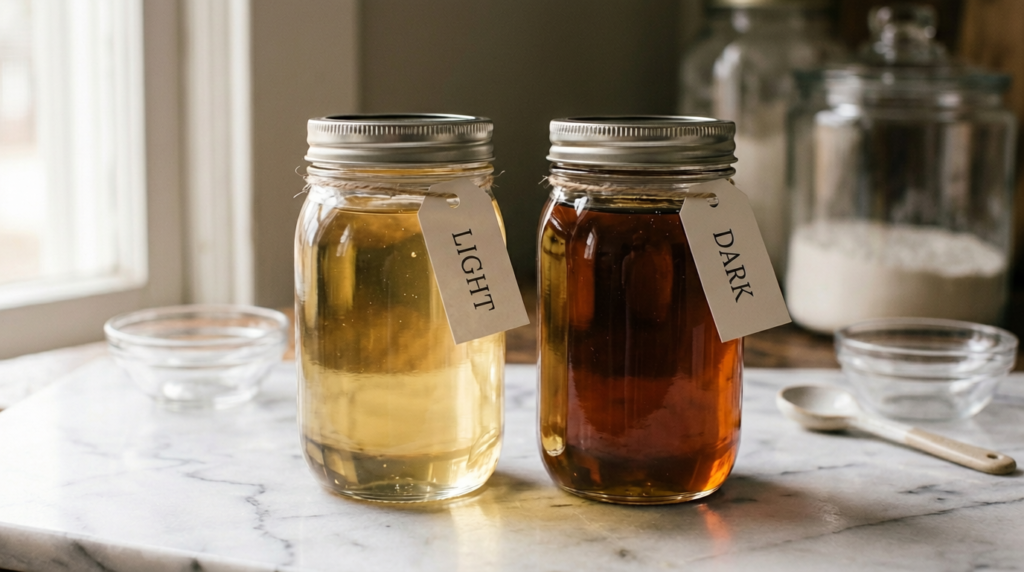
Light mais syrup is the clear or pale version, flavored with a touch of vanilla and salt but otherwise neutral. Dark mais syrup has caramel color and refined molasses added back in, giving it a deeper, slightly bitter-sweet flavor closer to golden syrup or a mild molasses.
When to Use Light
Light syrup is the one to use for anything where you do not want the syrup’s flavor competing with the rest of the dish, think marshmallows, fondant, or a delicate glaze.
When to Use Dark
Dark syrup earns its keep in pecan pie, gingerbread, and barbecue sauce, where that caramel note adds something rather than getting lost. Using dark syrup where a recipe calls for light will noticeably change both the color and the taste of the final result, so this is not a swap to make casually.
Mais Syrup vs. High-Fructose Corn Syrup
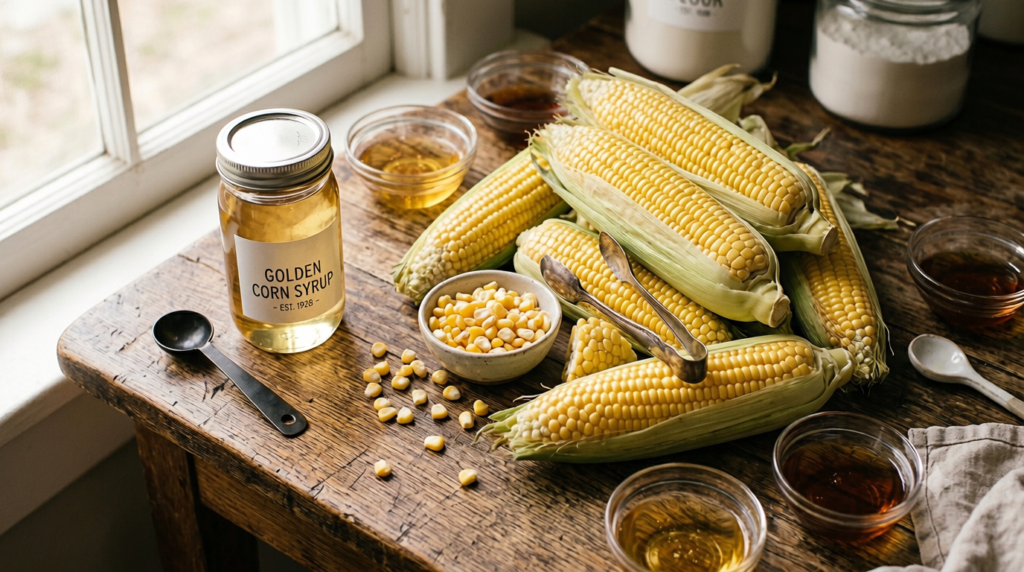
This is the mix-up that causes the most confusion, and it is worth clearing up plainly: mais syrup (regular corn syrup) and high-fructose corn syrup (HFCS) are chemically different products, even though they start from the same source.
The Chemical Difference
Regular corn syrup is mostly glucose. HFCS goes through an extra enzymatic step that converts a large share of that glucose into fructose, which is sweeter, so manufacturers can use less of it to hit the same sweetness level in sodas and processed foods.
Which One Is in Your Bottle
The syrup you buy for home baking, the Karo-style product, is almost always the regular, glucose-heavy version, not HFCS. If you are baking a pie or making fudge at home, you are very unlikely to be using HFCS at all, even if you have read warnings about it online.
What Mais Syrup Does in a Recipe
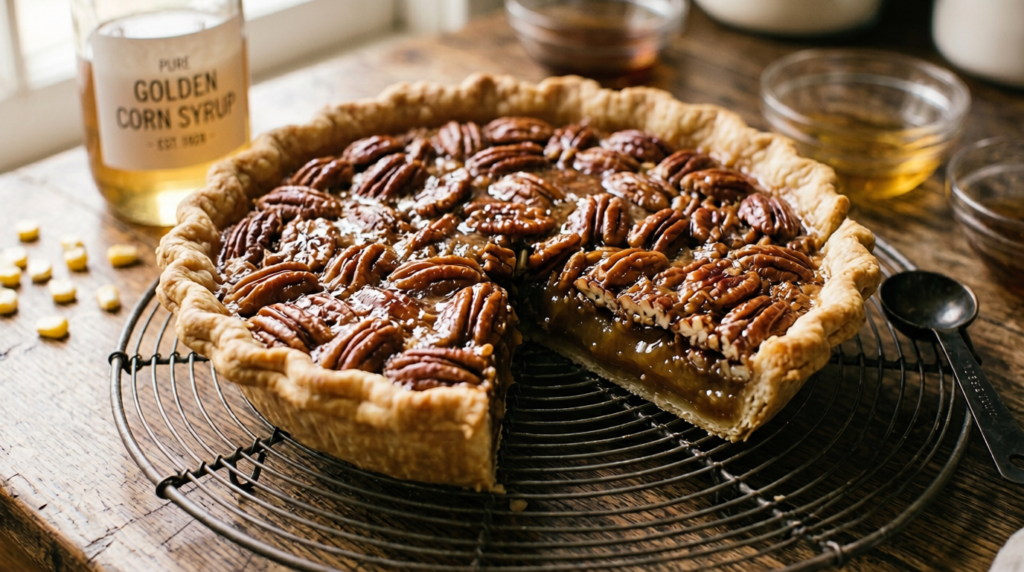
Beyond sweetness, mais syrup earns its place in a recipe for three specific jobs.
It Stops Sugar From Crystallizing
When you boil a sugar syrup for candy or caramel, plain sugar wants to form hard crystals as it cools. A small amount of corn syrup, usually 10 to 20 percent of the total sugar weight in a candy recipe, physically gets in the way of that crystal formation, keeping the final texture smooth instead of grainy.
It Adds Moisture and Softness
In cookies and cakes, corn syrup acts as a humectant, meaning it holds onto water. That’s why recipes using it tend to stay softer for longer and resist drying out on the counter.
It Adds Shine and Volume
In glazes, ganache, and pie fillings, it gives a glossy finish that plain sugar syrup does not produce on its own, and it can add body to a mixture without adding much competing flavor.
Is Mais Syrup Safe to Eat Regularly?
Regulatory bodies including the FDA and the European Food Safety Authority classify corn syrup as safe to eat. Nutritionally, it is not meaningfully different from other added sugars like table sugar or honey, your body processes the glucose in it the same way it processes glucose from any other source.
The Real Concern Is Total Added Sugar
The health concerns people raise about corn syrup are almost always actually concerns about total added sugar intake, not something unique to corn syrup itself. Eating too much added sugar from any source like corn syrup, honey, maple syrup, or plain table sugar is linked to a higher risk of weight gain, type 2 diabetes, and heart disease over time. The syrup itself is not the danger; the total amount of added sugar in your overall diet is. A tablespoon or two in a homemade pie a few times a year is not the same conversation as a diet high in sweetened sodas and processed snacks.
If You Have a Health Condition
If you have specific health conditions like diabetes or are managing sugar intake for another medical reason, talk to a doctor or dietitian about how much added sugar, from any source, fits your situation.
What to Use Instead of Mais Syrup
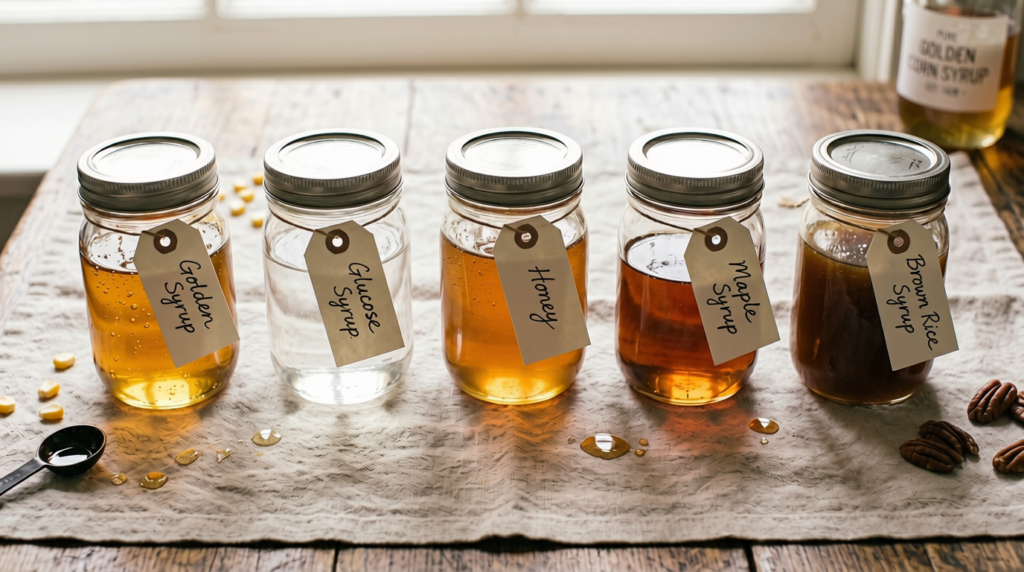
If a recipe calls for mais syrup and you do not have any, the right substitute depends on what you are making, not just what is in your pantry.
For Pie Fillings and Glazes: Golden Syrup
Golden syrup is the closest match, it has a similar thick consistency and a comparable caramel note, and it swaps in at a 1:1 ratio. It is widely available across Europe and the UK, which is useful if you are already in a mais-syrup-labeled part of the world.
For Candy-Making: Glucose Syrup
Where preventing crystallization is the actual job of the syrup, glucose syrup, sold in Europe as “glucosestroop” or similar, is a near-identical substitute, also at 1:1.
For a Lighter Touch: Honey or Maple Syrup
For a lighter touch in baked goods, honey or maple syrup can work, though both bring their own distinct flavor, and honey is noticeably sweeter, so you may want to reduce the other sugar in the recipe slightly.
For Avoiding Corn: Brown Rice Syrup
Brown rice syrup is a decent option for anyone avoiding corn specifically, since it’s derived from rice starch instead, it’s a bit less sweet and slightly nuttier in flavor, but it holds up reasonably well in baked goods.
A Simple Homemade Version
If none of those are on hand, you can make a rough stand-in with sugar, water, a small amount of cream of tartar, and a splash of lemon juice, simmered until it thickens into a slow-pouring syrup.
It won’t be chemically identical to corn syrup, it’s really an inverted sugar syrup, but it does the same job of resisting crystallization in candy and adding moisture to baked goods. This is especially handy for anyone avoiding corn as an ingredient altogether, since the homemade version contains none.
Where to Find Mais Syrup
In the U.S., mais/corn syrup is sold in nearly every grocery store, usually near the pancake syrups and baking aisle, under brands like Karo. In the Netherlands, Germany, and Belgium, look for “maissiroop” or “maissirup” in the baking supplies section, often sold in smaller bottles aimed at home bakers rather than the larger jugs common in the U.S.
What to Check on the Label
When you’re checking a label, the two things worth confirming are whether it’s labeled “light” or “dark” (since that affects flavor and color, as covered above) and whether it’s plain corn syrup or specifically labeled “high-fructose corn syrup.” For home baking, you almost always want the plain version.
Conclusion
At the end of the day, mais syrup isn’t a mystery ingredient, it is corn syrup wearing a different label, and once you know that, every recipe that calls for it stops being confusing. What actually matters is picking the right version for the job: light when you want the syrup to stay out of the way, dark when you want it to add flavor, and a suitable substitute when neither is in your cupboard. Used in normal amounts, it is a safe, functional ingredient rather than something to fear, the real thing to watch is your total added sugar intake, not this one syrup in particular. Keep a bottle on hand, know what “maissiroop” or “sirup jagung” means the next time you see it, and you will never have to second-guess a recipe again.
FAQ’s
Is corn syrup the same as mais syrup?
Yes. “Mais” is the Dutch, German, Afrikaans, and Indonesian word for corn, so “mais syrup” and “corn syrup” refer to the same product. You can use them interchangeably in any recipe.
Is corn syrup the same as high-fructose corn syrup?
No. Regular corn syrup is mostly glucose, while high-fructose corn syrup has gone through an additional process to convert much of that glucose into fructose. The bottled syrup used in home baking is almost always the regular, non-HFCS version.
Can I substitute honey or maple syrup for corn syrup in baking?
Generally yes, though both add their own flavor and honey is sweeter, so results won’t be flavor-neutral. They work best in recipes where a little extra taste is welcome, like cookies or glazes, rather than in delicate candies where texture control matters most.
Why does corn syrup keep candy from turning grainy?
The glucose molecules in corn syrup physically interfere with sugar crystals forming as a boiled syrup cools, which is what keeps fudge, caramel, and marshmallows smooth instead of gritty.
Is it safe for children to eat foods made with mais syrup?
In normal, occasional amounts, like a slice of homemade pie, it’s considered safe by food safety regulators. As with any added sugar, moderation is the relevant factor, not the specific source.
Does mais syrup go bad, and how should I store it?
Unopened, it has a long shelf life, often a year or more past the printed date if stored in a cool, dry place. Once opened, keep it tightly sealed at room temperature; it does not need refrigeration, and refrigerating it can actually make it harder to pour.
Can I make mais syrup at home without corn starch?
You can make a close substitute using sugar, water, cream of tartar, and lemon juice, though technically that’s an inverted sugar syrup rather than true corn syrup. It performs a similar role in most recipes but won’t be identical in flavor or exact texture.
Does dark mais syrup have more sugar or calories than light mais syrup?
No, the calorie and sugar content of light and dark corn syrup are essentially the same per tablespoon. The difference is flavor and color, from the added caramel color and molasses-like notes in the dark version, not nutritional content.