
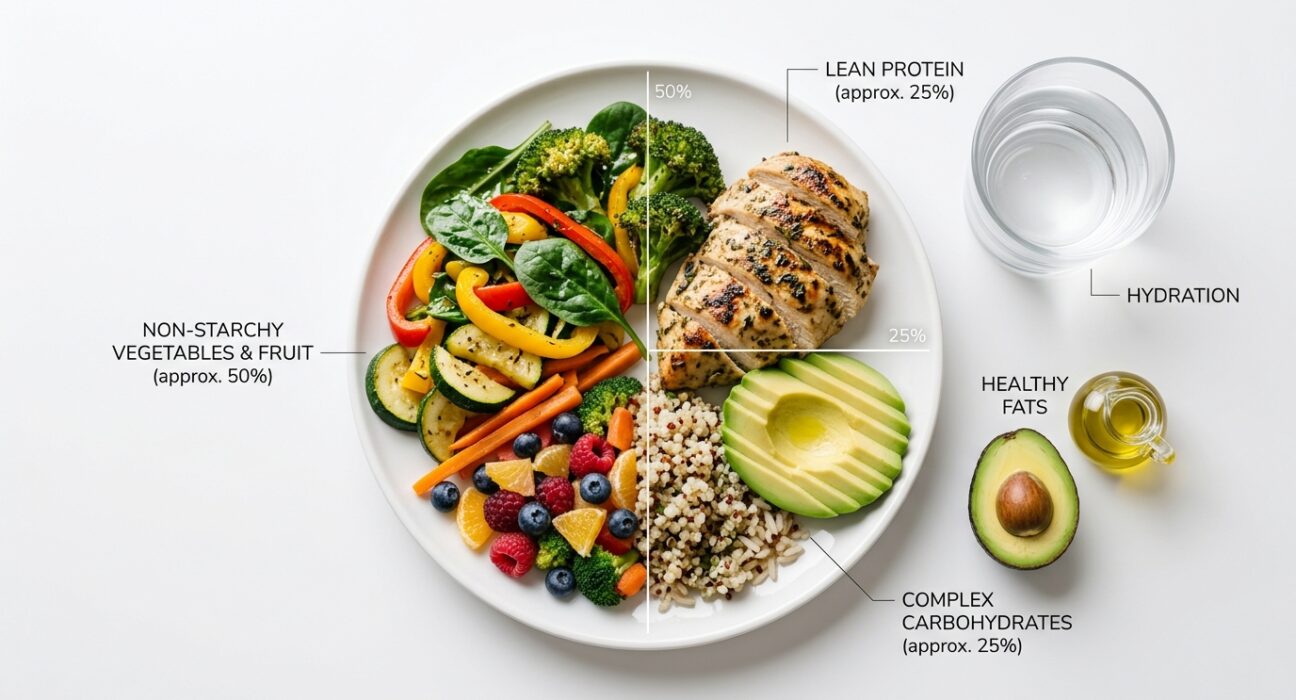
A balanced plate is a portion control method that fills roughly half the plate with vegetables, a quarter with lean protein, a quarter with complex carbs and a small amount of healthy fat, without requiring calorie counting. It works as a flexible eating framework for weight management, blood sugar control and general energy maintenance.
If you have ever played Dispatch, you know Invisigal does not win missions by rushing in, her invisibility ability runs on managed energy and burning through it too fast leaves her exposed at the worst moment. Eating on autopilot between meetings, sprints, or late night gaming sessions works the same way: skip the planning and you are running on fumes by 3 p.m. A balanced plate is the desk worker’s version of resource management: no counting, no apps, just filling the plate in the right proportions so your energy does not crash mid shift.
In this guide, you will learn exactly what a balanced plate looks like, how to build one, why it works so well and how to adapt it for eating out, meal prepping, or fueling a long day at a desk.
What Is a Balanced Plate?
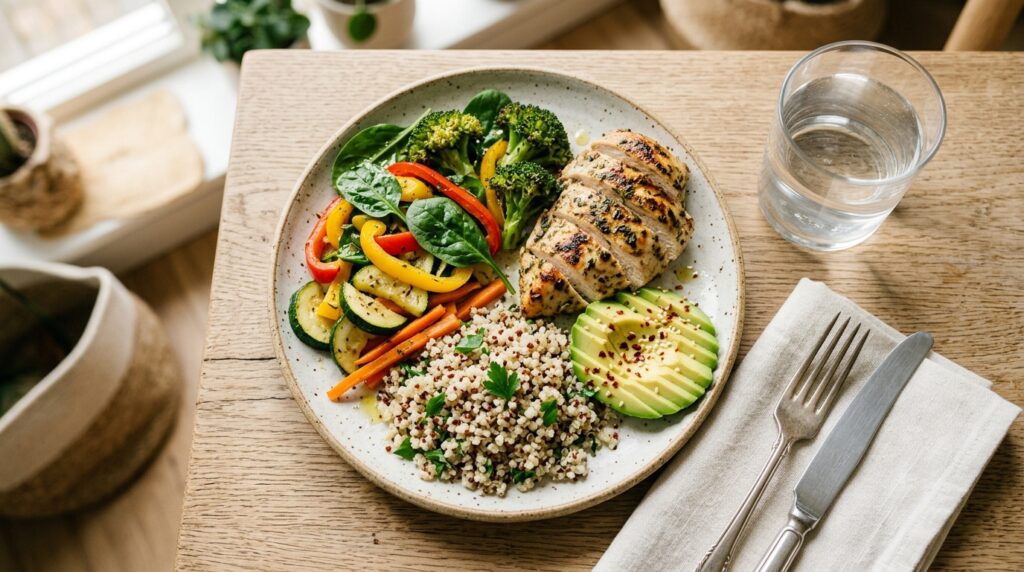
A balanced plate is a visual tool for managing meals without counting calories or measuring every gram. It works by filling your plate in set proportions so each meal covers your calorie and nutrient needs automatically, without any math.
| Section of the Plate | What Goes There |
| Half the plate | Non-starchy vegetables, plus a smaller portion of fruit |
| A quarter | Lean protein |
| A quarter | Whole grains or other complex carbs |
| A moderate side | Healthy fats |
| Alongside the meal | Plenty of water |
This approach is closely aligned with Harvard’s Healthy Eating Plate, which controls portions naturally while keeping meals nutrient-dense and satisfying.
Why the Balanced Plate Method Works
The proportions are not arbitrary, each section is doing a specific job:
The vegetable half controls volume
Non-starchy vegetables are mostly water and fiber, so they take up physical space in your stomach and trigger fullness signals without adding many calories. This is the main reason the method works for weight management without ever mentioning a calorie number.
The protein quarter controls hunger between meal
Protein digests slower than carbs, which means a steadier release of energy and fewer “I need a snack right now” moments an hour after eating.
The carb quarter provides fuel without a crash
Complex carbs release glucose more gradually than refined carbs, which is why the method naturally supports steadier blood sugar, useful whether you are managing diabetes or just trying not to hit a 2 p.m. slump.
The fat portion supports absorption and satisfaction
Some vitamins (A, D, E, K) are fat-soluble, meaning your body cannot use them without a little dietary fat present. Fat also adds flavor and satisfaction, which reduces the urge to keep eating after the meal is technically “done.”
Put together, the plate is not a diet in the restrictive sense, it is a repeatable structure that produces balanced nutrition automatically, meal after meal, without requiring willpower or math.
How to Build a Balanced Plate, Step by Step
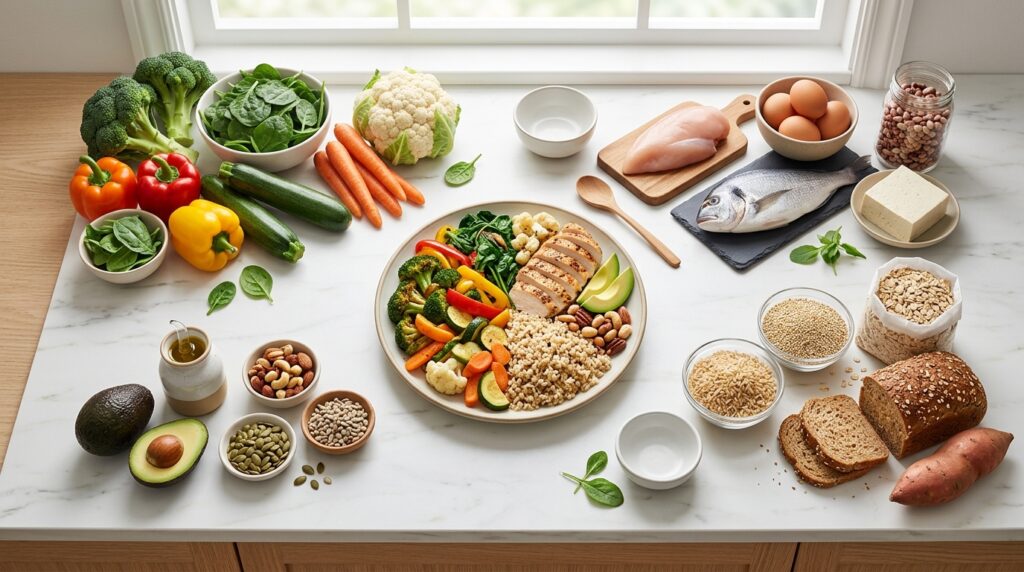
Building a balanced plate isn’t complicated, it just takes a little mindful planning at first. After a few tries, the proportions become automatic, and you stop having to think about it at all.
Step 1: Fill Half Your Plate with Vegetables and a Little Fruit
Non-starchy vegetables are low in calories and high in fiber, so they fill you up fast.
- Broccoli
- Leafy Green Vegetables
- Peppers
- Zucchini
- Carrots
- Cauliflower
Skip potatoes here, they are starchy enough to count as a carb rather than a vegetable. The same goes for corn and peas in larger portions; they are fine, but they belong more with the carb quarter than the vegetable half.
Fruit fits into this same half, in a smaller portion. Apples, berries, melon and citrus add vitamins and antioxidants without needing their own section on the plate. If you are short on time, frozen vegetables and fruit work just as well nutritionally as fresh, and they cut prep time to almost nothing, useful if dinner is happening between matches rather than as its own event.
Step 2: Add a Quarter Plate of Lean Protein
Protein takes longer to digest, which helps prevent energy crashes and supports muscle maintenance, useful whether you are grinding a boss fight or a backlog of tickets.
- Chicken breast
- Fish
- Eggs
- Tofu
- Beans
- Greek yogurt
Watch for hidden fat in some protein choices, like fattier cuts of red meat and opt for leaner versions when you can. If you are cooking in bulk, a rotisserie chicken, a batch of hard boiled eggs, or a pot of black beans can cover several days of the protein quarter without any daily prep at all.
Step 3: Add a Quarter Plate of Complex Carbs
Carbs are not the enemy, they are your body’s main energy source. Choose fiber rich options over refined versions.
- Brown rice
- Quinoa
- Oats
- Whole grain bread
- Sweet potatoes
The extra fiber keeps you fuller for longer and steadies your energy, instead of the sugar crash cycle of refined carbs like white bread or white rice. Batch cooking a large tray of rice or quinoa at the start of the week means the carb quarter is basically pre solved for every meal that follows.
Step 4: Add Healthy Fats in Moderation
Fat is not something to avoid, it is essential for hormone function and helps your body absorb certain vitamins. A small amount goes a long way.
- A drizzle of olive oil
- A few slices of avocado
- A small handful of nuts or seeds
Favor unsaturated fats over saturated and trans fats. A good rule of thumb: if the fat comes from a whole food like olives, nuts, fish, avocado rather than a processed source such as fried batter, packaged pastries, it is almost always the better pick.
Adjust the Ratio to Fit Your Goal
The standard half-quarter-quarter ratio is a strong starting point, but it isn’t identical for everyone, your goals, activity level and health needs can all shift the exact proportions slightly.
| Goal | Adjustment | Why It Helps |
| Losing weight | Keep the standard ratio, but keep the fat portion light, a tablespoon of oil or a small handful of nuts is plenty. | Fat is more calorie dense than protein or carbs, so trimming it slightly lowers total calories without shrinking the filling vegetable or protein portions. |
| Managing diabetes or blood sugar | Stick with the ratio, but lean toward higher fiber carbs like beans or sweet potato over refined grains, and always pair carbs with protein or fat. | Fiber, protein, and fat all slow digestion, which smooths out how fast sugar hits the bloodstream after eating. |
| Building muscle or training hard | Shift toward roughly equal thirds of vegetables, protein and carbs. | Active bodies need more total fuel and more protein for muscle repair than the standard plate provides. |
| Long desk or gaming sessions | Keep the ratio standard, but favor slower digesting carbs like oats, quinoa, sweet potato over fast ones. | Slower carbs mean a flatter energy curve, fewer crashes mid shift or mid session. |
Eating Out and Ordering In
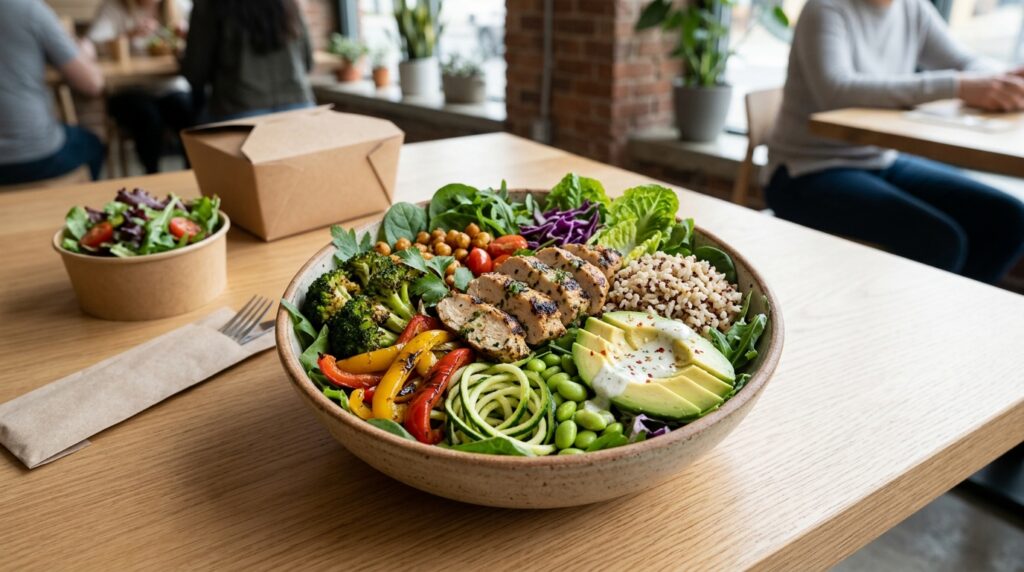
Most people do not abandon the balanced plate method because it is hard at home, they abandon it because takeout menus do not come divided into quarters. The good news is the same logic still applies, you are just eyeballing it instead of plating it yourself.
At a restaurant:
Ask for extra vegetables or a side salad instead of fries and treat the entrée’s protein as your protein quarter rather than eating the whole plate as one giant carb and fat block.
Ordering delivery:
Add a side salad or steamed vegetables to the order specifically to fill the half plate gap that most delivery mains do not cover on their own.
Fast casual spots like Build Your Own Bowl:
These map onto the balanced plate almost perfectly, load up the base with greens, pick a lean protein, add a modest carb, and go light on the sauce, which is often where hidden fat and sugar live.
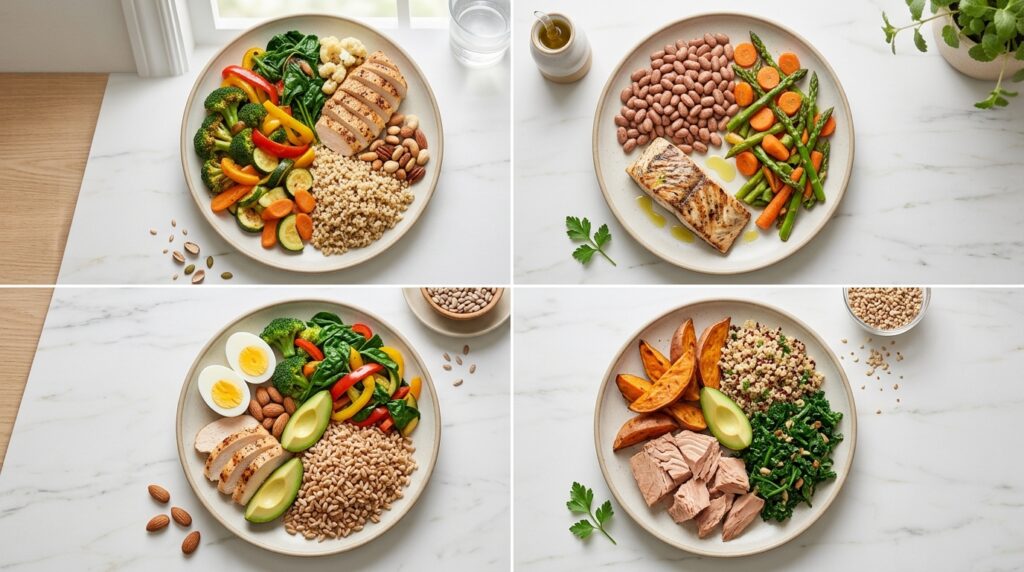
What a Real Balanced Plate Looks Like
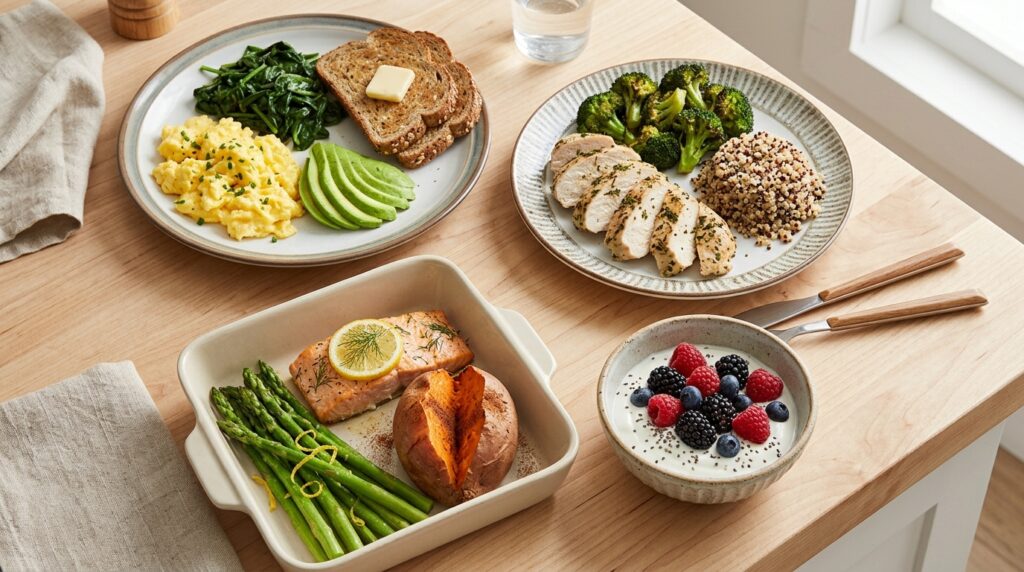
Theory is one thing, but seeing it on an actual plate makes it click faster. Here are some visual examples of what a balanced plate actually looks like:
Breakfast: Scrambled eggs, sautéed spinach, and a slice of whole grain toast with avocado
Lunch: Grilled chicken, roasted broccoli, and a small serving of quinoa
Dinner: Baked salmon, steamed asparagus, and a small sweet potato
Snack Mini Version: Greek yogurt with berries and a sprinkle of chia seeds
Late Session Fuel: Turkey and veggie wrap on a whole grain tortilla with a side of baby carrots
A Simple Balanced-Plate Grocery List
If you would rather shop once and build plates all week, this covers the basics for each section:
Vegetables: broccoli, spinach, bell peppers, zucchini, carrots, cauliflower, frozen mixed vegetables
Fruit: apples, berries (fresh or frozen), citrus
Protein: chicken breast, eggs, canned tuna or salmon, tofu, canned beans, Greek yogurt
Carbs: brown rice, quinoa, oats, whole grain bread or wraps, sweet potatoes
Fats: olive oil, avocado, mixed nuts, seeds
Buying a couple of items from each category is often enough to build a week of balanced plates without much daily decision making, one less thing to think about after a long day.
Common Mistakes to Avoid
Balanced eating is not about skipping meals, cutting out food groups or tracking every gram. Here is where most people trip up instead:
Skipping vegetables: Don’t let carbs or protein crowd out the vegetable half of your plate.
Fearing carbs entirely: Cutting them out completely often backfires into overeating later. Portion them instead.
Ignoring healthy fats: Fat-free does not mean healthy, your body needs some fat to function well.
Eating on autopilot: Use an actual plate, not a bowl or takeout container, so portions stay visible and consistent.
Treating snacks like a full plate: A snack does not need the full half quarter quarter split, a small pairing of protein and fiber is usually enough.
Letting “busy” become an excuse: The method is designed to survive busy weeks. A five minute plate beats a skipped meal or a vending machine dinner most days.
Conclusion:
Building a balanced plate is one of the simplest, most sustainable strategies for better health, no apps, no strict rules, just a smarter way to fill your plate. Think of it the way Invisigal treats her invisibility meter, you do not get the best results by burning everything at once and hoping to coast, you manage the resource deliberately so it is there when you need it. The same logic applies to a workday or a long gaming session: fuel deliberately early and you are less likely to run on empty later.
Start with your next meal: half vegetables, a quarter protein, a quarter carbs and a touch of healthy fat. Small, consistent choices like this one add up to lasting results, on the plate and mid shift alike.
FAQ
What exactly is a balanced plate?
A visual way to build meals: half vegetables, a quarter protein, a quarter carbs, plus a little healthy fat. No counting required.
How do I build a balanced plate step by step?
Fill half with vegetables, add a palm-sized protein, a cupped handful of carbs, and finish with a thumb-sized portion of fat.
Where does fruit fit into the balanced plate ratio?
Fruit usually counts with the vegetables in the “half the plate” section, since both are high in fiber and water.
How much protein should be on a balanced plate?
About a palm-sized portion, roughly 20–30 grams, more if you’re active or building muscle.
How does the balanced plate compare to MyPlate?
They’re close cousins. MyPlate is the USDA’s official version with a dairy serving, the balanced plate is a more flexible everyday take.
How can I meal prep balanced plates for the week?
Batch-cook a protein, a grain, and roasted vegetables, then portion them using the same half-quarter-quarter split.
Can the balanced plate method work with takeout or delivery food?
Yes. Treat the main protein as your protein quarter, add a side salad or vegetables to cover the half-plate gap, and go light on heavy sauces or extra carb sides.
Is the balanced plate method good for people who sit at a desk most of the day?
It works well for sedentary schedules specifically because the slower-digesting carbs and protein portion help avoid the energy spikes and crashes that come from grabbing quick, carb-heavy snacks between tasks.




T2D: Signs, Causes and Precautions
August 18, 2026[…] Balanced Plate: A Practical Framework for Eating Well […]
Hardy Hawkson
August 18, 2026https://invisigals.com/t2d/
Paxlovid Rebound: Critical Symptoms, Timeline & Treatment
August 18, 2026[…] getting enough sleep, drinking fluids, and eating nutritious meals. Your immune system is still actively clearing the […]