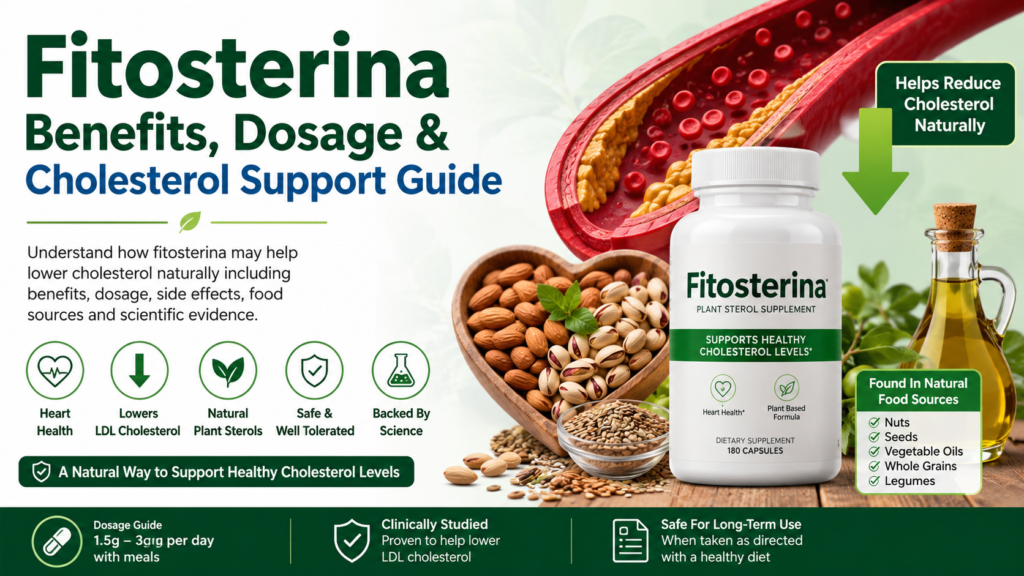
Fitosterina is becoming a popular natural option for people who want to lower cholesterol and improve heart health. It contains plant sterols, natural compounds that may help reduce the amount of cholesterol absorbed by the body. Many experts recommend combining this with a healthy diet, regular exercise and better lifestyle habits for improved cholesterol control.
Studies show that phytosterols may help lower LDL or bad cholesterol levels when used consistently. In this complete guide, you will learn how it works, its health benefits, possible side effects, recommended dosage and foods naturally rich in phytosterols.
This information can help you understand whether it is a safe and effective choice for supporting healthy cholesterol levels and overall cardiovascular wellness naturally.
What Is Fitosterina?
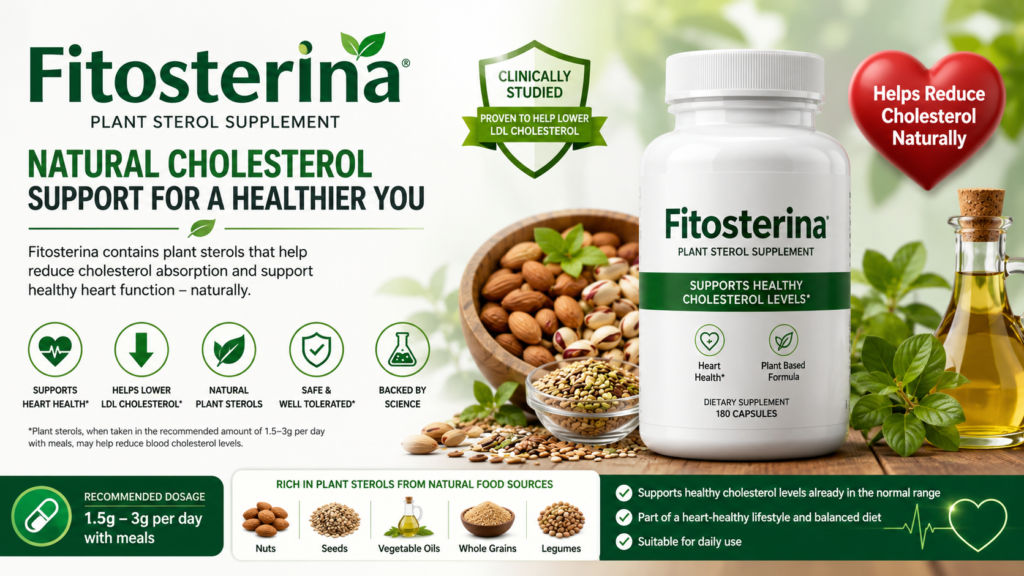
Fitosterina, also known as phytosterols or plant sterols, is a natural compound found in plants that has gained significant attention for its ability to support healthy cholesterol levels. These substances are structurally similar to cholesterol, allowing them to compete with cholesterol absorption inside the digestive system.
As cardiovascular disease continues to rise worldwide, many people are searching for natural ways to support heart health. Fitosterina has become one of the most researched natural cholesterol support compounds available today due to its scientifically backed effects on LDL cholesterol reduction. In this complete guide you will learn:
What phytosterol is
- How phytosterols work
- The health benefits
- Best food sources
- Recommended dosage
- Potential side effects
- Fitosterina vs statins
- Scientific studies and expert opinions
- Frequently asked questions
Understanding Phytosterols
Phytosterols are naturally occurring compounds found in vegetables, nuts, fruits, seeds, legumes and vegetable oils. The two most common phytosterols are Beta sitosterol, Campesterol and Stigmasterol.
These plant compounds resemble cholesterol chemically which is why they can interfere with cholesterol absorption during digestion.
When consumed regularly phytosterols may help lower LDL cholesterol levels while supporting overall cardiovascular health.
How Fitosterina Works
The Cholesterol Absorption Process
When you eat foods containing cholesterol, the digestive system absorbs part of that cholesterol into the bloodstream. It competes with cholesterol during this absorption process.
Because phytosterols resemble cholesterol molecules they partially block cholesterol from entering the bloodstream.
This leads to Reduced cholesterol absorption, Lower LDL cholesterol levels, Improved lipid balance, Better cardiovascular support.
Scientifically Proven Cholesterol Support
Research consistently demonstrates that phytosterols may reduce LDL cholesterol significantly when consumed daily.
Clinical studies often suggest that consuming approximately 2 grams of phytosterols daily may reduce LDL cholesterol by 8 to 15%.
BENEFITS
Supports Healthy Cholesterol Levels
The primary reason people use this is for natural cholesterol management.High LDL cholesterol is associated with: Plaque buildup, Reduced blood flow, Cardiovascular disease risk, Arterial damage.
Phytosterols help reduce cholesterol absorption naturally making them a popular nutritional strategy for heart health.
Supports Cardiovascular Health
Healthy cholesterol levels are essential for long-term cardiovascular wellness.It may contribute to: Better circulation, Improved arterial function, Reduced cardiovascular stress Heart healthy lipid balance.
Many nutrition experts recommend combining phytosterols with healthy diets and regular exercise for maximum heart benefits.
Natural Alternative for Cholesterol Support
Many individuals prefer natural cholesterol management approaches before considering prescription medications. Phytosterol offers plant based cholesterol support, non prescription availability a generally mild side effect profile and easy integration into daily diets.
However people with severe cholesterol conditions or cardiovascular risks should consult healthcare professionals before replacing prescribed cholesterol lowering treatments or medications.
Supports a Healthy Lifestyle
Phytosterol rich diets are commonly linked with Mediterranean diets, high fiber nutrition plans, plant based eating and cardiovascular wellness programs.
This may work more effectively when combined with healthy nutrition, regular physical activity, proper weight management and reduced saturated fat intake. This balanced lifestyle approach can help support natural cholesterol reduction and long term heart health improvement.
Best Natural Sources
Certain foods naturally contain higher concentrations of phytosterols.
Top Phytosterol Foods
| Food | Phytosterol Content |
| Sunflower seeds | Very High |
| Almonds | High |
| Pistachios | High |
| Olive oil | Moderate |
| Avocados | Moderate |
| Sesame seeds | High |
| Legumes | Moderate |
| Whole grains | Moderate |
Adding these foods regularly to your diet may naturally increase phytosterol intake.
Supplements
Although phytosterols occur naturally in food many people choose supplements to achieve clinically effective amounts.
Common Supplement Types
- Capsules
- Softgels
- Powder formulas
- Functional beverages
- Cholesterol-lowering spreads
Supplements are often designed specifically for cardiovascular support.
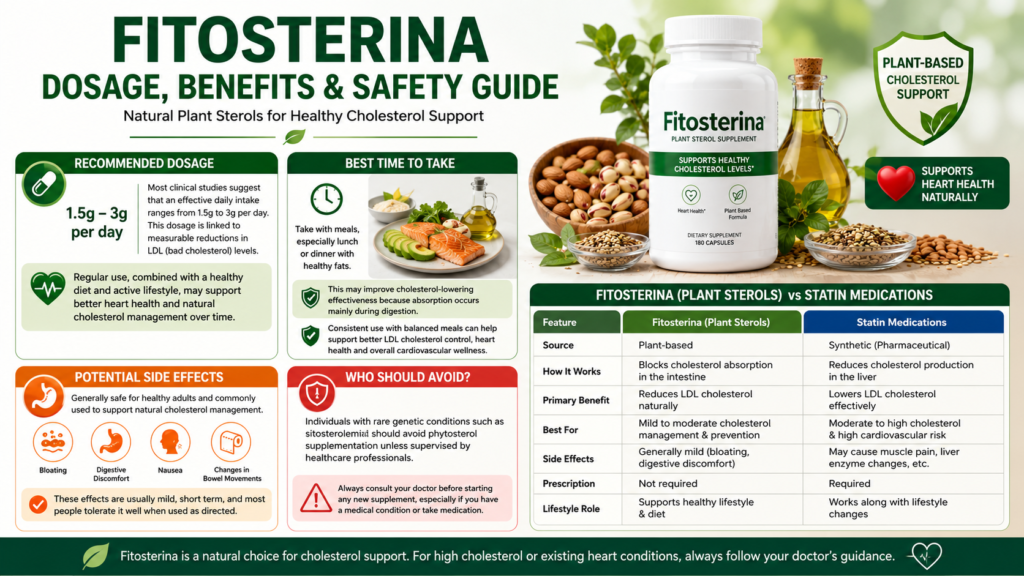
Recommended Dosage
Most clinical studies suggest that an effective daily intake of fitosterina ranges from 1.5g to 3g per day. This dosage is commonly linked to measurable reductions in LDL or bad cholesterol levels
Regular use, combined with a healthy diet and active lifestyle, may support better heart health and natural cholesterol management over time.
Best Time to Take Fitosterina
Experts generally recommend taking with meals, especially during lunch or dinner alongside healthy fats. This may improve cholesterol lowering effectiveness because cholesterol absorption mainly occurs during digestion.
Consistent use with balanced meals can help support better LDL cholesterol control, heart health and overall cardiovascular wellness naturally and effectively.
Potential Side Effects
It is generally considered safe for healthy adults and is commonly used to support natural cholesterol management.
Some individuals may experience mild side effects such as bloating, digestive discomfort, nausea or temporary changes in bowel movements. These effects are usually mild and short term. Most people tolerate it well when used as directed.
Who Should Avoid?
Individuals with rare genetic conditions such as sitosterolemia should avoid phytosterol supplementation unless supervised by healthcare professionals.Many people compare phytosterols with statin medications.
| Feature | phytosterol | Statins |
| Source | Natural plant compounds | Prescription drugs |
| Function | Blocks cholesterol absorption | Reduces cholesterol production |
| Prescription Required | No | Yes |
| Side Effects | Usually mild | Can be stronger |
| LDL Reduction | Moderate | Significant |
Which Option Is Better?
The answer depends on:
- Cholesterol severity
- Family history
- Cardiovascular risk
- Lifestyle habits
- Doctor recommendations
For mild to moderate cholesterol concerns phytosterols may be a helpful natural strategy.
Foods That May Slow Your Weight Loss Progress
Making smart food choices is an important part of any weight loss journey. While no single fruit causes weight gain on its own, some are higher in natural sugars and calories than others. Learning which fruits to enjoy in moderation can help you maintain a balanced diet and support your weight management goals. Read our complete guide to discover the 5 fruits to avoid for weight loss, healthier alternatives, and practical nutrition tips.
Scientific Research On Fitosterina
Phytosterols are among the most researched natural cholesterol-support ingredients.
Research findings commonly show: Reduced LDL cholesterol, Improved cholesterol absorption control, Cardiovascular support, Good long term safety profile
A 2024 meta-analysis involving 1,777 participants found phytosterol supplementation significantly reduced LDL cholesterol levels.Health organizations in several countries recognize phytosterols as part of cholesterol management recommendations.
The Mediterranean Diet
The Mediterranean diet naturally includes phytosterol rich foods such as olive oil, nuts, seeds legumes, vegetables and whole grains.
This heart healthy eating pattern is widely associated with better cholesterol balance, improved cardiovascular health and a lower risk of heart disease. Combining phytosterol rich foods with a Mediterranean diet may support natural cholesterol management and overall wellness.
How Long Does Fitosterina Usually Take to Work?
The effectiveness depends on diet quality, cholesterol levels, supplement dosage and overall lifestyle habits. People who follow a healthy diet and stay physically active often see better results.
With consistent daily use many individuals notice measurable improvements in LDL cholesterol levels within a few weeks, supporting long term heart health naturally and effectively.
Build a Healthy Eating Routine with a Balanced Plate Approach
Discover how the balanced plate method helps create nutritious meals by combining the right portions of proteins, vegetables, whole grains and healthy fats. This simple framework makes healthy eating easier supports better nutrition and helps maintain long term wellness.
Common Mistakes People Make
Common mistakes with Fitosterina plant sterol supplements include taking inconsistent doses using it without dietary changes, expecting fast results, taking it at the wrong time not with meals,overdosing and ignoring possible interactions with cholesterol medicines. Many also skip medical advice or buy low quality supplements
Ignoring Diet
Phytosterols work best alongside:
- Reduced saturated fats
- Increased fiber
- Healthy nutrition habits
Expecting Instant Results
Natural cholesterol support strategies usually require consistency and patience.
Tips to Maximize Results
For optimal benefits:
- Exercise regularly
- Eat more fiber
- Reduce processed foodsContinuous Dose-Response Relationship of the LDL Cholesterol Lowering Effect of Phytosterol Intake.
- Limit trans fats
- Maintain healthy body weight
- Stay consistent with supplementation
Conclusion
Fitosterina has become one of the most respected natural cholesterol support ingredients available today. Its ability to reduce cholesterol absorption naturally makes it valuable for individuals seeking plant based cardiovascular support.
When fitosterina is combined with healthy nutrition, regular exercise, weight management, professional medical guidance, It may help support long term cardiovascular wellness and healthier cholesterol balance naturally.
FAQs
What is fitosterina used for?
This is commonly used to help lower LDL or bad cholesterol naturally and support better heart health. It works by reducing cholesterol absorption in the digestive system. Many people use this alongside a healthy diet, exercise and cholesterol management plans to improve cardiovascular wellness and maintain healthier cholesterol levels safely.
Does it really lower cholesterol?
Plant sterols work by reducing cholesterol absorption in the intestines which may lower LDL levels by 7 to15% with regular use. Combined with a healthy diet and exercise. Fitosterina may support heart health and improve overall cholesterol management safely and effectively.
Is phytosterol safe?
Fitosterina is generally considered safe for most adults when taken in recommended amounts. It may help lower LDL cholesterol naturally and support heart health. Some people may experience mild digestive discomfort. Individuals taking cholesterol medications, pregnant women, or people with medical conditions should consult a healthcare professional before use.
Can this replace statins?
Fitosterina (plant sterols) may help lower LDL cholesterol naturally, but it cannot fully replace statins for people with high cholesterol or heart disease risk. Statins are stronger and medically proven to reduce cardiovascular events. Fitosterina works best alongside a healthy diet, exercise, and medical guidance for better cholesterol management and heart health.
What foods contain phytosterols naturally?
Phytosterols are naturally found in healthy foods like nuts, seeds, vegetable oils, avocados, whole grains, legumes, soybeans and wheat germ. Many cholesterol lowering foods including fortified margarine, yogurt, and orange juice, also contain plant sterols. These foods may help support heart health and reduce LDL cholesterol naturally when eaten regularly.
How long does it take to work?
Fitosterina usually starts lowering LDL bad cholesterol within 2 to 3 weeks of consistent daily use. Most people see the full effect after about 4 weeks when taking around 1.5 to 3 g daily with meals and following a heart healthy diet.Studies show LDL cholesterol may decrease by roughly 7to15% depending on dosage, diet and individual response.
Learn more about us on Invisigal
In Dispatch, Invisigal is a standout character defined by depth, choice and transformation. Her journey from a troubled past to a possible heroic future captures the essence of the game’s storytelling. Whether she rises or falls depends entirely on the player making her one of the most memorable and impactful characters in modern narrative driven games.