
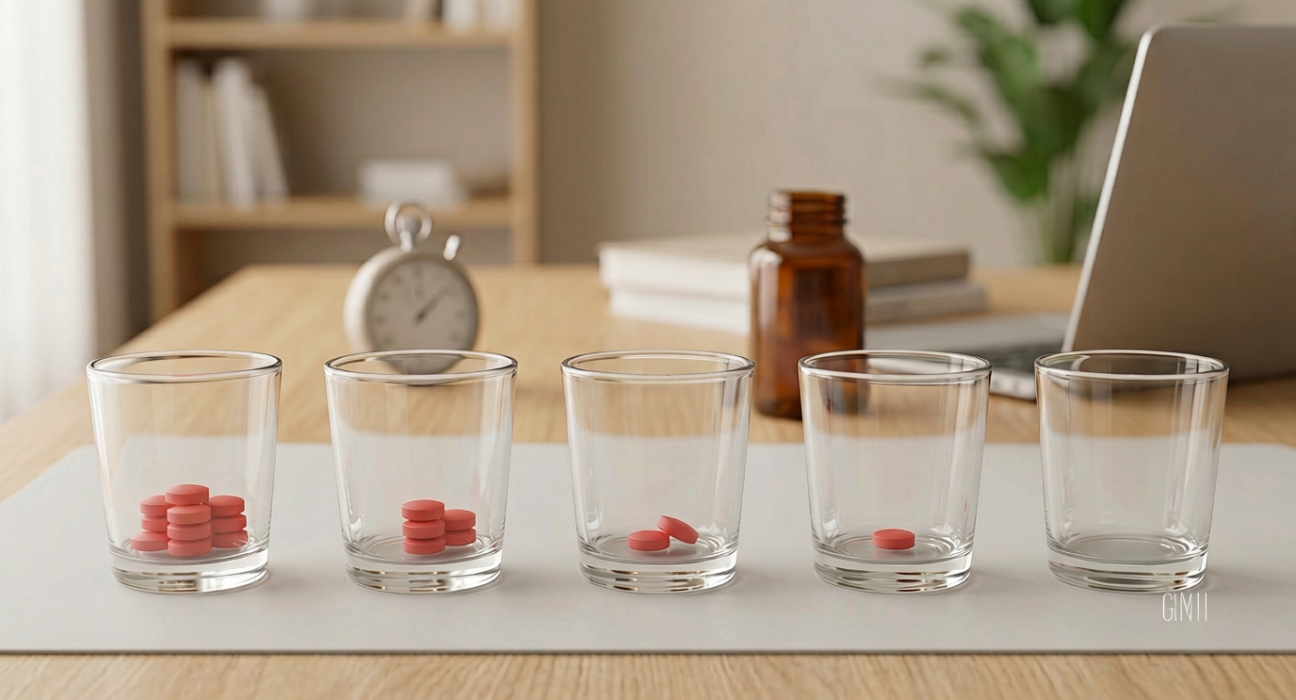
If you’ve taken buprenorphine, whether as Suboxone, Subutex, or another brand, you’ve probably wondered how long it stays in your system before it’s fully out. The honest answer is: it depends heavily on what form you took, how long you’ve been using it, and how your body processes it.
Below, we’ll walk through exactly what drives that range so you’re not left guessing.
The Quick Answer
For someone taking standard sublingual buprenorphine, the kind that dissolves under the tongue, like Suboxone or Subutex once a day, here’s the general picture:
The drug’s effects and active presence in your blood mostly wind down within about 5 to 8 days after the last dose, but sensitive lab tests can still pick up traces in urine for up to two weeks in long-term daily users.
Hair testing is the outlier, it can detect past use for around three months. Extended-release injectable buprenorphine Sublocade is a different story entirely, since it’s designed to release slowly for weeks, and we’ll cover that separately below.

What Buprenorphine Is, and Why It Outlasts Most Opioids
Buprenorphine is a partial opioid agonist. In plain terms, that means it attaches to the same brain receptors as opioids like heroin or oxycodone, but it only partially activates them. This is exactly why it’s used in medication-assisted treatment (MAT) for opioid use disorder. It eases cravings and withdrawal without producing the intense high of a full opioid, and it has a built-in ceiling effect that makes overdose less likely than with full agonists.
That same partial-agonist chemistry is also why it stays in your body longer than most opioids. Heroin and oxycodone typically clear the body within a day or two. Buprenorphine binds more tightly and releases more slowly, which is part of why it’s effective as a once-daily treatment in the first place but it also means it takes longer to fully leave your system.
Buprenorphine’s Half-Life, Explained Simply
Half-life is just the time it takes for your body to clear half of the drug from your blood. If you take 8mg of buprenorphine, after one half-life you’d have roughly 4mg left in your system, after two half-lives about 2mg, and so on. As a rule of thumb, it takes about five half-lives for a drug to be considered essentially cleared from the bloodstream.
According to FDA prescribing information, sublingual buprenorphine, dissolved under the tongue, has a half-life of roughly 24 to 42 hours. Take the middle of that range, around 33 hours, and multiply by five, and you land close to a week for the drug to be mostly gone from your blood. That’s why most sources land somewhere around 5 to 8 days as the point where buprenorphine is largely, though not entirely, out of your system.
There’s a wrinkle, though. When your liver breaks down buprenorphine, it produces a metabolite called norbuprenorphine. A metabolite is simply the leftover compound your body creates as it processes a drug. Norbuprenorphine has a much longer half-life, up to around 150 hours, or over six days, and it’s often what extends urine detection windows well past the point where the original drug is gone from your blood. This is one of the most commonly skipped details, and it explains a lot of the confusion around why detection windows vary so widely.
How Long It Shows Up in Different Tests
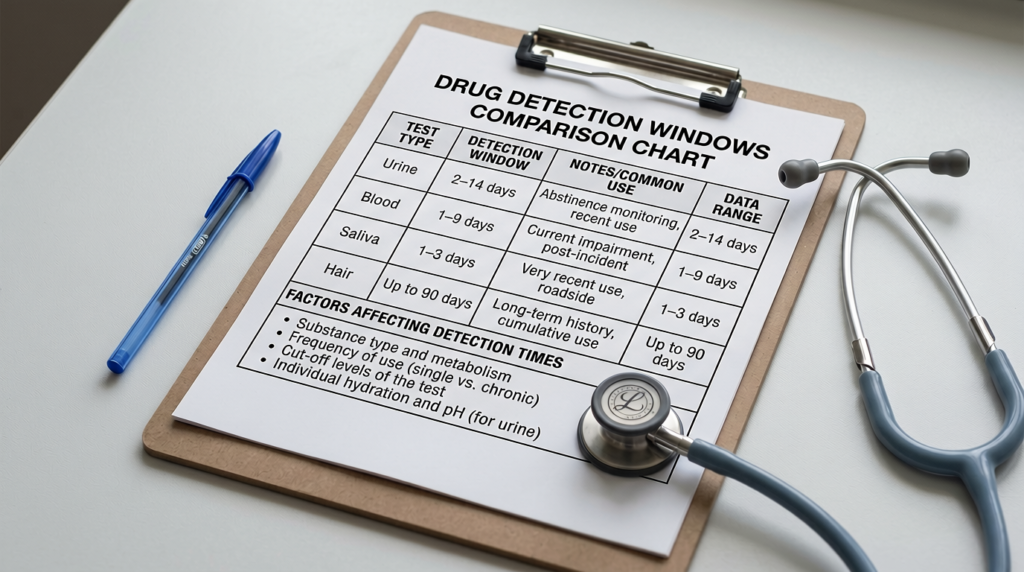
Detection windows differ by sample type because each one measures something slightly different,, recent use, cumulative exposure, or historical use.
Urine
Urine is the go-to sample for both clinical monitoring and legal testing. After a single dose, buprenorphine or norbuprenorphine is typically detectable for roughly 2 to 7 days. For people on a steady daily dose over weeks or months, that window commonly stretches to 10–14 days, since the drug and its metabolite build up in the body over time.
Blood
Blood testing is more invasive and less commonly used outside medical settings, but it’s the most useful when timing actually matters, for example, before surgery. Reported windows vary by source, generally landing somewhere between 1 and 9 days, with most clinical guidance pointing toward the shorter end like 1–2 days for typical use.
Saliva
Saliva testing is non-invasive and increasingly used for on-site checks. It generally mirrors blood’s detection window, roughly 1 to 3 days after the last dose, occasionally longer in heavier or more chronic use.
Hair
Hair testing has by far the longest lookback window: around 90 days. It doesn’t tell you about recent use in hours or days, it’s a historical record used mostly for legal proceedings, custody cases, or long-term monitoring, not for everyday clinical decisions like adjusting a dose.
Does the Type of Medication Change the Timeline? Suboxone vs. Subutex vs. Sublocade
This is the part most people glossed over, and it matters more than almost anything else.
Suboxone and Subutex are both sublingual formulations. Suboxone combines buprenorphine with naloxone, while Subutex is buprenorphine alone. Because they’re dosed and absorbed the same way, they follow essentially the same detection and half-life timelines described above.
Sublocade is a completely different delivery system: a monthly injectable that forms a solid depot under the skin and releases buprenorphine slowly over weeks. Because it’s engineered for slow, sustained release rather than a single absorption spike, it stays detectable in the body far longer than sublingual forms, realistically for months after the last injection, not days.
If you’ve switched to or from an extended-release injectable, standard sublingual detection windows simply don’t apply to you, and this is worth discussing directly with your prescriber rather than estimating from general timelines.
Why Two People on the Same Dose Clear It at Different Speeds
Two patients on an identical 8mg daily dose can have meaningfully different clearance times. A few factors consistently make the biggest difference:
Liver function matters more than almost anything else, since buprenorphine is processed almost entirely through the liver. FDA data shows that in people with moderate to severe liver impairment, buprenorphine’s half-life can increase by more than 50%, which significantly extends how long it lingers.
Body fat percentage also plays a role, since buprenorphine is fat-soluble and can be stored in fatty tissue and released slowly over time.
Metabolic rate, age, hydration, dose size, and how long someone has been taking the medication, a single dose clears faster than months of daily dosing, because of drug buildup all shift the timeline as well.
Will a Standard Drug Test Even Catch It?
Here’s a detail that changes the entire equation for a lot of people searching this question: standard 5-panel and 10-panel drug tests, the kind most employers use, do not screen for buprenorphine at all. These panels are built to catch substances like THC, cocaine, amphetamines, and common opioids such as morphine or codeine. Buprenorphine has a different chemical structure and isn’t picked up by those standard opioid screens.
Buprenorphine only shows up when a test specifically includes a buprenorphine panel or an expanded opioid-treatment screen. These are used in addiction treatment monitoring, certain probation or court-ordered testing, and some specialized workplace screenings, but they’re the exception, not the default. If you’re on prescribed buprenorphine and worried about a routine employment drug test, it’s genuinely unlikely to appear unless the employer has specifically requested that panel.
What Happens After Buprenorphine Leaves Your System – Withdrawal Timeline
Because buprenorphine clears the body slowly, withdrawal is generally slower and milder to onset compared with full opioid agonists, this is actually one of the reasons it’s used to help people taper off other opioids.
Early withdrawal symptoms (anxiety, muscle aches, sweating, trouble sleeping) commonly start around 24 to 72 hours after the last dose, later than the near-immediate onset seen with short-acting opioids.
Symptoms often peak within the first week and then gradually ease, though some people report lingering fatigue, mood changes, or sleep disruption for several weeks, sometimes referred to as a protracted withdrawal phase. This drawn-out pattern is precisely why abrupt discontinuation isn’t recommended; tapering under medical supervision is the standard, safer approach.
Conclusion
There’s no single number that answers “how long does buprenorphine stay in your system” and that’s really the point. The honest range runs from about a week, for the drug to mostly clear a typical sublingual dose, out to several months for extended-release injectables like Sublocade. What matters most for your specific situation is the formulation you’re on, how long you’ve been taking it, and how your liver processes it. If you’re navigating a drug test, a medication switch, or an upcoming surgery, the safest move is always to talk it through with your prescriber, who can give you a timeline based on your actual dose and health history rather than a broad estimate.
FAQ’S
How long does buprenorphine stay in your urine?
Typically 2 to 7 days after a single dose, extending to roughly 10–14 days with regular daily use, largely because of buildup of its metabolite, norbuprenorphine.
Does buprenorphine show up on a regular drug test?
No — standard 5-panel and 10-panel workplace tests don’t screen for it. It only appears on tests specifically designed to detect buprenorphine or opioid-treatment medications.
How long after stopping buprenorphine will I feel normal again?
Acute withdrawal symptoms usually ease within one to two weeks, though some people experience milder lingering symptoms, like fatigue or sleep issues, for several weeks. This varies a lot by individual and dosing history.
What’s the difference between buprenorphine’s half-life and how long it’s “in your system”?
Half-life measures how long the drug’s blood level takes to drop by half; being “in your system” more broadly includes how long sensitive tests can still detect trace amounts, which is usually much longer than the half-life alone suggests.
Can I speed up how fast buprenorphine leaves my body?
There’s no medically proven way to significantly speed clearance beyond normal liver function, hydration, and time. Be cautious of products claiming to “flush” opioids — most aren’t backed by evidence and can even interfere with accurate testing in medical settings.
Does Sublocade stay in my system longer than Suboxone?
Yes, significantly. Because Sublocade is a slow-release monthly injection, it stays detectable for months after the last injection, unlike sublingual forms that clear over days to weeks.
Will taking buprenorphine affect a pain medication test before surgery?
It can, buprenorphine occupies opioid receptors and can complicate pain management timing. This is exactly the kind of situation where you should tell your surgical team about your buprenorphine use well in advance, since some protocols involve adjusting or pausing it before a procedure under medical guidance.
Is it dangerous to have buprenorphine and another opioid in your system at the same time?
Combining buprenorphine with other opioids or with substances like benzodiazepines and alcohol can be dangerous and increases the risk of dangerous sedation or breathing problems. If this situation applies to you, it’s important to speak with a doctor or pharmacist rather than relying on general timelines.