
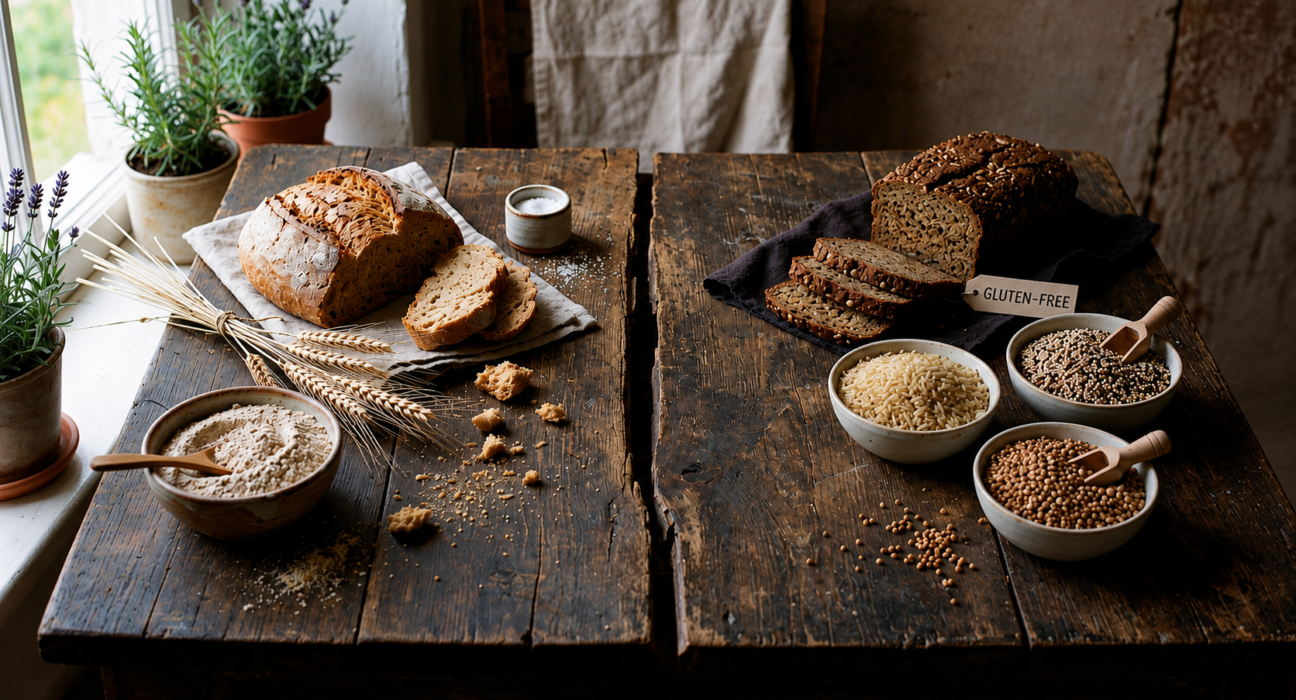
Ask five different people whether gluten is bad for you, and you will likely get five different answers. Some will tell you it is practically a toxin best avoided altogether. Others will say the whole gluten-free trend is a myth with no real science behind it. Neither extreme holds up. Gluten is not bad for most people, but it is genuinely bad for a smaller group whose bodies react to it in specific, measurable ways and the goal here is to help you figure out which group you actually belong to.
What Gluten Actually Is and Isn’t
Gluten is a protein, not a chemical additive or a toxin. It forms when two proteins, glutenin and gliadin, combine with water and get kneaded or mixed. That combination is what gives bread its stretch and pizza dough its chew. Without gluten, dough falls apart instead of holding air bubbles, which is why gluten-free bread often has a denser, crumblier texture.

Gluten shows up naturally in wheat, barley, rye, and a wheat-rye hybrid called triticale. It also hides in less obvious places: soy sauce, beer, some salad dressings, malt vinegar, and processed meats that use wheat-based fillers or binders. Oats are naturally gluten-free but are frequently processed in facilities that also handle wheat, so cross-contact is common enough that people with celiac disease need oats labeled specifically “gluten-free.”
A concentrated, isolated form of this protein, called vital wheat gluten, is sometimes added to commercial bread to boost rise and chewiness, and it is also the base ingredient in seitan, a meat substitute popular in vegetarian and vegan cooking. If you are avoiding gluten, seitan is one of the easiest things to miss on a menu, since it is often just labeled “wheat meat” or “mock duck.”
Which foods contain gluten and which surprising ones don’t
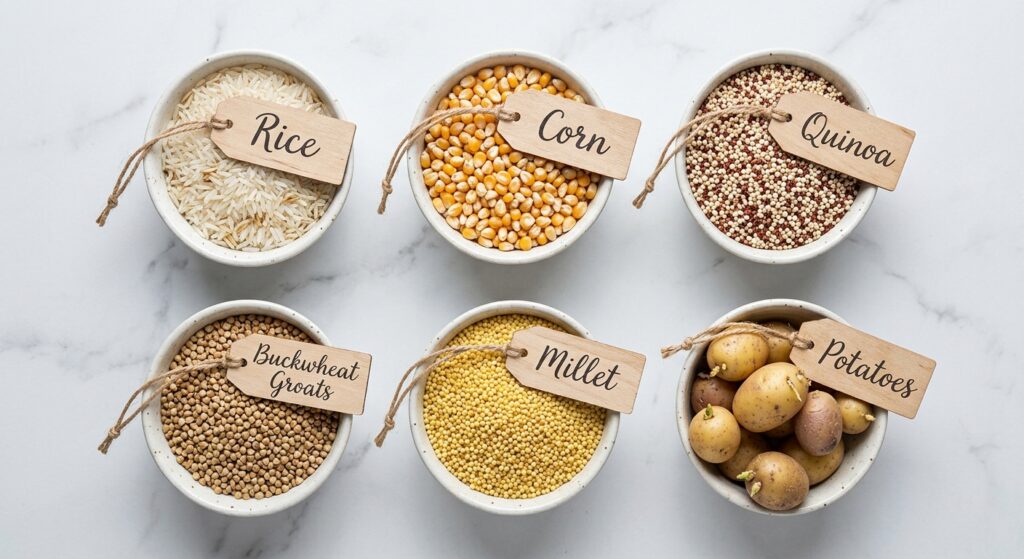
Rice, corn, quinoa, buckwheat, millet, and potatoes are all naturally gluten-free, despite buckwheat’s confusing name. Amaranth and teff, less common in Western kitchens but staples elsewhere, are also gluten-free grains worth knowing about if you’re building meals around variety rather than substitutes.
So, Is Gluten Bad for You? The Honest Answer
For the vast majority of people, no. Wheat, the main source of gluten in most diets, brings along fiber, B vitamins, iron, and plant protein, nutrients tied to lower rates of heart disease and better digestive health in large population studies. There is no solid evidence that gluten itself causes inflammation, weight gain, or fatigue in someone whose gut can process it normally.
But “most people” isn’t “everyone.” A smaller, specific group of people has an immune or digestive system that genuinely cannot handle gluten, and for them, it is not a preference, it is a medical necessity to avoid it.
When Gluten Is Genuinely a Problem
Celiac disease
Celiac disease is an autoimmune condition, not a food intolerance. When someone with celiac disease eats gluten, their immune system attacks the lining of their own small intestine, flattening the tiny finger-like structures, villi, that absorb nutrients. That damage leads to malabsorption, the gut simply cannot pull nutrients out of food properly anymore, even when the diet itself is adequate. Over time, untreated celiac disease can lead to anemia, bone thinning, and nutrient deficiencies even in someone who eats plenty of food.
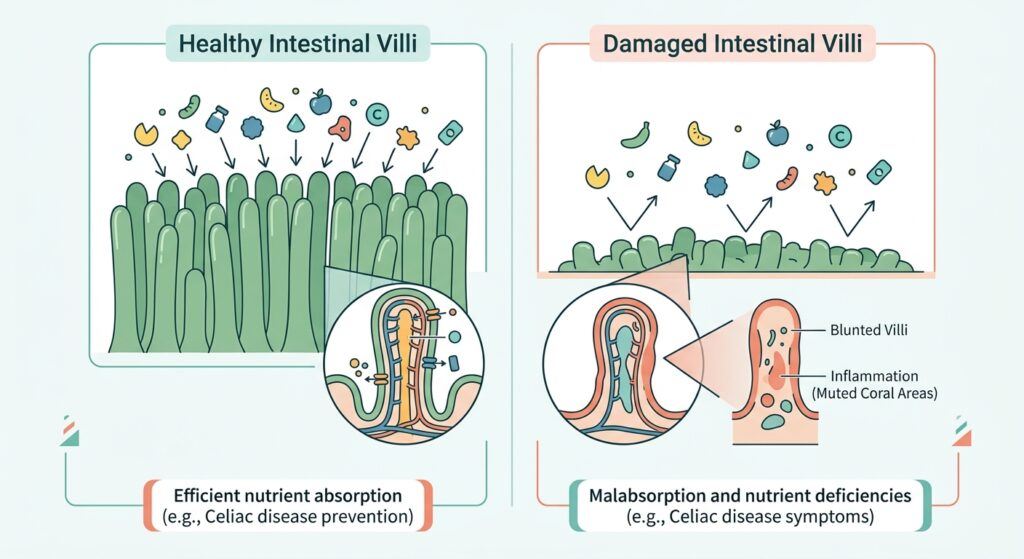
Some people have what is sometimes called silent celiac disease, where the intestinal damage is happening without obvious digestive symptoms, which is part of why screening through a blood test, usually one that checks for anti-tTG antibodies, matters more than waiting for symptoms to appear.
Current estimates suggest celiac disease affects roughly 1% of the population, though many cases go undiagnosed for years because symptoms like, bloating, fatigue, joint pain, skin rashes usually get blamed on other things first.
One specific skin reaction, dermatitis herpetiformis, causes an intensely itchy, blistering rash and is considered a direct skin manifestation of celiac disease. Anyone diagnosed with it is typically found to have celiac disease even without obvious digestive symptoms.
Non-celiac gluten sensitivity
This is where a lot of confusion sits. People with non-celiac gluten sensitivity get real symptoms like bloating, brain fog, headaches, joint pain, after eating gluten, but they test negative for both celiac disease and wheat allergy. Researchers do not yet fully understand the mechanism, and there is no blood test or biopsy that confirms it the way there is for celiac disease.
One hypothesis under study is increased intestinal permeability, sometimes called “leaky gut” in popular writing, where the lining of the small intestine lets undigested particles pass through more easily than it should, though this remains an active research area rather than a settled explanation. Diagnosis is mostly done by ruling everything else out first, then trying a structured elimination and reintroduction of gluten under supervision.
Wheat allergy
A wheat allergy is a true allergic reaction, involving the immune system’s IgE antibodies, and it is different from both celiac disease and gluten sensitivity. Someone with a wheat allergy can sometimes tolerate barley or rye just fine, the reaction is to proteins in wheat specifically, not to gluten as a category. Reactions can include hives, swelling, or in rare cases, anaphylaxis, and they tend to show up faster than celiac symptoms do.
Could It Be FODMAPs, Not Gluten?
Here is something not discussed at all, and it is one of the most useful pieces of this whole puzzle. Wheat contains a type of carbohydrate called fructans, which belong to a broader group known as FODMAPs (fermentable oligo-, di-, monosaccharides, and polyols). These carbs are not well absorbed by everyone, and when they reach the large intestine undigested, gut bacteria ferment them, producing gas and bloating.
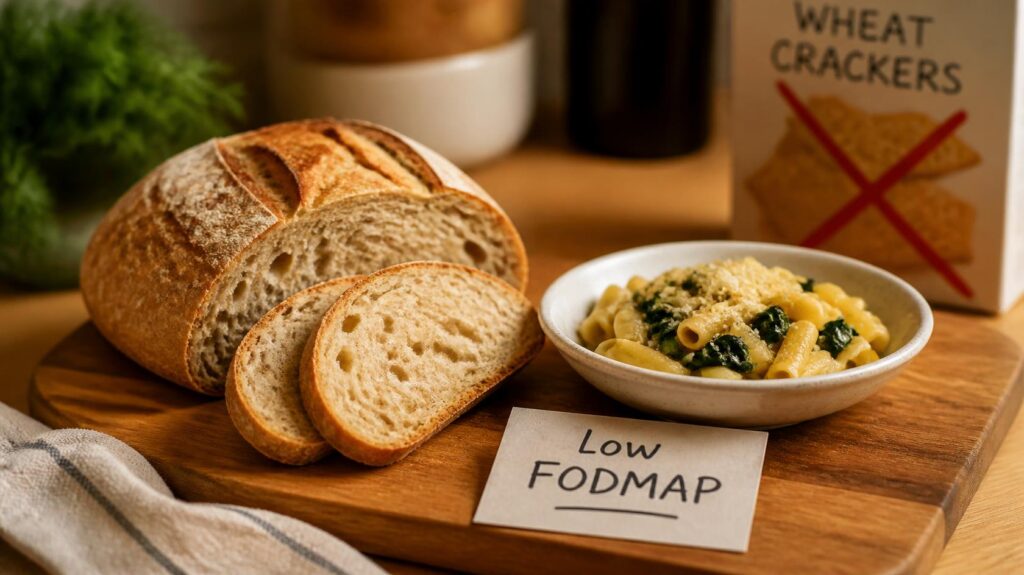
Some people who feel better on a gluten-free diet are not actually reacting to gluten at all, they are reacting to the fructans that happen to travel alongside it in wheat-based foods. This matters practically, because it means cutting out all gluten-containing foods might be more restrictive than necessary. A low-FODMAP approach, guided by a dietitian, can sometimes pinpoint the actual trigger without giving up gluten permanently.
This is also where a lot of the confusion between IBS and gluten intolerance comes from. Irritable bowel syndrome (IBS) is a separate digestive condition defined by its own set of symptoms which include cramping, bloating, altered bowel habits and it’s driven largely by sensitivity to FODMAPs, not gluten specifically. Someone with IBS can react to wheat because of its fructan content while tolerating gluten just fine in a low-FODMAP form, like sourdough or a small amount of pasta. Mixing up the two often leads people to blame gluten when the actual issue is a broader carbohydrate sensitivity.
What Happens If You Cut Out Gluten Without Needing To
This is the part that rarely gets said plainly: going gluten-free when you do not medically need to is not a neutral choice. It is a trade-off, and it often comes out worse nutritionally.
Refined wheat flour in the U.S. and several other countries is fortified with iron and B vitamins like folate, thiamine, and niacin, a public health measure originally introduced to prevent deficiency diseases.
Gluten-free substitute products, especially packaged ones like gluten-free bread, crackers, and pasta, are usually made from rice flour, tapioca starch, or potato starch, none of which carry that same fortification. Several product analyses have found gluten-free packaged foods tend to be lower in fiber and protein and higher in sugar, fat, or salt than their wheat-based counterparts, largely because manufacturers add these ingredients to mimic gluten’s texture and shelf life.
None of this means gluten-free eating is inherently unhealthy, plenty of gluten-free diets built around whole foods like rice, beans, vegetables, and naturally gluten-free grains are perfectly balanced. The problem shows up specifically when someone swaps wheat bread for gluten-free bread and assumes it is a straight health upgrade, without noticing what else changed on the ingredient label.
There is also a gut microbiome angle worth knowing: whole grains, including gluten-containing ones like whole wheat, feed beneficial gut bacteria through their fiber content, so cutting them out without replacing that fiber elsewhere can quietly shift your gut microbiome in a less favorable direction.
How to Actually Find Out If Gluten Is the Problem
If you suspect gluten is behind your symptoms, the most important thing to do is get tested before you cut it out. Celiac disease blood tests look for specific antibodies, but they only work accurately if you’re still eating gluten regularly at the time of testing. If stopped too early, the test can come back falsely negative even if you do have celiac disease.
This practice of eating gluten regularly before testing has a name, a gluten challenge, and it is usually recommended for at least a few weeks before bloodwork, since stopping too early is one of the most common reasons celiac testing comes back inaccurate.
A typical path looks like this:
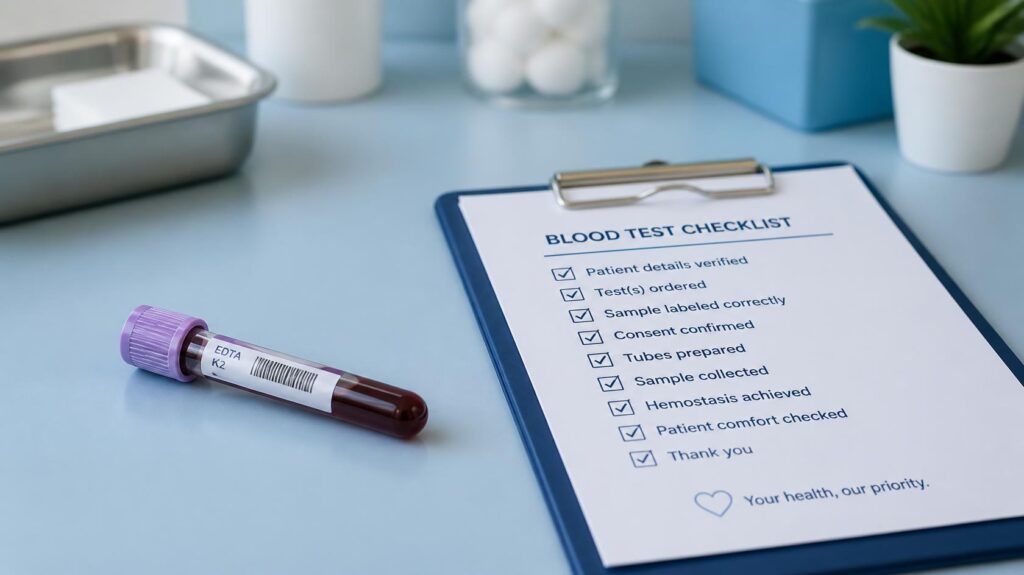
- start with a blood test for celiac antibodies while still eating gluten normally, and
- If that is positive, follow up with an endoscopy and small intestine biopsy to confirm.
- If celiac and wheat allergy are both ruled out but symptoms persist, a structured elimination diet — removing gluten completely for a set period, then reintroducing it under a dietitian’s guidance — can help confirm non-celiac gluten sensitivity.
Self-diagnosing by quietly dropping gluten for a few weeks skips this process and can make later testing unreliable.
Reading Gluten-Free Labels the Right Way
If you do need to eat gluten-free, whether medically or by choice, the label matters more than the “gluten-free” claim on the front of the package.
Check the ingredient list for fiber content, whole grain rice flour, buckwheat flour, and legume-based flours (like chickpea or lentil flour) tend to offer more fiber and protein than pure rice or tapioca starch blends.
Look at the sugar content too, since some gluten-free baked goods add extra sugar to compensate for texture loss.
And if fortification matters to you, a few brands now fortify gluten-free flour blends with iron and B vitamins, it is worth checking, since most still don’t.
Conclusion:
Most people who ask “is gluten bad for you” are not the people who actually need to avoid it. They are often dealing with something else entirely, a fructan sensitivity, irregular eating patterns, or a general diet quality issue and gluten becomes the easy thing to blame because it is the trend they have heard about. The people who genuinely need to worry are those with a diagnosed condition, or those with persistent, unexplained digestive symptoms who haven’t been tested yet.
If you fall into neither group, gluten is not something to fear. If you suspect you might, the answer is not to quietly experiment for months, it is to get tested while you can still get an accurate result.
FAQ’s
Does gluten cause inflammation in everyone?
No. Gluten triggers an inflammatory immune response specifically in people with celiac disease. In people without celiac disease, wheat allergy, or gluten sensitivity, there’s no solid evidence that gluten causes inflammation.
Can you suddenly become gluten intolerant as an adult?
Yes. Celiac disease and non-celiac gluten sensitivity can develop at any age, even in people who ate gluten without issue for decades. Researchers don’t fully understand what triggers the onset, though illness, pregnancy, or major stress are sometimes reported around the time symptoms start.
Is gluten-free the same as low-carb?
No, and this is a common mix-up. Gluten-free simply means the food doesn’t contain wheat, barley, or rye proteins such as rice, potatoes, and gluten-free pasta are all gluten-free but still carbohydrate-heavy.
What are the first signs of gluten intolerance?
Common early signs include bloating, stomach pain, diarrhea or constipation, fatigue, and headaches after eating gluten-containing foods. Some people also notice skin issues or joint pain, though these symptoms overlap with many other conditions, which is why testing matters more than symptom-spotting alone.
If I feel fine after eating gluten, is there any reason to cut it out anyway?
Not based on current evidence. If you have no diagnosed condition and no symptoms, there is no established health benefit to removing gluten, and doing so may mean losing out on fiber and fortified nutrients found in whole wheat products.
Can gluten sensitivity go away on its own?
There is not strong evidence that non-celiac gluten sensitivity resolves on its own, though some people find their tolerance changes over time. Celiac disease, by contrast, does not go away and it requires lifelong avoidance of gluten once diagnosed.
Is spelt or sourdough bread easier to digest than regular wheat bread?
Some people report easier digestion with sourdough, possibly because the fermentation process partially breaks down fructans before baking, and with spelt, an older wheat variety. Neither is gluten-free, though, so this does not apply to anyone with celiac disease or a genuine wheat allergy.
Do children need to be tested differently for celiac disease than adults?
The blood test process is similar, but symptoms in children can look different, poor growth, delayed puberty, or irritability sometimes show up instead of classic digestive symptoms. A pediatrician or pediatric gastroenterologist is best placed to guide testing in kids.
What is a gluten challenge, and do I have to do one?
A gluten challenge means eating gluten-containing foods regularly, usually for several weeks, before a celiac disease blood test or biopsy so the results are accurate. If you have already cut out gluten before getting tested, your doctor may ask you to do a gluten challenge first, skipping this step is one of the main reasons celiac testing gives a false negative.
Is “leaky gut” a real medical diagnosis?
Increased intestinal permeability is a real, measurable phenomenon studied in connection with several conditions, including celiac disease. “Leaky gut syndrome” as a standalone diagnosis, however, is not currently recognized as a formal medical condition, and it is worth being cautious of products or diets marketed specifically to “heal” it.
Does seitan or vital wheat gluten count as gluten-free?
No, seitan is made almost entirely from concentrated wheat gluten, so it is one of the most gluten-dense foods you can eat, not a gluten-free option. Anyone avoiding gluten for medical reasons should treat seitan and vital wheat gluten as strictly off-limits.