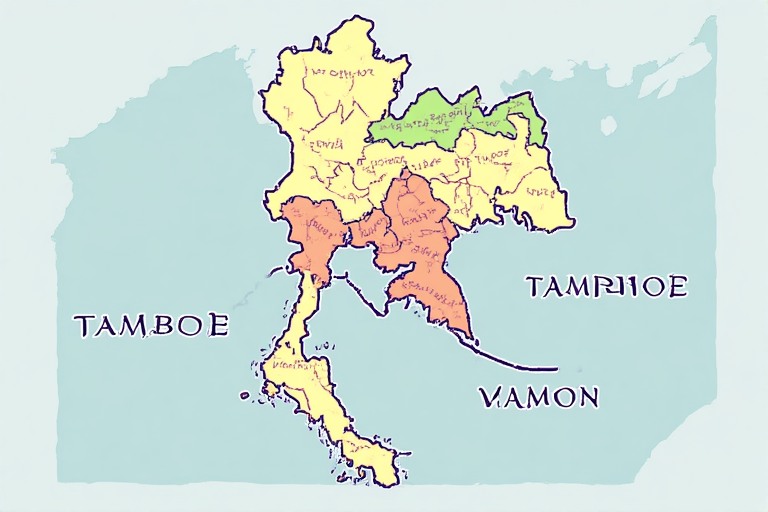
The term tambon often misspelled as tumbon or tumbons refers to a fundamental unit in Thailand’s administrative structure. Although commonly translated as a subdistrict its role extends far beyond a simple geographic label.
It represents the level at which governance becomes visible in daily life connecting national systems with local communities. It is within these subdistricts that policies are implemented, services are delivered and cultural identity is maintained making them essential to understanding how Thailand functions at the grassroots level.
The Administrative Role of Tambons

Position Within Thailand’s Governance System
Tambons occupy a central position within Thailand’s hierarchical administrative framework sitting between districts known as amphoe and villages called muban. This placement allows tambons to function as operational bridges that translate broader governmental strategies into localized action. Their structure ensures that governance is not only organized but also adaptable to regional differences which is critical in a country with diverse cultural and geographic landscapes.
The effectiveness of tambons lies in their ability to maintain a balance between centralized control and local autonomy. While they operate under national policies have the flexibility to respond to specific community needs. This dual role enables them to act as both implementers of government initiatives and representatives of local interests ensuring that development remains relevant and inclusive.
Historical Evolution of Tambons
Origins in Administrative Reform
Tambons were formally established during the administrative reforms of King Chulalongkorn in the late nineteenth century a period marked by efforts to modernize Thailand’s governance system. These reforms introduced a structured hierarchy that improved efficiency strengthened state control and unified previously fragmented regions. The creation of played a crucial role in achieving these objectives by standardizing local administration across the country.
Transition From Control to Community Development
Over time the role of tambons evolved significantly from being tools of administrative control to becoming centers of community development. As governance in Thailand became more decentralized tambons gained greater responsibility and autonomy allowing them to support local initiatives and encourage civic participation. This transformation reflects a broader shift toward governance models that prioritize community engagement and sustainable development.
Understanding Similar Regional and Cultural Terms
While learning about Tambon, you may come across other unfamiliar words and regional terms from different cultures. Some expressions gain attention because of their unique origins or online popularity. For example, Caricatronchi explores another uncommon term that has sparked curiosity among readers interested in language and cultural topics.
Governance and Institutional Structure
Role of Tambon Administrative Organizations
Tambon Administrative Organizations, commonly referred to as TAOs are the primary governing bodies responsible for managing local affairs within each tambon. These organizations oversee essential services such as infrastructure development environmental management and public welfare programs. Their responsibilities extend beyond basic administration encompassing strategic planning aimed at improving long term living conditions for residents.
Democratic Participation and Local Leadership
A defining feature of tambon governance is its emphasis on democratic participation. Local leaders are elected ensuring that decision making processes reflect the priorities of the community. Village heads within each tambon further strengthen this system by acting as intermediaries between residents and administrative bodies. This layered approach creates a governance model that is both representative and responsive.
Cultural Dimensions of Tambons
Serve as important markers of cultural identity with residents often developing a strong sense of belonging to their local area. These subdistricts preserve traditions customs and shared histories that define community life. The cultural significance of extends beyond administrative boundaries shaping how people connect with one another and maintain social cohesion.
Role of Religion and Community Spaces
Religious institutions particularly Buddhist temples play a central role in tambon communities. These spaces function as hubs for social interaction hosting ceremonies festivals and communal activities that bring residents together. The integration of religious and social life within highlights their importance as centers of both cultural expression and community organization.
Economic Significance of Tambons

Local Production and Rural Economies
Tambons are integral to Thailand’s economic landscape particularly in rural regions where agriculture remains a primary source of income. Economic activities within are closely tied to local resources resulting in diverse production systems across the country. In addition to farming many support small scale industries that contribute to economic resilience and local employment.
Innovation Through the OTOP Initiative
The One Tambon One Product program has significantly enhanced the economic potential of by encouraging each subdistrict to develop a unique product. This initiative promotes entrepreneurship and cultural preservation by showcasing locally produced goods on a broader scale. As a result have gained increased visibility in both domestic and international markets, strengthening their economic position.
Discover More Unique Words and Their Meanings
Understanding terms like Tambon can open the door to learning about other unique names and expressions from around the world. Our guide on Peitner explained examines another intriguing term, providing insights into its meaning, possible origins, and why people continue searching for it online.
Education Healthcare and Welfare
Tambons play a vital role in delivering essential social services particularly in areas where access to larger facilities may be limited. Local administrations work to provide basic education healthcare and welfare support tailored to community needs. This localized approach ensures that services are accessible and responsive to the specific challenges faced by residents.
Community Development Initiatives
In addition to essential services tambons actively promote community development through various initiatives. Programs focused on skill development youth engagement and support for vulnerable populations contribute to social stability and growth. These efforts demonstrate the capacity of to address complex societal issues at a grassroots level.
Environmental Responsibilities
Local Stewardship of Natural Resources
Tambons are closely connected to their surrounding environments which makes them key players in resource management. Communities within tambons often take an active role in preserving water sources managing waste and protecting ecosystems. This direct involvement allows for practical and effective environmental solutions tailored to local conditions.
Sustainability and Long Term Planning
As environmental concerns continue to grow tambons are increasingly integrating sustainability into their development strategies. Long term planning now often includes measures aimed at balancing economic growth with environmental protection. This approach ensures that natural resources are preserved while supporting the needs of present and future generations.
Contemporary Challenges and Adaptation
Impact of Urbanization
Urban migration has created significant challenges for many as younger populations move to cities in search of better opportunities. This shift can lead to aging communities and reduced economic activity in rural areas. Addressing these issues requires innovative solutions that encourage local development and make more attractive places to live and work.
Administrative and Resource Constraints
Limited financial resources and administrative complexities can impact the efficiency of tambon governance. Coordinating responsibilities across different levels of government remains a challenge, particularly in areas requiring significant infrastructure investment. Ongoing reforms aim to improve efficiency and strengthen the capacity of local administrations.
Tambon vs Tumbon: Clarifying the Confusion

The difference between tambon and tumbon is primarily a matter of spelling rather than meaning. Tambon is the correct term derived from the Thai language while tumbon is a common variation seen online. Both refer to the same administrative unit but using the correct spelling is important for accuracy and clarity.
Global Comparisons and Unique Characteristics
Tambons can be compared to subdistricts or local councils in other countries but their integration of governance culture and community life sets them apart. Unlike purely administrative divisions tambons function as living communities where social relationships and cultural traditions are deeply embedded within governance structures.
Future Outlook for Tambons
The future of tambons will be shaped by their ability to adapt to changing social economic and technological conditions. Advances in digital governance and infrastructure development are expected to enhance their effectiveness, while continued investment in local communities will ensure their long term sustainability.
Conclusion
Tambons represent the foundation of Thailand’s local governance system combining administrative functionality with cultural and social significance. They play a crucial role in connecting national policies with community realities ensuring that development is both inclusive and sustainable. Understanding offers valuable insight into how Thailand maintains balance between tradition and progress at the local level.
Exploring Other Uncommon Terms From Around the World
Tambon is one example of a regional term with a specific cultural context. If you enjoy discovering the meanings behind unusual words, you might also find What is Cadibara? interesting. It explains another lesser-known term and the reasons it has become a popular search topic.
FAQs
What is a Tambon?
A Tambon is a sub district administrative unit in Thailand positioned below a district (Amphoe) and above villages (Muban). It is used for local governance and regional organization.
How many Tambons are there in Thailand?
There are more than 7,000 Tambons across Thailand each serving as a local administrative area within a province.
What does a Tambon Administrative Organization do?
A Tambon Administrative Organization (TAO) manages local services such as infrastructure, sanitation, community development and public welfare within the Tambon.
What is the difference between a Tambon and an Amphoe?
An Amphoe is a district level division while a Tambon is a smaller sub-district within it. Each Amphoe contains multiple Tambons.
How is a Tambon structured?
A Tambon is made up of several villages known as Muban which are the smallest administrative units in Thailand.
Why are Tambons important in Thailand?
Tambons are important because they help deliver government services support local development and ensure administration reaches smaller communities.
Can foreigners visit or live in a Tambon?
Yes, foreigners can visit Tambons for cultural experiences or live there depending on visa status as many Tambons include residential and rural areas.