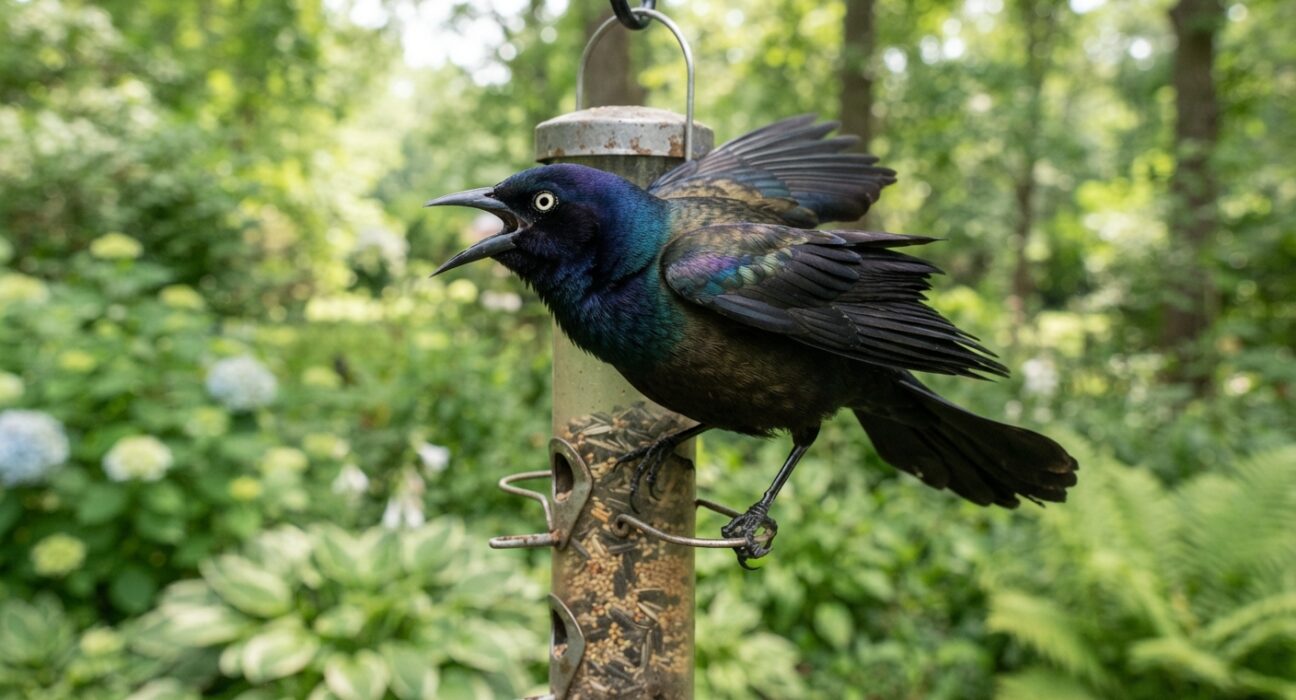
If a massive flock of noisy grackles descends on your yard and empties your feeders in a single morning and you want to know how to keep grackles away from bird feeders, you are not alone. Common Grackles are aggressive, highly social blackbirds that bully smaller songbirds, hoard feeding stations and leave behind messy ground spills.
Fortunately, you can keep grackles away from bird feeders without driving away Cardinals, Chickadees and Nuthatches by using targeted feed choices, clever hardware modifications and proven backyard management habits.
Why Are Grackles Such a Problem at Bird Feeders?
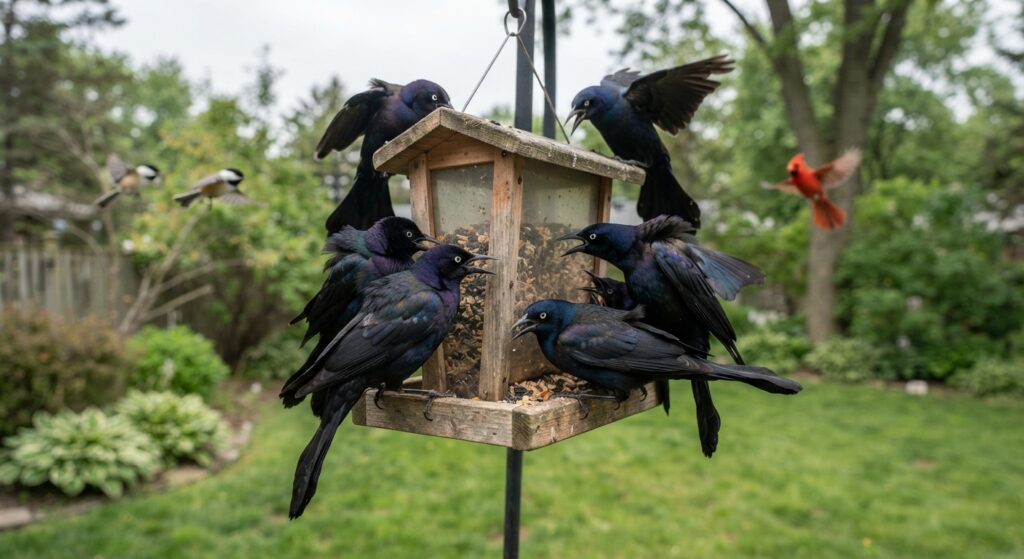
Grackles arrive in large, iridescent black plumaged flocks during spring and summer feeding seasons. Because they forage in groups, they quickly overwhelm standard backyard feeding stations and alter the natural ecosystem of your yard.
Bully Behavior at Perches: Grackles are large, assertive birds that physically block smaller songbirds like Finches, Titmice and Chickadees from accessing food ports.
Rapid Food Depletion: A flock of grackles can clear several pounds of high value bird seed in a matter of hours, making backyard feeding an expensive hobby.
Selective Foraging Waste: Grackles toss aside seeds they dislike to search for preferred bits, leaving heavy waste and rotting hulls scattered on the lawn beneath your feeders.
Switch to Seeds Grackles Cannot Crack: The Ultimate Deterrent
One effective way to discourage grackles from your feeders is to change the type of seed you serve. Grackles have relatively wide, weak beaks that struggle to break hard outer shells and they strongly dislike bitter-tasting kernels.
Transition to Pure Safflower Seed: Grackles actively avoid safflower seed because its hard outer hull is difficult for their beaks to crack, and the bitter taste is commonly preferred by many songbirds. Replacing mixed grain with pure safflower bird seed is the quickest permanent fix for a grackle problem.
Serve Pure Nyjer (Thistle) Seed: Nyjer seeds are tiny and served in fine wire mesh socks or specialized finch feeders. Goldfinches and redpolls love them, but grackles cannot harvest them efficiently.
Eliminate Cheap Commercial Blends: Cheap commercial bird seed mixes containing cracked corn, millet, milo, and wheat act as a magnet for grackles. Stop purchasing standard mixed bags entirely.
How to Keep Grackles Away From Bird Feeders Effectively
To protect your backyard and stop aggressive blackbirds, you need a solid strategy. Here are the core methods to implement:
Upgrade to Grackle-Proof Bird Feeder Designs
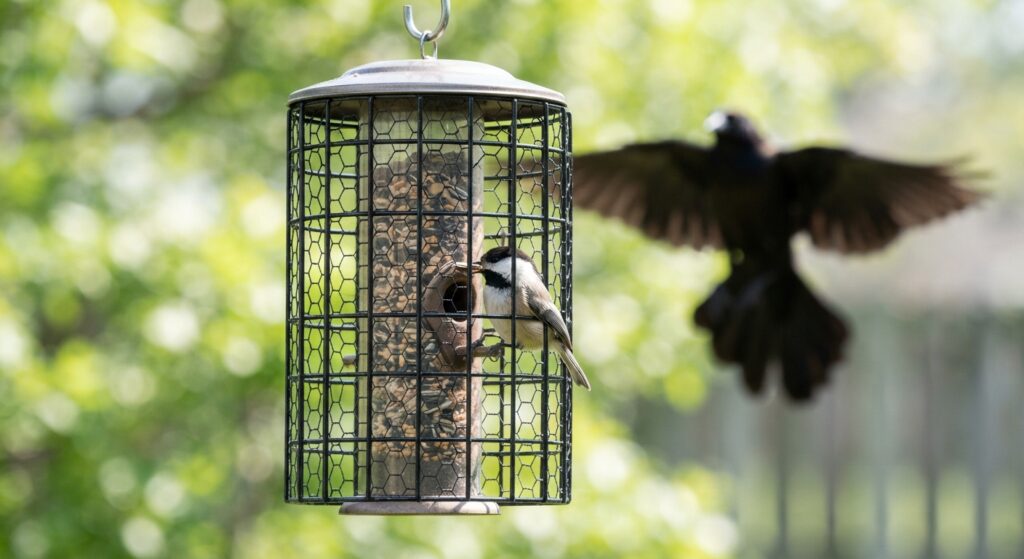
Modifying your feeder hardware creates a physical barrier that comfortably accommodates small songbirds while completely excluding larger bully species.
Caged Feeder Enclosures: Wire safety cages surrounding tube feeders allow small birds like Chickadees, Nuthatches, and downy woodpeckers to hop safely inside, while the outer wire mesh blocks wide-bodied grackles and starlings.
Weight-Sensitive Collapsible Feeders: Spring-loaded mechanism feeders automatically shut off access ports when a heavier bird like a grackle, jay, or squirrel lands on the perch, while remaining fully open for lighter songbirds.
Upside-Down Suet Feeders: Grackles love suet blocks, but their feet are not naturally designed to cling upside-down. Serving suet in a specialized upside down cage feeder allows Woodpeckers and Nuthatches to feed easily while grackles give up out of frustration.
Change Backyard Feeding Habits to Discourage Flocks
Adjusting how and when you manage your feeding stations helps disrupt grackle foraging patterns and prevents them from establishing your yard as a permanent food source.
Clean Up Ground Spills Daily: Fallen seed on the ground acts as an open invitation for grackles. Use seed-catcher trays beneath hanging feeders or sweep up debris every evening.
Remove Open Platform Feeders Temporarily: Open platform trays offer comfortable perching for large flocks. Switch exclusively to vertical tube feeders or enclosed hopper styles during peak grackle season.
Implement Feeder Fallows: If a massive flock settles stubbornly in your yard, temporarily remove all feeders for 3 to 5 days. Songbirds will return shortly after you hang feeders back up, but grackles will move on to greener territory.
Understanding Grackle Seasonal Behavior Patterns
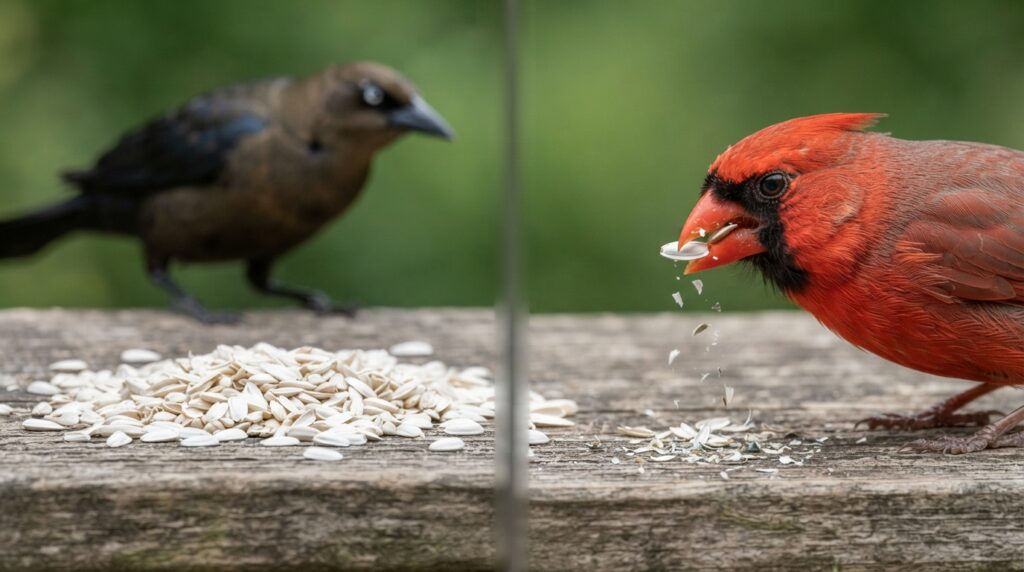
To truly outsmart grackles, it helps to understand why and when they target your yard the most. Grackle behavior changes dramatically throughout the year:
Spring Breeding Season: During spring, grackles require massive amounts of protein to feed their nestlings. They will raid feeders aggressively for insects, suet, and large sunflower seeds.
Late Summer Flocking: After breeding, grackles gather into massive migratory flocks consisting of dozens, sometimes hundreds, of birds. During this phase, they sweep through neighborhoods like a vacuum cleaner. Keeping your feeding stations strictly limited to high-defense seeds during these months protects your budget and keeps your backyard peaceful for permanent resident songbirds.
Grackle Prevention vs. Common Feeder Birds (Quick Comparison)
| Bird Feeder Strategy | Effect on Grackles | Effect on Songbirds (Cardinals, Finches) |
| Pure Safflower Seed | Deters (Hard hull & bitter taste) | Attracts (Favorite of Cardinals & Grosbeaks) |
| Caged Mesh Feeders | Blocks (Body size too large) | Allows Access (Small birds hop through) |
| Upside-Down Suet | Deters (Cannot cling upside down) | Attracts (Nuthatches & Woodpeckers feed easily) |
| Cracked Corn Blends | Attracts Flocks (Soft & easy to digest) | Low Quality (Mostly ignored by songbirds) |
Conclusion
Keeping grackles away from your backyard doesn’t mean you have to stop feeding songbirds altogether. By combining a smart seed switch, such as relying on pure safflower, with weight activated or caged hardware and clean feeding habits, you take away their food source and physical leverage. Once grackles realize your yard is no longer an easy feeding ground, they will move on, leaving your cardinals, finches, and chickadees to enjoy a peaceful, bully-free environment.
FAQ’s
Do grackles eat safflower seed?
No, grackles generally do not eat safflower seed. Their beaks lack the mechanical leverage required to crack the hard white shell, and they dislike the bitter taste of the inner kernel.
Will grackles leave my yard naturally?
Grackles are migratory birds that intensify their flocking behavior during spring nesting and late summer foraging. Changing your bird seed type forces them to abandon your feeders much sooner.
Can grackles ruin suet feeders?
Yes, grackles can consume an entire standard suet block in a single day. Switching to hot-pepper suet or upside-down cage feeders stops them completely.
Are blackbirds and grackles the same thing?
While Common Grackles belong to the blackbird family (Icteridae), they are distinct from Red-winged Blackbirds and European Starlings, though all three share similar flocking habits at backyard feeders.
Do homemade chilli or spicy seed sprays deter grackles?
Yes, birds like grackles and squirrels are sensitive to capsaicin (chilli pepper), whereas songbirds like cardinals and finches cannot taste spice and will continue eating normally. However, rain washes it away frequently, making physical feeders or seed changes a better long-term fix.
What time of day are grackles most active at feeders?
Grackles usually arrive in large, aggressive flocks during the early morning hours right after sunrise, and return again in the late afternoon for a final feeding before roosting for the night.
Do motion-activated deterrents work against grackles?
Motion-activated water sprinklers or visual scare devices (like fake owls or reflective tape) can temporarily startle grackles, but smart birds quickly realize they are harmless and return within a few days.
Can I stop grackles by using a smaller bird feeder?
Using short-perch tube feeders helps because grackles prefer long perches or open tray surfaces to balance their larger bodies while feeding.