If squirrels or noisy grackles keep emptying your bird feeder before songbirds get a turn, switching to safflower bird seed is one of the most effective natural deterrents available.
Safflower is a small, white, oil-rich seed with a hard outer hull. While backyard songbirds easily crack the hull to eat the nutritious kernel inside, mammals like squirrels find the outer shell unpalatable due to its natural bitter compounds.
What Is Safflower Bird Seed?
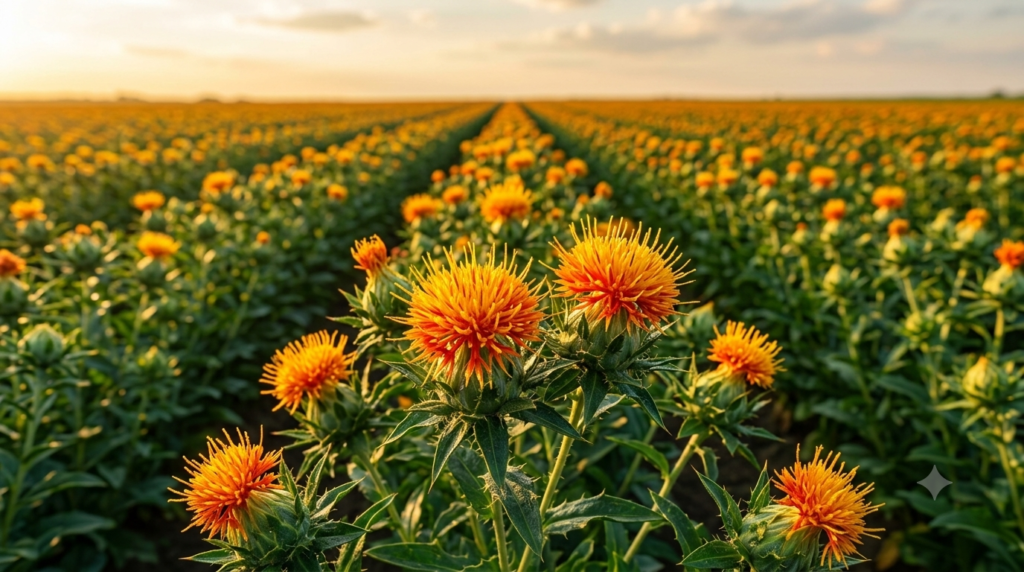
Safflower bird seed comes from the Carthamus tinctorius plant and features a hard white hull containing a bitter-tasting kernel rich in protein and fat.
Originally cultivated for natural dyes and vegetable oil, safflower (Carthamus tinctorius) is now an established staple in wild bird feeding. The seed closely resembles a small, white sunflower seed. Its primary feature is a naturally bitter outer shell that acts as a taste deterrent for mammals while remaining undetectable to birds.
Many backyard bird enthusiasts choose safflower bird seed as a premium alternative to standard wild bird food. Because safflower crops require specific warm, dry growing conditions, the seeds are harvested with low moisture levels. This gives them a long shelf life and makes them resistant to premature spoilage in outdoor bird feeders.
Why Does Safflower Bird Seed Keep Squirrels Away?
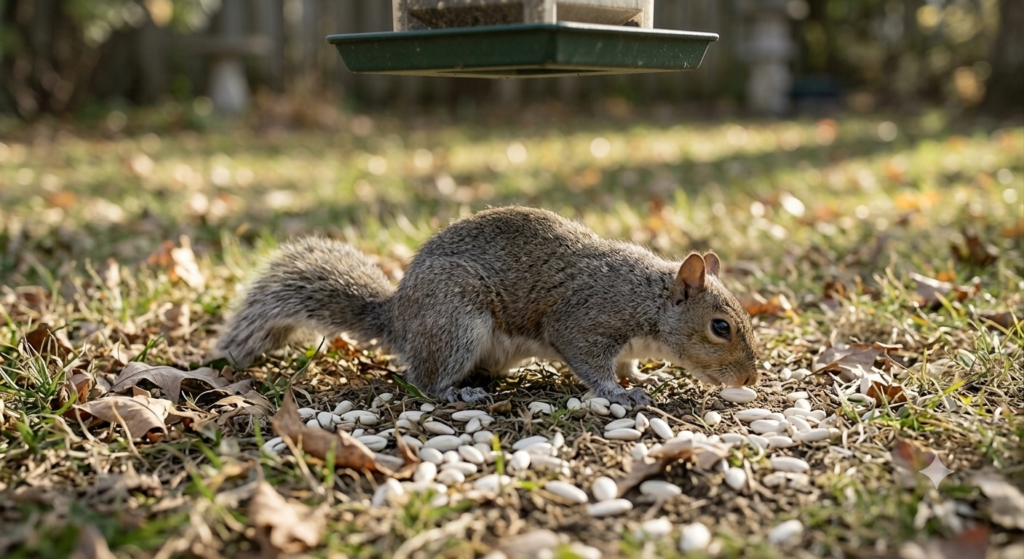
Safflower bird seed deters squirrels because its outer hull contains bitter chemical compounds that taste unpleasant to mammals, who have thousands of taste buds compared to birds.
Mammals like squirrels, chipmunks and raccoons possess roughly 10,000 taste buds, making them exceptionally sensitive to bitter flavors. Avian species, by contrast, generally possess fewer than 100 taste buds and lack the specific receptors required to register these bitter compounds.
When a squirrel attempts to bite into a safflower seed, the sharp bitter taste from the outer hull creates an immediate negative sensory response. Since mammals prioritize high efficiency foraging, they quickly abandon safflower feeders in search of milder, easier food sources like black oil sunflower seeds, corn or acorns.
Do Squirrels Eat Safflower Bird Seed When Hungry?
Yes, squirrels will eat safflower seed if they are extremely hungry or if no alternative food sources are available in early spring or winter.
While squirrels strongly dislike safflower seeds, severe weather or extreme hunger can force them to consume the bitter seed. Additionally, young or juvenile squirrels that have not yet learned to identify the taste may occasionally sample the feeder before moving on.
How to Stop Desperate Squirrels Entirely
If squirrels continue testing your safflower feeder during harsh winter months, implement these three physical feeder adjustments:
Follow the 5-10-12 Rule: Mount your feeder at least 5 feet off the ground, 10 feet away from nearby tree branches or fence rails and under an overhang with 12 feet of clearance above.
Install a Torpedo Baffle: Place a smooth metal or polycarbonate baffle below pole mounted feeders to block vertical climbing.
Avoid Tray Feeder Spills: Use seed catcher trays beneath tube feeders so dropped hulls do not collect on the ground.
Safflower Bird Seed vs. Black Oil Sunflower Seed
Safflower bird seed provides similar nutritional value to black oil sunflower seed but offers built-in protection against squirrels and nuisance birds.
| Feature | Safflower Seed | Black Oil Sunflower Seed |
| Squirrel Resistance | High (Bitter shell deters mammals) | Low (Squirrel favorite) |
| Pest Bird Resistance | High (Grackles and starlings skip it) | Low (Attracts large bully flocks) |
| Primary Target Birds | Cardinals, Chickadees, Grosbeaks, Doves | Almost all wild bird species |
| Nutritional Value | High protein (16%) and high fat (30%) | High protein (15%) and high fat (28%) |
| Feeder Mess | Low (Hulls crumble cleanly) | Moderate to high (Dark hull buildup) |
| Weather Resistance | High (Tough hull resists rain rot) | Moderate (Soaks up moisture easily) |
Which Birds Eat Safflower Seed?
Northern Cardinals, Chickadees, Nuthatches, Grosbeaks, and Mourning Doves are the primary backyard birds that prefer safflower bird seed.
Birds That Love Safflower Seed
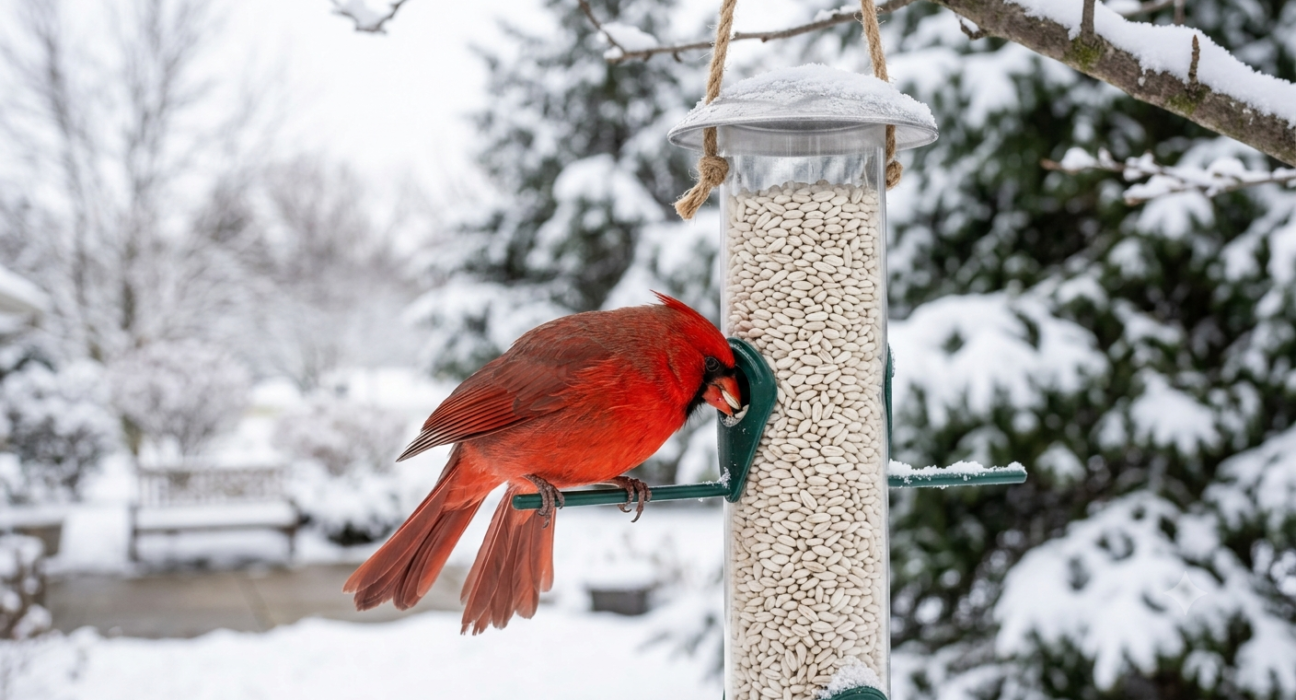
- Northern Cardinals: Cardinals are especially fond of safflower seed and will visit feeders consistently once they identify it as a primary food source.
- Black Capped & Carolina Chickadees: Easily shell the white hull using their sharp, specialized beaks.
- Rose Breasted & Evening Grosbeaks: Possess heavy, conical beaks designed specifically to crack hard seeds effortlessly.
- Tufted Titmice & White-Breasted Nuthatches: Frequently take single seeds from the feeder to cache in nearby tree bark.
- Mourning Doves: Clean up fallen safflower seeds on the ground beneath feeding stations.
Nuisance Species That Avoid It
- Grey & Red Squirrels: Avoid the seed due to the bitter hull compound.
- Common Grackles & European Starlings: Bully birds with weak beaks that struggle to crack the hard hull and dislike the bitter taste.
- House Sparrows: Generally prefer soft millet or cracked corn over hard safflower hulls.
Regional Bird Compatibility Guide (North America)
Safflower bird seed attracts different native bird species depending on your geographical region across the United States and Canada.
Eastern & Southern US: Exceptional for attracting Northern Cardinals, Tufted Titmice and Carolina Chickadees year round.
Midwest & Central Plains: Draws large flocks of Rose-Breasted Grosbeaks during spring migration and Mourning Doves through autumn.
Northern US & Canada: Provides essential winter fats (30% fat content) for Evening Grosbeaks, Red-Breasted Nuthatches and Black-Capped Chickadees.
Western US: Attracts Steller’s Jays, Evening Grosbeaks and Pyrrhuloxia (in southwestern arid zones).
Cost Breakdown: Is Safflower Bird Seed Worth the Price?
Although safflower seed costs 15% to 25% more per pound than basic sunflower blends, it reduces overall feeding costs by eliminating seed waste from squirrels and grackles.
When feeding standard sunflower or mixed seed, up to 60% of the food is consumed by non target species like grey squirrels, raccoons and flocking European starlings.
By switching to pure safflower seed:
Zero Wastage: Pests stop emptying the feeder in a single afternoon.
Refill Frequency Drops: A single feeder refill lasts 3 to 5 times longer compared to sunflower blends.
Long Term Savings: You buy less bulk seed per month because only native songbirds are consuming the calories.
Best Feeders for Safflower Bird Seed
Hopper feeders, platform feeders, and wide-perch tube feeders work best for serving safflower seed to songbirds.
Because Northern Cardinals are the primary species attracted to safflower, your feeder setup must accommodate their physical feeding habits. Cardinals are chest heavy birds that cannot easily cling to small, flexible tube perches.
Hopper Feeders: Offer large, stable perching ledges and protect seeds from heavy rainfall.
Platform Feeders: Ideal for cardinals and doves, provided they feature a mesh bottom for drainage.
Caged Tube Feeders: Prevent large squirrels from chewing the feeder while letting small chickadees and nuthatches access the safflower inside.
How to Switch Your Backyard Birds to Safflower Seed
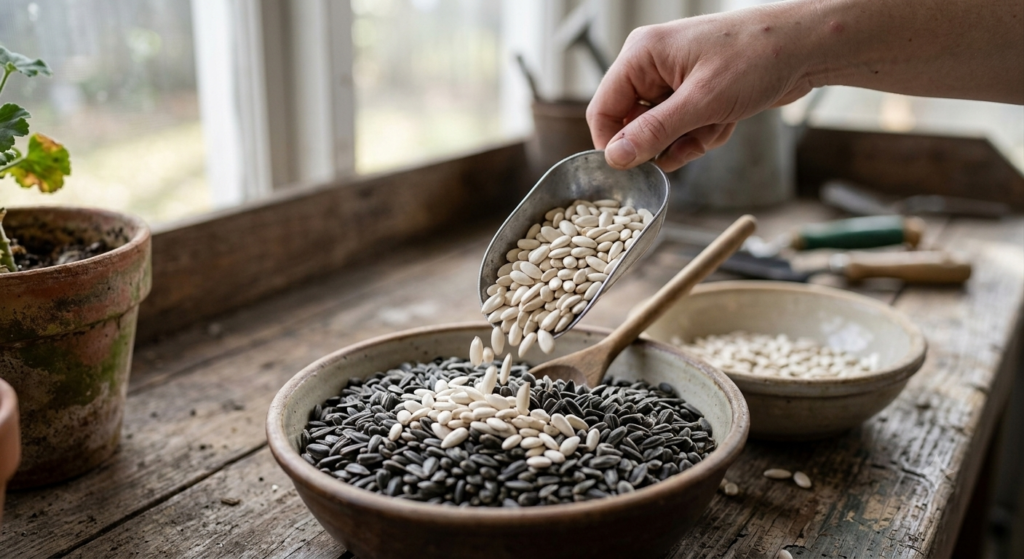
Transition your feeder to safflower seed gradually over 7 to 14 days by mixing it with black oil sunflower seed.
Songbirds rely on visual memory to find food. Because safflower seeds are bright white, birds may not immediately recognize them as edible if you change the food overnight.
- Days 1–4: Mix 75% black oil sunflower seed with 25% safflower seed in your feeder.
- Days 5–8: Adjust the mix to 50% sunflower seed and 50% safflower seed.
- Days 9–12: Increase to 75% safflower seed and 25% sunflower seed.
- Day 14 Onward: Fill the feeder with 100% pure safflower seed.
Storing Safflower Bird Seed to Prevent Spoilage
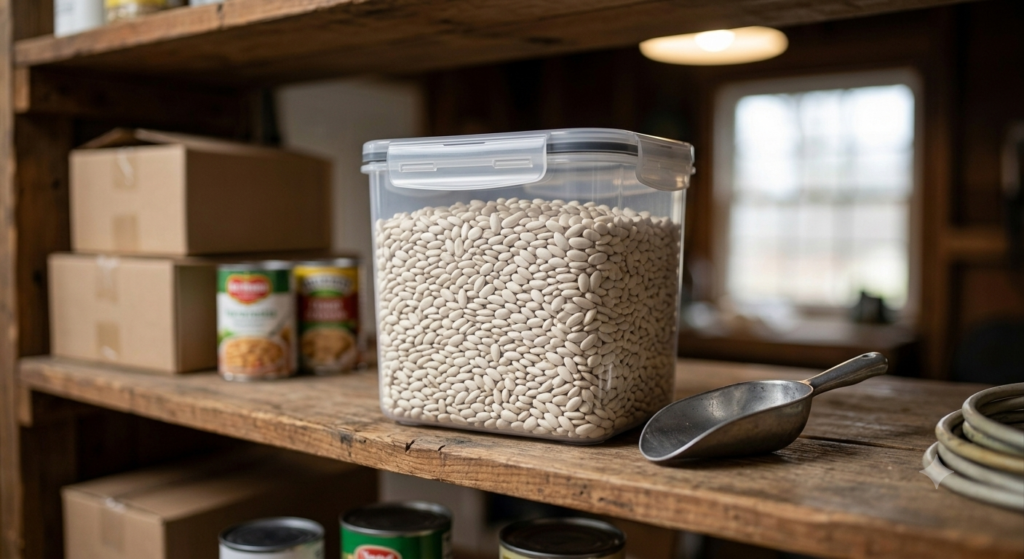
Store safflower bird seed in an airtight metal or heavy-duty plastic container in a cool, dry place to prevent moisture buildup and rancidity.
Because safflower seed contains high levels of natural oils (30% fat content), exposure to heat, humidity, and direct sunlight can cause the internal kernel to go rancid over time.
Use Galvanized Steel Cans: Metal bins prevent rodents from chewing through storage bags.
Keep Off Concrete Floors: Elevate storage containers on wooden pallets or shelving to prevent ground moisture from transferring into the container bottom.
Shelf Life: Properly stored safflower seed remains fresh for 12 to 18 months.
Conclusion:
Switching to pure safflower bird seed is one of the most effective, long-term investments you can make for your backyard ecosystem. By eliminating cheap commercial fillers, frustrating squirrels, and turning away heavy bully flocks like grackles, you protect your budget and reduce daily maintenance. Most importantly, you create a safe, peaceful sanctuary where colorful songbirds—especially Northern Cardinals, Grosbeaks, and Chickadees—can feed undisturbed throughout the year.
FAQ’s
Do squirrels eat safflower bird seed?
No, squirrels generally do not eat safflower seed because the outer hull contains bitter compounds that taste unpleasant to mammals. However, extremely hungry squirrels may occasionally eat it during severe winter conditions when no other food exists.
What birds will NOT eat safflower seed?
Nuisance birds like European starlings, common grackles, house sparrows, and brown-headed cowbirds do not eat safflower seed. Insect-eating birds like wrens and swallows also ignore it because they do not eat dry seeds.
Do cardinals like safflower seed?
Yes, Northern Cardinals love safflower seed and consider it one of their favorite food sources. Because cardinals have strong beaks, they easily crack the hard white shell to access the high-fat kernel inside.
Why are birds not eating my safflower seed?
Birds ignore safflower seed primarily because they do not recognize its white color as food. If you switch seeds abruptly, songbirds may take 7 to 14 days to adjust. Mixing safflower with sunflower seed helps them adapt faster.
Does safflower seed leave a mess under feeders?
No, safflower seed creates significantly less mess than black oil sunflower seed. Ground-feeding birds like Mourning Doves eat dropped kernels, and the discarded white hulls break down quickly without killing lawn grass.
Can grackles crack safflower seeds?
No, common grackles struggle to crack safflower seeds because their beaks lack the leverage needed for hard hulls. Combined with the seed’s bitter taste, grackles quickly abandon safflower feeders.
Will raccoons and chipmunks eat safflower seed?
No, raccoons and chipmunks avoid safflower seed due to its bitter outer shell. Like squirrels, these mammals have thousands of taste buds that register the bitter compounds as unpalatable.
Does safflower bird seed go bad in the rain?
Safflower seed resists rain better than sunflower seed due to its tough outer shell, but it can still mold if left in standing water. Always use bird feeders with bottom drainage holes to keep seeds dry.